Table of Contents
- Recognize Early Signs of Androgenic Alopecia
- Understand How Male Pattern Baldness Develops
- FDA-Approved Hair Loss Treatments That Work
- Lifestyle Changes to Support Hair Health
- When to See a Dermatologist for Hair Loss
- What to Expect: Timeline and Results
- Common Myths About Male Pattern Baldness Prevention
- Frequently Asked Questions
Last Updated: September 30, 2026
Recognize Early Signs of Androgenic Alopecia
Male pattern baldness progresses gradually, so catching it early gives you the best chance to prevent male pattern baldness from advancing further.
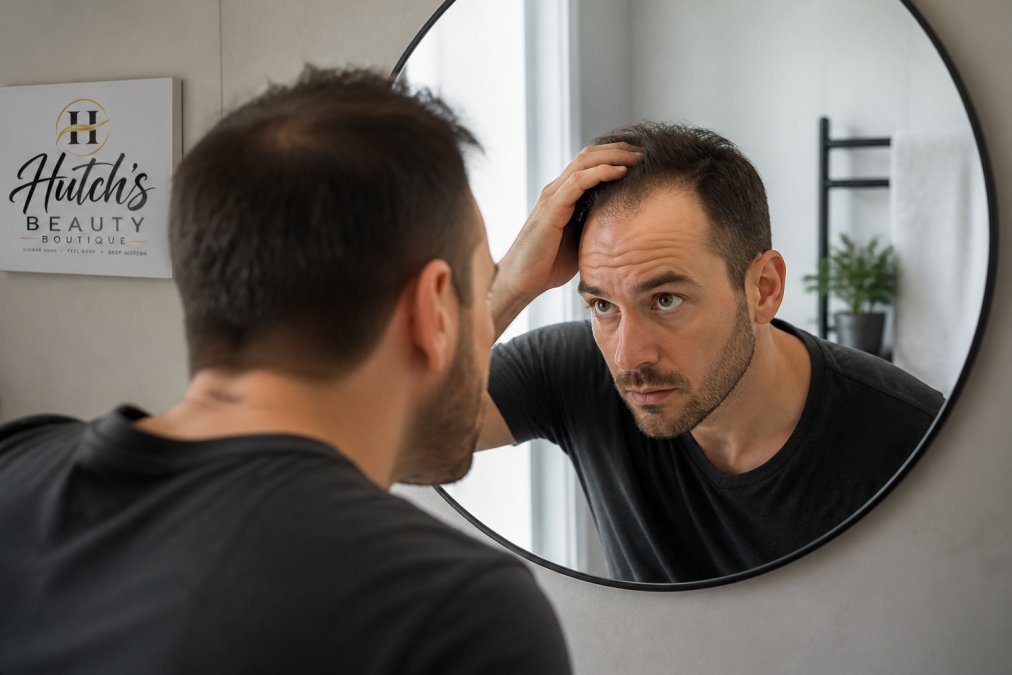
Early signs vary: some notice a receding hairline, others see thinning at the crown, and some experience both.
Watch for these early warning signs:
- Hair falling out more than usual when you shower or brush
- A widening part line that wasn't there before
- Visible scalp showing through hair, especially at the crown
- Hairline moving back from the forehead
- Hair that feels thinner or more brittle than it used to
Early detection matters. Spotting changes in your 20s or 30s gives you more treatment options and lets you preserve more hair. Many people wait too long, but hair loss rarely stops on its own.
Understand How Male Pattern Baldness Develops
Androgenic alopecia is a genetic condition where hair follicles shrink in response to hormonal signals. The hormone DHT (dihydrotestosterone) causes this miniaturization in people who are genetically predisposed.
DHT shortens the growth phase of hair follicles and lengthens the resting phase, so hair spends less time growing and more time falling out.
Over time, affected follicles produce thinner, shorter hairs and may stop producing visible hair entirely. This is why prevent male pattern baldness early is so important, once follicles shrink too much, they're harder to revive.
Genetics determine your risk, but genetics isn't destiny. Environmental factors, stress, and nutrition also play roles.
FDA-Approved Hair Loss Treatments That Work
The FDA has approved two medications specifically for male pattern baldness: minoxidil and finasteride. These are the only treatments with solid evidence behind them.
Minoxidil: Topical Treatment Option
Minoxidil is a liquid or foam applied twice daily that extends the growth phase of hair follicles and increases blood flow to the scalp.
Minoxidil is available over-the-counter in 2% and 5% strengths; the 5% version works better but costs more.
Results take 3-6 months of consistent use. You must keep using it; if you stop, hair loss typically resumes within a few months.
Managing Minoxidil Side Effects
Common side effects are mild and temporary. Scalp irritation, itching, or flaking occur in roughly 5-10% of users. To minimize them:
- Start with the 2% strength if you have sensitive skin, then move to 5% after two weeks if tolerated
- Apply only to a completely dry scalp; wet scalp increases irritation
- Wait 4 hours after application before washing your hair
- Use a gentle, fragrance-free shampoo on treated days
- If itching persists, apply a thin layer of unscented moisturizer to the scalp 30 minutes after minoxidil dries
Some report headaches, dizziness, or increased heart rate in the first few weeks, which usually fade. Contact your doctor if dizziness persists beyond two weeks.
Rare but serious side effects include chest pain or severe headache. Stop use and seek medical attention if these occur.
The main drawback is consistency. Applying it twice daily requires discipline, and missing doses reduces effectiveness. Setting phone reminders or pairing application with your morning and evening routine helps.
Finasteride: Oral Medication Option
Finasteride is a daily pill that blocks the enzyme converting testosterone to DHT, reducing follicle shrinkage.
Finasteride requires a prescription and is taken as a 1mg daily dose for hair loss.
Finasteride stops hair loss progression in most users and regrows some hair in many, though results take 3-6 months.
Understanding and Managing Finasteride Side Effects
Side effects are uncommon. Roughly 1-2% of men report sexual side effects like decreased libido or difficulty achieving erections, which usually reverse after stopping. If you experience sexual side effects:
- Give the medication 6-8 weeks before deciding it's the cause
- Talk to your doctor about dose timing or combining with minoxidil
- Know that stopping reverses these effects in most cases
Other rare side effects include breast tenderness (fewer than 1%), mood changes, or allergic reactions. Report mood changes to your doctor immediately.
Some men experience temporary increased shedding in the first 2-4 weeks ("shedding phase"), which reflects old hairs making room for new growth and usually resolves by week 6.
One advantage: you only take one pill daily, making it easier to maintain long-term.
Combination Therapy
Using minoxidil and finasteride together often produces better results than either alone. Finasteride stops DHT-driven shrinkage, while minoxidil stimulates growth directly. Many dermatologists recommend combination therapy for men serious about preventing male pattern baldness, especially in the early stages when hair follicles are still responsive.
Lifestyle Changes to Support Hair Health
Male pattern baldness often impacts confidence and mental well-being. A complete prevention strategy addresses both physical and psychological dimensions.
Physical and Nutritional Support
Medications work best combined with healthy habits: nutrition, stress management, and scalp care all affect hair growth.
Protein and nutrients matter. Hair is made of protein, and iron deficiency causes hair loss. Aim for adequate protein at each meal and track iron intake if vegetarian or vegan.
Be gentle with your scalp. Avoid tight hairstyles, harsh shampoos, and hot water. Use a wide-tooth comb instead of aggressive brushing.
Sleep and recovery matter. Poor sleep disrupts hormone balance. Aim for 7-9 hours nightly with consistent schedules.
Consider a hair-healthy diet:
- Fatty fish rich in omega-3s (salmon, sardines, mackerel)
- Leafy greens for iron and folate
- Nuts and seeds for biotin and minerals
- Eggs for choline and protein
- Legumes for plant-based protein and zinc
Managing Stress and the Psychological Impact
Stress can accelerate male pattern baldness by triggering inflammation and worsening hormonal imbalance. Anxiety about early hair loss creates a cycle where worry itself worsens the condition.
The psychological toll is real. Many men report anxiety about appearance, social situations, or dating. Addressing it directly improves mental health and treatment adherence.
Practical strategies for managing the emotional side:
- Reframe the narrative. Early detection is an advantage, you caught it when treatment is most effective.
- Connect with others. Online communities reduce isolation and anxiety.
- Set realistic expectations. Results take 3-6 months; knowing this prevents disappointment.
- Consider therapy if needed. CBT helps reframe anxious thoughts about appearance.
- Practice stress reduction. Exercise, meditation, and 20 minutes of daily walking reduce stress and improve hormone balance.
- Avoid comparison traps. Everyone's timeline differs; focus on your own results.
Chronic stress elevates cortisol, pushing hair follicles into the resting phase prematurely. Stress management directly supports hair retention and treatment effectiveness.
These changes alone won't stop male pattern baldness if you're genetically predisposed, but they remove obstacles to treatment working well.
When to See a Dermatologist for Hair Loss
See a dermatologist when you first notice changes. Early intervention gives you more options.
A dermatologist can confirm androgenic alopecia versus other conditions like thyroid problems, nutritional deficiencies, or scalp infections, which require different treatment.
During your visit, bring photos showing your hair over time. Describe when you first noticed changes and how quickly they've progressed. Family history matters too. Tell your doctor if male relatives experienced hair loss.
Your dermatologist can prescribe finasteride and discuss minoxidil options. They can also monitor your progress and adjust treatment if needed. Some people respond better to one medication than the other. Your doctor helps find what works for you.
Schedule a visit if you notice:
- Sudden hair loss (different from gradual thinning)
- Hair loss in patches or unusual patterns
- Scalp pain, redness, or flaking alongside hair loss
- Hair loss after starting a new medication
These signs suggest something other than male pattern baldness. A dermatologist can diagnose quickly.
What to Expect: Timeline and Results
Understanding realistic timelines prevents disappointment and helps you stay committed to treatment.
Months 1-3: You might not see visible changes yet. Hair is still in its growth cycle.
Common Myths About Male Pattern Baldness Prevention
Misinformation spreads easily around hair loss. Knowing what's false helps you make better decisions.
Frequently Asked Questions
What are the first signs of male pattern baldness I should watch for?
Early signs of androgenic alopecia include a receding hairline, thinning at the crown or vertex, or increased hair shedding when shampooing or brushing. You might notice your part widening or your hairline moving back gradually. If you spot these changes before age 25, early intervention with FDA-approved treatments can slow progression significantly. A dermatologist can confirm the diagnosis and rule out other causes like nutrient deficiency or hormonal imbalance.
Can lifestyle changes actually stop hair loss?
Lifestyle modifications alone cannot reverse male pattern baldness, which is primarily driven by genetics and DHT sensitivity. However, they support scalp health and may slow progression. Stress management, adequate protein intake, iron supplementation if deficient, and regular scalp care all contribute to maintaining existing hair density. For best results, combine lifestyle changes with FDA-approved medications like minoxidil or finasteride, which have clinical efficacy in preventing further hair loss and sometimes regrowing hair.
How long does it take to see results from hair loss treatments?
Results vary by treatment type. Minoxidil typically shows visible improvement in 3-4 months, with maximum results around 6-12 months. Finasteride works more slowly, often requiring 6-12 months to see noticeable slowing of hair loss, though some regrowth may occur after 12-24 months. Consistency is critical, stopping treatment reverses gains. Start early when you first notice signs, as treatments work best on hair follicles before severe miniaturization occurs.
Is it normal for a man in his 20s to experience hair loss?
Yes, male pattern baldness can begin in the late teens or early 20s, particularly if there's a family history. Genetics determine both age of onset and progression rate. If your father or grandfather experienced early hair loss, you're at higher risk. Early recognition and treatment at this stage is valuable because preventative measures and FDA-approved medications work best before significant follicular miniaturization happens. Consult a dermatologist if you notice changes.


