Table of Contents
- How Minoxidil and Finasteride Work
- How Long Does Minoxidil Take to Work
- Finasteride Side Effects and Safety
- Using Minoxidil and Finasteride Together
- Which One Should You Choose
- Frequently Asked Questions
Last Updated: August 31, 2026
How Minoxidil and Finasteride Work
Minoxidil and finasteride represent fundamentally different approaches to hair loss: one stimulates growth at the follicle level, the other addresses the hormonal root cause. Neither is inherently superior, they target different mechanisms, which is why many people use them together.
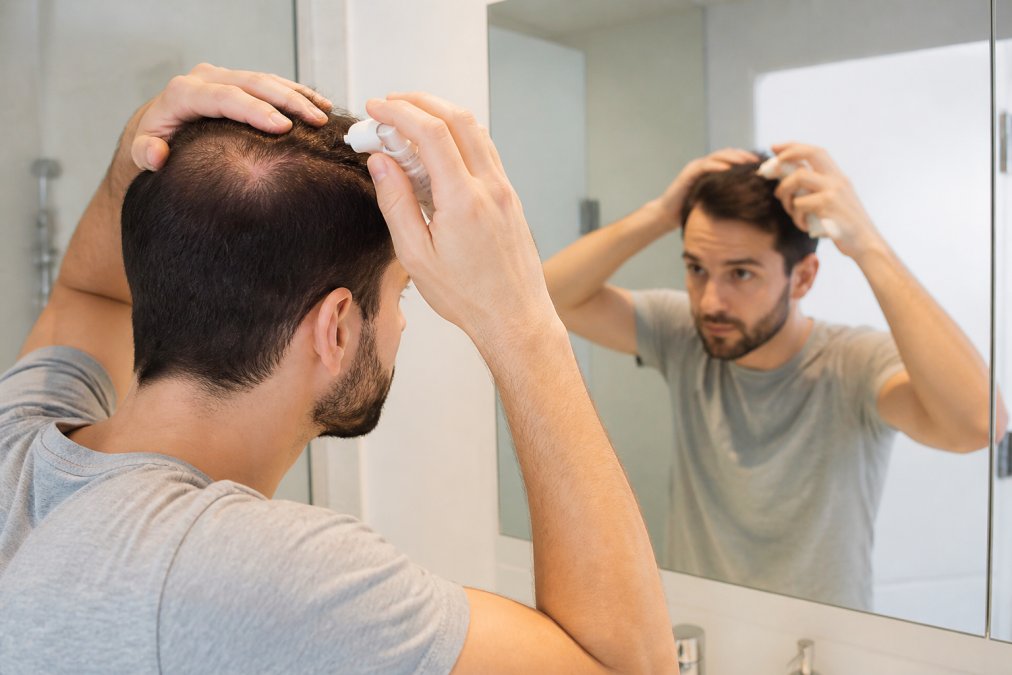
Minoxidil: Topical Stimulation
Minoxidil is a topical solution applied directly to your scalp, typically twice daily. It increases blood flow to hair follicles and extends the anagen phase, the active growth period of your hair cycle. When follicles spend more time in this growth phase, they produce thicker, longer strands before shedding.
Minoxidil reactivates follicles that have begun to shrink, reversing the follicle miniaturization that causes male pattern baldness. It's available over-the-counter in 5% foam or liquid formulations, requiring no prescription. The topical application means minimal systemic absorption; most of the drug stays localized to your scalp.
Finasteride: Hormonal Regulation
Finasteride works through an entirely different pathway. This oral medication blocks the enzyme 5-alpha reductase, which converts testosterone into dihydrotestosterone (DHT). By reducing DHT levels, finasteride slows hair loss and can stimulate regrowth in some cases.
This hormonal approach targets the root cause of androgenetic alopecia rather than just stimulating follicles. For men with a receding hairline or significant crown thinning, finasteride often produces more dramatic results than minoxidil alone, with many users reporting stabilization within 3-6 months. Finasteride requires a prescription at the standard 1mg dose. Because it's systemic, it affects DHT levels throughout your body, which is why some users experience side effects, though most experience none.
How Long Does Minoxidil Take to Work
Most users don't see noticeable results until 3-6 months of consistent twice-daily application (the FDA). The timeline depends on how advanced your hair loss is, your age, and how responsive your follicles are to the treatment.
The Initial Shedding Phase: Why Hair Loss Worsens Before It Improves
The first 2-6 weeks on minoxidil often involve increased shedding, sometimes called telogen effluvium. This happens because minoxidil pushes hairs out of their resting phase into the active growth phase more quickly. The hairs that shed are typically thinner, miniaturized ones being replaced by thicker, healthier strands.
This shedding phase is actually a positive sign, it indicates the medication is working, but the visual reality can be alarming. Users report anxiety and temptation to stop treatment during this window. Setting realistic expectations before starting minoxidil significantly improves adherence.
Timeline to Visible Improvement
After the initial shedding resolves (typically by week 6), you'll notice finer hairs appearing on the scalp, often described as "peach fuzz." These gradually thicken over subsequent months. By month 4-6, most users see visible density improvements if the treatment is working for them. Results plateau after 12 months; minoxidil doesn't produce continuous improvement indefinitely. Maximum benefit is typically achieved by month 12.
If you're considering combination therapy with finasteride, adding it around the 3-4 month mark of minoxidil use can accelerate visible results.
Consistency: The Hidden Variable
Consistency is non-negotiable for minoxidil efficacy. Users who skip more than one application per week see substantially diminished results compared to those with near-perfect adherence. The twice-daily requirement is challenging long-term, particularly after initial motivation wears off.
This adherence challenge is one reason combination therapy with finasteride becomes appealing. Finasteride requires only one daily dose, making it easier to maintain long-term compliance. Some users find that adding a once-daily oral medication actually improves their overall adherence to the minoxidil regimen.
Finasteride Side Effects and Safety
Finasteride's side effect profile concerns many men considering the treatment. The most commonly reported adverse reactions involve sexual function: decreased libido, erectile dysfunction, and reduced ejaculate volume. These effects occur in roughly 1-2% of users in clinical trials, though real-world reports suggest higher rates (the FDA).
Sexual side effects are often reversible. Most men who discontinue finasteride see these effects resolve within weeks to months. However, a small subset reports persistent sexual dysfunction even after stopping the medication. Other potential side effects include breast tenderness, depression, and decreased ejaculate volume. Finasteride also slightly lowers PSA levels, which can complicate prostate cancer screening.
Minoxidil's side effect profile is considerably milder. Scalp irritation, itching, and unwanted facial hair growth are the primary concerns. Because minoxidil is topical, it doesn't produce hormonal side effects. For men concerned about sexual dysfunction, minoxidil alone represents a safer starting point.
Safety data supports long-term use of both medications. Minoxidil has been used for decades with no serious long-term adverse effects identified. Finasteride has similarly strong safety data for hair loss treatment at the 1mg dose.
Using Minoxidil and Finasteride Together
The combination of minoxidil and finasteride represents the most evidence-backed approach to male pattern baldness. They work through different mechanisms, so combining them produces additive effects. Men using both typically see better results than either treatment alone, with studies showing approximately 40-45% improvement in hair count at 12 months compared to 20-25% with monotherapy (peer-reviewed research).
Sequencing: Which Medication to Start First
When starting combination therapy, the sequence matters. Most practitioners recommend beginning with one medication first, allowing your body to adjust, then adding the second.
Starting with finasteride first makes sense if you have a receding hairline or significant crown loss. After 2-3 months on finasteride alone, you can introduce minoxidil for additional follicle stimulation. This sequence allows you to assess finasteride's side effect profile in isolation before adding a second medication.
Starting with minoxidil first makes sense if you're uncertain about committing to a prescription medication or concerned about finasteride's side effects. After 3-4 months on minoxidil, you can add finasteride if results plateau or if you want more aggressive treatment.
Managing the Intensified Shedding Phase During Transition
When adding a second medication to an existing regimen, many men experience a more pronounced shedding phase than they did on monotherapy. This occurs because both medications push follicles into the growth phase simultaneously. The shedding can last 4-8 weeks and is often more visually dramatic than the initial shedding phase on either medication alone.
Understanding this phase as a positive sign, indicating that both medications are working synergistically, helps maintain compliance. Some practitioners recommend starting the second medication at a reduced frequency to minimize shedding intensity, though evidence for this approach is anecdotal.
Maintenance Commitment and Compliance Strategies
Combination therapy requires managing a once-daily oral medication plus twice-daily topical applications. Practical compliance strategies include anchoring applications to existing routines, setting phone reminders, using a pill organizer, and considering subscription services for automatic monthly delivery.
Cost Considerations Over Time
Pricing for finasteride and minoxidil varies. Combined, this represents an ongoing monthly commitment. For current pricing, please check our website.
Long-Term Maintenance and Discontinuation Effects
Long-term combination therapy typically requires ongoing treatment indefinitely. Discontinuing either medication results in hair loss resuming within 3-6 months, as the underlying genetic predisposition remains unchanged. This represents a permanent commitment to maintenance therapy rather than a cure.
Which One Should You Choose
The choice between minoxidil and finasteride depends on your specific pattern of hair loss, side effect tolerance, and treatment goals.

Choose minoxidil alone if you're experiencing early-stage hair thinning, prefer to avoid prescription medications, or have concerns about hormonal side effects. It's particularly effective for crown and vertex thinning. However, expect slower results and understand that effectiveness plateaus around the 12-month mark.
Choose finasteride if you have a receding hairline or significant crown loss and want to address the hormonal cause directly. It typically produces more dramatic results than minoxidil, particularly for hairline recession. The once-daily dosing improves long-term compliance.
Choose combination therapy if you're willing to commit to twice-daily applications and want maximum effectiveness. This approach produces the best outcomes in clinical evidence and real-world use.
Your age matters. Younger men benefit from starting treatment earlier; earlier intervention prevents additional follicle miniaturization and produces better long-term outcomes. Men in their 20s and 30s should prioritize finasteride.
Your actual compliance with a treatment matters more than the theoretically optimal choice. A minoxidil regimen you maintain consistently outperforms a finasteride prescription you skip doses on.
Consider starting with minoxidil if you're uncertain about commitment. It allows you to assess your tolerance for hair loss treatment without prescription requirements. If results disappoint after 6 months, you can add finasteride or switch to combination therapy.
| Factor | Minoxidil | Finasteride | Combination |
|---|---|---|---|
| Application | Topical, twice daily | Oral, once daily | Both required |
| Time to results | 3-6 months | 4-6 months | 3-4 months |
| Best for | Crown/vertex thinning | Receding hairline | Moderate-advanced loss |
| Side effects | Scalp irritation, facial hair | Sexual dysfunction risk | Higher commitment |
| Prescription required | No | Yes | Yes |
| Long-term cost | Moderate | Moderate | Higher |
The minoxidil vs finasteride decision ultimately reflects your priorities around efficacy, convenience, and side effect risk. Neither treatment cures hair loss; both require ongoing use to maintain results. Success depends less on choosing the theoretically superior option and more on selecting the treatment you'll actually use consistently. If you're exploring hair regrowth solutions, Hutch's Beauty Boutique provides convenient access to quality personal care products alongside other beauty and wellness essentials, making it easier to maintain your chosen treatment regimen as part of your broader self-care routine. Start with an honest assessment of your commitment level, discuss your specific hair loss pattern with a healthcare provider, and remember that combination therapy remains available if monotherapy disappoints.
Frequently Asked Questions
Can you use minoxidil and finasteride together?
Yes, many dermatologists recommend combining minoxidil and finasteride for enhanced results. Minoxidil stimulates hair growth while finasteride prevents further hair loss by blocking DHT. Using both addresses hair loss from different angles. However, combining them requires consistency and patience, results typically take 4-6 months. Consult a healthcare provider before starting any combination therapy to ensure it's right for your specific situation.
How long does minoxidil take to work for hair regrowth?
Minoxidil typically shows visible results within 3-6 months of consistent twice-daily application. Some users notice reduced shedding within 4-8 weeks, which is an early sign the treatment is working. Full results may take 6-12 months. Consistency is critical, skipping doses or stopping treatment can reverse progress. Hair growth follows natural cycles, so patience is essential before expecting noticeable density improvement.
What are the main side effects of finasteride?
The most commonly reported side effects of finasteride include decreased libido, erectile dysfunction, and reduced ejaculate volume. These sexual side effects occur in 1-2% of users and often resolve after discontinuation. Other possible effects include scalp irritation, breast tenderness, and allergic reactions. Most users tolerate finasteride well. Discuss any concerns with your healthcare provider, as they can adjust dosing or recommend alternatives if side effects are bothersome.
Which is better for hair loss, minoxidil or finasteride?
Neither is universally 'better', effectiveness depends on your hair loss pattern and goals. Finasteride works best for receding hairlines and crown thinning caused by male pattern baldness, as it blocks the hormone driving hair loss. Minoxidil excels at stimulating regrowth on the crown and vertex. Many experts recommend using both together for maximum results. Your choice should factor in whether you need a prescription, tolerance for side effects, and how quickly you want to see progress.
This article was written using GrandRanker


