Table of Contents
- Is Buying Hair Growth Treatments Online Safe? The Real Answer
- Do Hair Growth Products Actually Work? What the Evidence Says
- FDA Approved Hair Growth Products Online: What You Should Know
- Telehealth Hair Loss Prescriptions: Convenient but Not Risk-Free
- Side Effects of Online Finasteride and Other Prescription Treatments
- How to Spot Fake Hair Growth Products Before You Buy
- Verification Checklist: How to Identify a Legitimate Online Pharmacy
- When to See a Dermatologist Instead of Shopping Online
Last Updated: July 30, 2026
Is Buying Hair Growth Treatments Online Safe? The Real Answer
Whether buying hair growth treatments online is safe depends entirely on where you buy. The online marketplace has expanded rapidly, giving consumers access to everything from FDA-approved topical treatments to unverified supplements. This guide from Hutch's Beauty Boutique breaks down what separates a safe, legitimate purchase from one that could put your health at risk, including verification steps, red flags, and the regulatory landscape most shoppers never consider.
A compounded medication is a drug prepared by a licensed pharmacy specifically for an individual patient, existing in a legal gray zone that most online shoppers don't realize applies to their purchase. This distinction matters enormously when dealing with prescription hair loss treatments like finasteride or minoxidil, where dosage errors and contaminated formulations carry real consequences.
The good news: buying hair growth treatments online is genuinely safe when you use verified sources. The problem is that "verified" requires more than a five-star rating.
Do Hair Growth Products Actually Work? What the Evidence Says
Not all hair growth treatments online are created equal. The evidence base varies dramatically depending on the product category, and conflating FDA-approved medications with unregulated supplements is one of the most common mistakes shoppers make.
FDA-Approved Options vs. Unverified Claims
FDA-approved hair growth products have passed rigorous clinical testing for both safety and efficacy. Minoxidil is the most widely recognized example: it's available over the counter in topical form and has a well-documented safety profile for treating androgenetic alopecia. Finasteride is an oral prescription medication approved for male pattern hair loss, with a clear mechanism of action targeting hair follicles at the hormonal level.
Contrast that with the supplement aisle. Products marketed as "natural hair regrowth" boosters often rely on ingredients with limited or no clinical trial evidence. The claims on their packaging are typically classified as structure/function claims, which the FDA does not pre-approve. Many shoppers assume all products sold on legitimate-looking websites have been vetted. They haven't.
The Role of Clinical Trials in Hair Regrowth Products
Clinical trials are the standard by which a hair growth treatment earns credibility. For a drug like finasteride, multiple randomized controlled trials demonstrated statistically significant improvements in hair count and patient-reported outcomes before the FDA granted approval. According to FDA's drug approval database, only a small number of active ingredients have cleared this bar for hair loss specifically.
Products without clinical trial backing aren't automatically useless, but they carry a fundamentally different risk profile. If you're spending money on a prescription hair loss treatment, the clinical evidence should be traceable and publicly available.
FDA Approved Hair Growth Products Online: What You Should Know
FDA-approved hair growth products online are safer by definition, but "FDA-approved" is a phrase that gets misused constantly. Only minoxidil and finasteride hold FDA approval specifically for hair loss. Everything else, from biotin supplements to laser caps, falls into different regulatory categories with weaker oversight.
Buying FDA-approved treatments online introduces one specific risk that doesn't exist in a physical pharmacy: the product you receive may not be what the label says. Counterfeit versions of legitimate medications circulate widely, particularly on third-party marketplaces. The FDA's regulatory oversight applies to the manufacturer and the licensed pharmacy, not to every seller who lists a product on a marketplace platform.
The Compounded Drug Legal Loophole You Need to Understand
Compounded medications occupy a legally distinct space. A licensed compounding pharmacy can prepare customized formulations of FDA-approved active ingredients, including finasteride and minoxidil, at doses or concentrations not commercially available. This is legal and regulated, but the compounded product itself has not been individually FDA-approved.
Some telehealth platforms prescribe compounded hair loss treatments at scale, effectively mass-producing formulations that are technically meant to be patient-specific. As documented in FDA guidance on compounded drug products, compounded medications are not required to undergo the same clinical trial process as approved drugs.
A compounded finasteride or minoxidil formulation from a reputable, state-licensed compounding pharmacy is generally considered safe. A "custom formula" from an unverified online seller using the word "compounded" as marketing language is a different matter entirely.
Telehealth Hair Loss Prescriptions: Convenient but Not Risk-Free
Telehealth platforms have made prescription hair loss treatment genuinely accessible. A patient can complete a screening questionnaire, upload photos of their hair loss patterns, and receive a finasteride or minoxidil prescription without leaving their home. For many people, this removes the barrier of a dermatologist visit and reduces cost.
The convenience is real. So are the risks.
Screening Questions to Ask Before Using a Telehealth Platform
The quality of a telehealth hair loss service is largely determined by how seriously it takes the medical screening process. A platform that issues prescriptions after a two-minute questionnaire is cutting corners that exist for patient safety reasons. Finasteride carries a black box warning related to birth defects and should never be handled by women who are pregnant or who may become pregnant.
Before using any telehealth platform for hair loss prescriptions, ask these questions:
- Does a licensed physician or physician assistant review your case, or is it algorithm-driven?
- What pharmacy fulfills the prescription, and is that pharmacy licensed in your state?
- Does the platform conduct follow-up consultations to monitor for side effects?
- Are compounded formulations disclosed as such, with clear ingredient and dosage information?
- What happens if you experience an adverse reaction?
A platform that can't answer these clearly isn't one you should trust with a prescription medication.
Side Effects of Online Finasteride and Other Prescription Treatments
Side effects of online finasteride are the same as side effects of finasteride from any source. The drug doesn't change because of how it was purchased. What changes is whether you received the correct drug, the correct dosage, and whether a qualified provider reviewed your health history before prescribing it.
Finasteride's known side effects include decreased libido, erectile dysfunction, and, in some cases, persistent sexual side effects that continue after stopping the medication. Topical minoxidil carries a different profile: skin irritation, scalp dryness, and initial hair shedding in the first few weeks of use are common experiences that often alarm new users but typically resolve.
The side effect risk specific to buying online relates to dosage accuracy. Compounded formulations can vary in concentration if the compounding pharmacy lacks quality controls. A minoxidil solution prepared at double the intended concentration can cause systemic absorption issues.
| Treatment | FDA-Approved | Common Side Effects | Requires Prescription |
|---|---|---|---|
| Minoxidil (topical) | Yes | Skin irritation, hair shedding, scalp dryness | No (OTC) |
| Finasteride (oral) | Yes (men only) | Decreased libido, sexual side effects | Yes |
| Compounded minoxidil | No (compounded) | Variable, depends on formulation | Yes |
| Unverified supplements | No | Unknown, varies by ingredient | No |
| Ketoconazole shampoo | Yes (prescription strength) | Scalp irritation | Yes (Rx strength) |
How to Spot Fake Hair Growth Products Before You Buy
Counterfeit hair growth products are more common than most shoppers expect, and they're increasingly sophisticated. The packaging often replicates legitimate brands closely enough to fool a casual inspection.
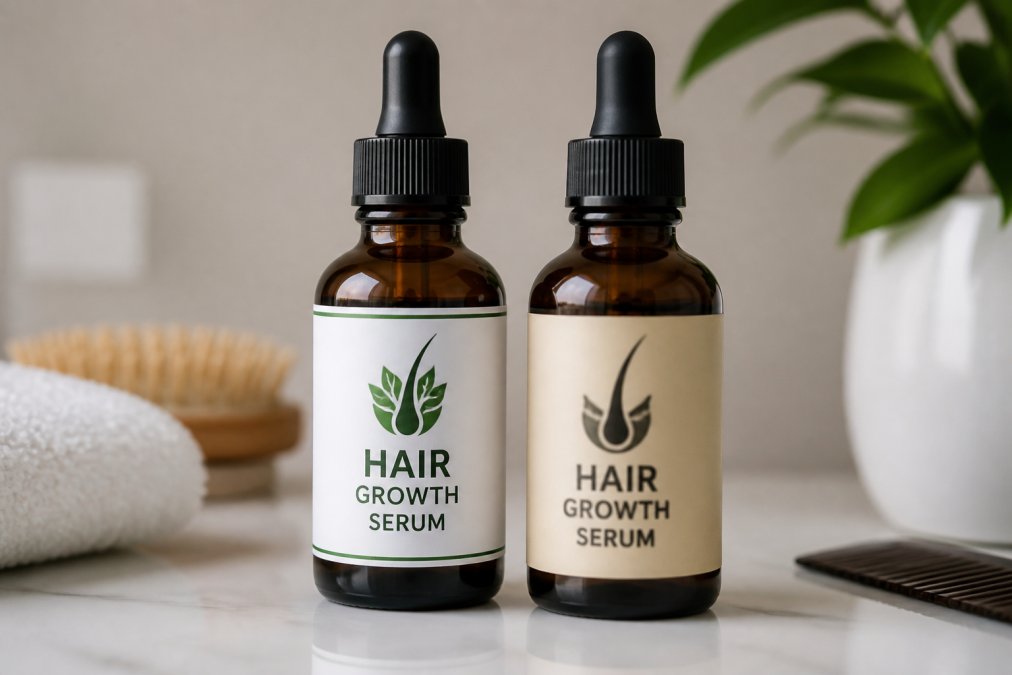
Counterfeit Detection Guide: Red Flags on Packaging and Labels
The most reliable counterfeit indicators are physical. Examine the packaging before opening:
- Lot numbers and expiration dates: Legitimate products have clearly printed, consistent lot numbers. Counterfeits often use smudged, inconsistent, or duplicated lot numbers.
- Seal integrity: Prescription topical treatments should have tamper-evident seals. A broken or absent seal is an immediate disqualifier.
- Label alignment: Professional packaging has precisely aligned labels. Slight skewing, uneven margins, or misaligned text are production quality failures common in counterfeits.
- Spelling and grammar: Counterfeit products frequently contain subtle spelling errors in ingredient lists or instructions.
- Active ingredient concentration: Cross-reference the stated concentration against what FDA-approved versions contain. An unusual concentration should raise questions.
- Manufacturer contact information: Legitimate products include a verifiable manufacturer address and contact number. Vague or missing details are a red flag.
Risks of Buying from Third-Party Marketplaces
Third-party marketplaces present the highest counterfeit risk in the online hair growth treatment category. A well-known platform may list a product under a major brand name, but the seller fulfilling that order may have no relationship with the original manufacturer. This means the product's storage conditions, authenticity, and expiration status are unverifiable.
The specific risks include receiving expired product, receiving a counterfeit formulation, or receiving a product that was stored improperly. The FDA has issued multiple safety alerts related to counterfeit medications sold through online channels. According to FDA consumer advice on buying medicines online, consumers should only purchase prescription medications from licensed pharmacies.
Verification Checklist: How to Identify a Legitimate Online Pharmacy
Identifying a legitimate online pharmacy is the single most important step in making hair growth treatments online purchases safe. The verification process takes less than ten minutes and eliminates the majority of risk.
Use this checklist before completing any purchase:
- The pharmacy displays a valid NABP (National Association of Boards of Pharmacy) VIPPS seal, verifiable at nabp.pharmacy
- The pharmacy requires a valid prescription for prescription medications
- A licensed pharmacist is available by phone or live chat to answer questions
- The pharmacy's physical address is listed and verifiable
- The state license number is displayed and can be confirmed through your state's pharmacy board
- The website uses HTTPS (secure connection) for all transactions
- No unsolicited emails offering discounted prescription medications led you to the site
- The pharmacy does not offer "lifestyle" prescriptions without a documented patient-provider relationship
- Pricing is consistent with market rates; dramatically discounted prescription medications signal counterfeits
- The pharmacy provides a package insert and dosage instructions with every prescription order
The NABP maintains a list of "Not Recommended" online pharmacies that fail basic safety standards. Checking that list before purchasing takes thirty seconds and has prevented countless unsafe purchases. As noted by National Association of Boards of Pharmacy's internet drug outlet report, a significant portion of online pharmacies operating globally do not meet U.S. safety standards.
When to See a Dermatologist Instead of Shopping Online
Some hair loss patterns require a medical diagnosis before treatment, and buying hair growth treatments online without that diagnosis is a genuine safety risk. A dermatologist can distinguish between androgenetic alopecia, alopecia areata, telogen effluvium, and other conditions that look similar but respond to completely different treatments.
Specific situations that warrant a dermatologist visit before purchasing any treatment:
- Sudden or patchy hair loss rather than gradual thinning
- Hair loss accompanied by scalp pain, itching, or visible inflammation
- Hair thinning that began after a medication change, illness, or significant stress event
- No family history of hair loss, which makes androgenetic alopecia less likely
- Previous treatments that produced no results or worsened the condition
- Hair loss in women, where hormonal causes are more varied and require blood work to assess
A medical consultation also provides one thing no online platform can fully replicate: a documented health history that informs prescribing decisions. Finasteride is contraindicated in women of childbearing age due to birth defect risk. Minoxidil interacts with certain cardiovascular medications. These are not edge cases, they're the reason a qualified provider's involvement matters.
Navigating the online hair growth treatment market safely is genuinely manageable, but it requires active verification rather than passive trust in platform ratings. Hutch's Beauty Boutique offers a curated selection of beauty and personal care essentials, giving you access to products across health and wellness categories through a single, easy-to-navigate online catalog. If you're exploring hair care and wellness products, search the Hutch's Beauty Boutique catalog to find quality items suited to your personal care routine.
Frequently Asked Questions
What are the risks of buying hair growth products online?
Buying hair growth treatments online carries several risks: counterfeit products with incorrect or harmful active ingredients, unregulated compounded medications without proper dosage instructions, and purchases from third-party marketplaces that lack regulatory oversight. Products may also arrive without adequate safety warnings. To reduce risk, always verify that an online pharmacy is NABP-accredited, look for FDA-approved formulations like minoxidil or finasteride, and avoid deals that seem too good to be true.
Which hair growth treatments are FDA-approved and available online?
The most well-known FDA-approved hair growth treatments available online are minoxidil, sold over the counter in topical form, and finasteride, a prescription oral medication. Both have established clinical trial evidence supporting their effectiveness for certain hair loss patterns. When buying hair growth treatments online, always confirm the product lists its active ingredients clearly and comes from a licensed pharmacy or telehealth provider that requires a proper medical consultation before dispensing.
Are online prescriptions for hair loss safe to use?
Telehealth hair loss prescriptions can be safe when obtained through a licensed U.S. medical provider who conducts a proper intake process, including screening questions about your health history. The key is ensuring the platform employs board-certified dermatologists or physicians and dispenses only from licensed pharmacies. Be cautious of platforms that skip medical consultation entirely. Side effects of online finasteride, for example, can include sexual dysfunction and, critically, birth defects if handled by pregnant women, making proper medical guidance essential.
How do I spot a fake hair growth product online?
To spot counterfeit hair growth products, check for packaging issues like blurry text, misspellings, or misaligned labels. Verify the product's NDC number on the FDA's website, look for a lot number and expiration date, and cross-check the seller's credentials. Avoid third-party marketplace listings from unknown sellers, especially those priced significantly below retail. Legitimate products will always include clear dosage instructions, a list of active ingredients, and manufacturer contact information on the packaging.
What ingredients should I look for or avoid in online hair growth treatments?
Look for evidence-based active ingredients like minoxidil for topical treatments or finasteride for prescription oral use, both have clinical trial backing. Be cautious of products making exaggerated hair regrowth claims without listing specific active ingredients or concentrations. Avoid any treatment that does not disclose its full ingredient list, as unknown compounds may cause skin irritation, allergic reactions, or interact with other medications. A dermatologist can help you evaluate whether a product's safety profile is appropriate for your specific hair thinning pattern.
What is the compounded drug loophole, and why does it matter when buying online?
Compounded medications are custom-mixed drugs prepared by a compounding pharmacy, often combining ingredients like finasteride and minoxidil in a single formula. They are not FDA-approved as finished products, meaning they haven't gone through the same regulatory review process. While compounding is legal under U.S. law and can be prescribed by licensed providers, quality and potency can vary between pharmacies. When buying hair growth treatments online that involve compounded medications, always confirm the pharmacy is PCAB-accredited or listed with your state board of pharmacy.
This article was written using GrandRanker


