Table of Contents
- What Is DHT and How Does It Cause Hair Loss?
- How Natural DHT Blockers Work
- Top Natural Ingredients That Block DHT
- Foods That Block DHT Naturally
- Rosemary Oil for Hair Growth: Evidence and Application
- How to Reduce DHT Levels Naturally Beyond Supplements
- Natural vs. Pharmaceutical DHT Blockers: What You Should Know
- Realistic Timeline and Effectiveness of Natural DHT Blockers
- Frequently Asked Questions
Last Updated: September 24, 2026
What Is DHT and How Does It Cause Hair Loss?
DHT (dihydrotestosterone) is a hormone derived from testosterone that causes androgenetic alopecia (male and female pattern baldness). When DHT attaches to androgen receptors in hair follicles, it triggers miniaturization, follicles shrink, producing thinner, shorter hairs until they stop growing.
Genetics determine DHT sensitivity. If you inherited sensitivity, your follicles shrink in response to DHT regardless of your overall testosterone levels, which is why some men with normal testosterone experience significant hair loss while others with higher levels don't.
DHT shortens the anagen (growth) phase of the hair cycle, pushing follicles into the telogen (shedding) phase prematurely. Hair that would normally grow for years instead grows for months, resulting in thinner hair and increased shedding.
This explains why natural DHT blockers work: they target 5-alpha reductase, the enzyme that converts testosterone into DHT, rather than reducing testosterone itself.
How Natural DHT Blockers Work
Natural DHT blockers inhibit 5-alpha reductase, reducing DHT production locally in the scalp and preserving the anagen phase, allowing follicles to produce thicker, longer hair.
Natural DHT blockers target the scalp and follicle tissue specifically rather than shutting down DHT production throughout the body, which is why many prefer them despite potentially slower results.
Bioavailability: The Hidden Challenge
Bioavailability, how much of an active compound reaches hair follicles, is natural approaches' biggest challenge. Saw palmetto's active compounds have oral bioavailability rates of only 10-20%, meaning most of an oral dose never reaches follicle tissue in meaningful quantities.
Topical application bypasses this limitation, active compounds penetrate follicle tissue without systemic absorption, delivering faster results than oral supplements alone, though they require consistent local application.
Synergistic Combinations: Greater Than the Sum of Parts
Effectiveness depends on potency, concentration, and consistency. A fourth factor, synergy, is often overlooked: combining ingredients that work through different mechanisms produces stronger results than higher doses of a single ingredient.
Oral saw palmetto combined with topical rosemary oil produces better outcomes than doubling either treatment alone. Green tea extract paired with pumpkin seed oil addresses multiple pathways driving miniaturization simultaneously.
Weak, sporadic doses produce minimal results. Properly dosed, consistent treatment, especially combining oral and topical approaches, produces meaningful improvements within 3-6 months, though responses vary based on genetic DHT sensitivity and baseline follicle health.
Top Natural Ingredients That Block DHT
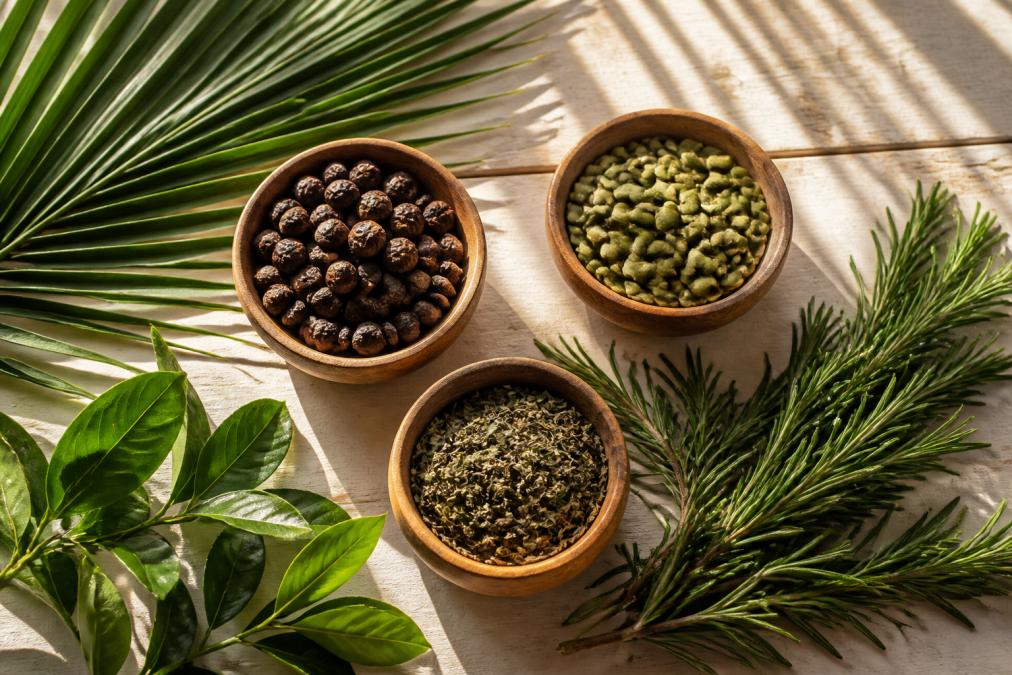
Saw Palmetto
Saw palmetto is the most researched natural DHT inhibitor. Its active compounds inhibit 5-alpha reductase in prostate and scalp tissue, though most studies have focused on prostate health.
Typical doses range from 160-320 mg daily, though studies show mixed results due to variation in extract quality and individual response rates. There's no reliable way to predict who will respond without trying it.
Many people combine oral and topical saw palmetto for maximum effect.
Pumpkin Seed Oil
Pumpkin seed oil contains delta-7 sterol and other compounds that inhibit 5-alpha reductase while reducing scalp inflammation, which contributes to miniaturization independently of DHT.
Typical supplementation is 400-500 mg daily. Pumpkin seed oil has minimal side effects and supports scalp health through antioxidant and anti-inflammatory properties, with results emerging over 3-4 months.
Topical application combines DHT inhibition with improved scalp circulation.
Green Tea Extract and EGCG
Green tea contains EGCG, a potent antioxidant that inhibits 5-alpha reductase and reduces scalp inflammation, addressing two drivers of androgenetic alopecia.
Multiple studies show topical green tea extract produces measurable improvements in hair count and thickness over 6 months. Oral supplementation (typically 300-400 mg EGCG daily) shows promise, though topical application is more effective.
Rosemary Oil
Rosemary oil deserves its own section because the evidence supporting it is particularly compelling and the mechanism is distinct from other natural DHT blockers.
Foods That Block DHT Naturally
Pumpkin seeds contain high concentrations of delta-7 sterol and are one of the few foods where DHT-blocking compounds appear in meaningful quantities.
Green tea (2-3 cups daily) provides EGCG, though supplements deliver higher therapeutic levels. Tomatoes contain lycopene, and fatty fish provide omega-3s that support scalp circulation and reduce inflammation.
Zinc-rich foods (oysters, beef, pumpkin seeds) support hair growth; deficiency impairs growth and increases DHT sensitivity. Biotin-rich foods (eggs, almonds) support keratin production.
Diet works best as a supporting strategy alongside targeted supplementation or topical treatments.
Rosemary Oil for Hair Growth: Evidence and Application
Rosemary oil addresses hair loss through multiple pathways: it inhibits 5-alpha reductase, improves scalp circulation, reduces inflammation, and provides antimicrobial benefits.
A study comparing rosemary oil to minoxidil found comparable results after 6 months (pubmed.ncbi.nlm.nih.gov). The advantage of rosemary oil is the absence of systemic effects.
Dilute rosemary essential oil in a carrier oil at 5-10 drops per tablespoon. Massage into the scalp daily or several times weekly. Consistency matters more than frequency.
Most people notice reduced shedding within 4-6 weeks and visible improvements in hair thickness within 3 months, with full results after 6 months of consistent use.
How to Reduce DHT Levels Naturally Beyond Supplements
Stress management is foundational, chronic stress elevates cortisol, which triggers DHT production and impairs hair growth. Regular exercise and meditation support hair retention.
Sleep quality matters significantly. Poor sleep increases DHT levels and impairs hair growth. Target 7-9 hours nightly for optimal hormone regulation.
Diet composition influences DHT through multiple mechanisms. High-glycemic foods and excessive sugar consumption increase insulin levels, which stimulate androgen production. Diets emphasizing whole foods, adequate protein, and healthy fats create a hormonal environment less favorable to DHT-driven hair loss. Reducing alcohol consumption also helps, alcohol impairs nutrient absorption and increases DHT sensitivity.
Scalp health practices support natural DHT reduction indirectly. Regular scalp massage increases blood flow to hair follicles, improving nutrient delivery and oxygen supply. A healthy scalp microbiome, maintained through gentle cleansing and avoiding harsh chemicals, reduces inflammation that compounds DHT-driven miniaturization.
Natural vs. Pharmaceutical DHT Blockers: What You Should Know
Natural DHT blockers and pharmaceutical options like finasteride operate through similar mechanisms but differ significantly in potency, speed, and side effect profiles. Finasteride inhibits 5-alpha reductase more completely and more rapidly than natural alternatives, producing measurable improvements within 3-4 months for many users.
The trade-off is that finasteride works systemically, reducing DHT throughout your body. This comprehensive approach produces faster results but also carries risks of sexual dysfunction and other hormonal effects in a meaningful percentage of users.
Realistic Timeline and Effectiveness of Natural DHT Blockers
Most natural DHT blockers require 3-6 months of consistent use before producing visible results. This timeline reflects the hair growth cycle: you need to complete multiple anagen phases with reduced DHT exposure before seeing thicker, longer hair. Impatience is the primary reason people abandon natural approaches prematurely.
Month-by-Month Expectations
Weeks 1-4: Most users notice no visible change. This is normal. The hair currently shedding was already in the telogen phase before treatment began. You're preventing future shedding, not immediately stopping current loss. Some people report reduced scalp itching or improved scalp health, which are early signs the treatment is working.
Measuring Progress Objectively
Don't rely on subjective observation alone. Track progress using:
- Hair count in shower drain: Count hairs lost daily for one week at baseline, then repeat monthly. A 20-30% reduction indicates the treatment is working.
- Part width: Photograph your part line monthly under consistent lighting. Measure the width of visible scalp. Narrowing indicates new growth.
- Hair density cards: Some practitioners use standardized density comparison cards. Take monthly photos against the same card under identical lighting.
- Shedding rate: Pluck 50 hairs gently from your scalp and count how many are in the telogen (shedding) phase. A healthy scalp has 10-15% telogen hairs; DHT-sensitive scalps often have 20-30%. Improvement shows as a declining percentage.
Important Medication and Supplement Interactions
Blood thinners (warfarin, apixaban, dabigatran): Saw palmetto and green tea extract both have mild anticoagulant properties. Combined with prescription blood thinners, they may increase bleeding risk. Consult your physician before combining these treatments.
Realistic Expectations on Regrowth
Natural DHT blockers rarely restore hair to pre-loss density. They excel at halting further loss and potentially regrowing some hair in early-stage androgenetic alopecia. If you're experiencing significant thinning across the crown or temples, natural approaches alone may not produce satisfactory results, though they can serve as an adjunct to pharmaceutical treatments.
Frequently Asked Questions
Do natural DHT blockers actually work for hair loss?
Natural DHT blockers show modest promise in slowing hair loss, particularly saw palmetto and pumpkin seed oil. Clinical trials show mixed results, some demonstrate measurable reductions in DHT levels or slowed hair shedding, while others show minimal benefit. Natural DHT blockers are generally less potent than prescription medications like finasteride, but they carry fewer side effects. Results vary by individual and depend on consistent use over several months.
Does rosemary oil actually block DHT?
Rosemary oil shows promise in supporting scalp health and hair growth through improved circulation and anti-inflammatory properties, rather than directly blocking DHT conversion. One small study suggested rosemary oil performed similarly to minoxidil for hair regrowth, but the research is limited. It's best used as part of a broader approach to hair health rather than as a standalone DHT blocker.
What foods naturally reduce DHT levels?
Foods rich in zinc, omega-3 fatty acids, and polyphenols may support lower DHT levels. These include pumpkin seeds, fatty fish, green tea, tomatoes, and nuts. While no food directly blocks DHT conversion like pharmaceutical inhibitors do, a nutrient-dense diet supports overall scalp health and hormonal balance. Consistency matters more than individual foods, focus on general dietary patterns rather than expecting dramatic results from specific items.
Are there side effects to natural DHT blockers?
Natural DHT blockers are generally well-tolerated with minimal side effects compared to prescription options. Saw palmetto may cause mild digestive upset or headache in some users. Topical rosemary oil rarely causes issues but can irritate sensitive scalp skin. High-dose supplements may interact with certain medications. Start with lower doses, patch-test topicals, and consult a healthcare provider if you take blood thinners or have hormone-sensitive conditions.
Natural DHT blockers address one of the most common concerns our customers bring to us: hair loss without the side effects of pharmaceutical interventions. If you're exploring topical treatments like rosemary oil or supplements like saw palmetto and pumpkin seed oil, Hutch's Beauty Boutique carries a curated selection of quality products designed for hair growth and scalp health. Browse our collection of natural hair care solutions and find the combination that works for your specific needs.


