Table of Contents
- Our Verdict: What Actually Works for Hair Regrowth
- How Hair Growth Treatments Work and Why Many Fail
- FDA-Approved Hair Loss Treatments: The Gold Standard
- How Long Does Hair Regrowth Take? Realistic Timelines
- Natural Hair Growth Remedies: What the Science Says
- Cost vs. Benefit: Comparing Regrowth Treatments
- Managing Expectations: The Mental Health Side of Hair Loss
- Final Thoughts: Building Your Hair Growth Plan
- Frequently Asked Questions
Last Updated: September 4, 2026
The hair loss industry is built on insecurity, and most of its products simply don't work. This guide from Hutch's Beauty Boutique cuts through the marketing noise to answer directly: are hair growth treatments effective, and which ones deserve your money and time?
Here is the short answer: the only treatments with decades of clinical evidence behind them are FDA-approved medical options like minoxidil and finasteride, alongside proven procedures such as PRP therapy and hair transplantation. Everything else ranges from mildly supportive to completely useless.
Our Verdict: What Actually Works for Hair Regrowth
The most effective approach to hair regrowth combines FDA-approved medical treatments with consistent application over a period of six to twelve months. Minoxidil and finasteride remain the gold standard because they target the two primary mechanisms of androgenetic alopecia: follicle stimulation and hormonal blockade.
For those seeking professional intervention, PRP therapy and GFC therapy offer minimally invasive options that use your body's own growth factors to stimulate dormant follicles. Surgical options like FUE hair transplants provide the most dramatic and permanent results, but they require a significant financial investment and are best reserved for advanced cases.
| Treatment | Mechanism | Success Rate | Time to Results |
|---|---|---|---|
| Minoxidil | Follicle stimulation | Works for roughly 2 out of 3 men | 3-6 months |
| Finasteride | Hormonal blockade | Slows or stops loss in nearly 90% of men | 3-6 months |
| PRP Therapy | Growth factor injections | Variable, requires multiple sessions | 3-6 months |
| FUE Transplant | Surgical relocation | Permanent restoration | 6-12 months |
How Hair Growth Treatments Work and Why Many Fail
Hair growth treatments fail for a simple reason: most never reach the dermal papilla, the structure at the follicle base that regulates the hair cycle. When follicles shrink due to hormonal imbalances or scalp inflammation, they enter the telogen phase and stop producing visible hair.
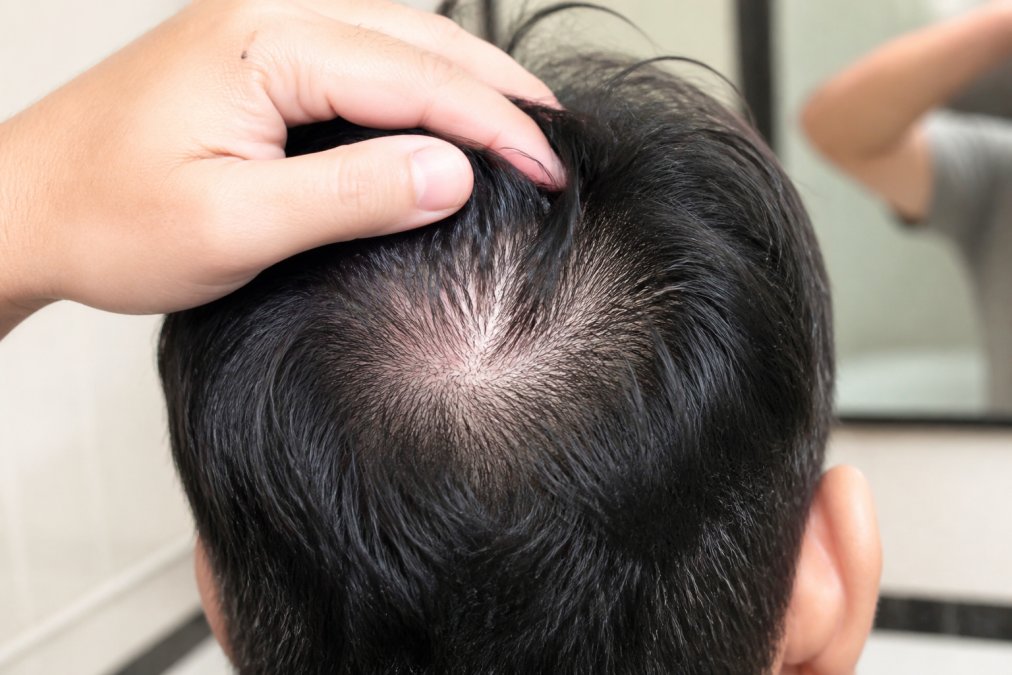
The therapeutic intervention must either stimulate blood flow and cellular activity in the follicle or block the hormonal signal causing the shrinkage. Topical minoxidil works through vasodilation; finasteride works systemically by preventing testosterone from converting to DHT.
The hair cycle operates on a three-month delay, so any treatment started today will not produce visible changes until the current telogen phase completes. Many people abandon treatments after six weeks, convinced they do not work, when they simply have not waited long enough.
But there is a deeper reason most products fail: they target the wrong layer. The dermal papilla sits roughly 1.5 to 2.5 millimeters deep, and a topical serum must penetrate the stratum corneum, epidermis, and dermis to reach it, a barrier most cosmetic ingredients cannot cross (peer-reviewed research). This is why minoxidil uses propylene glycol and ethanol: these solvents temporarily disrupt the skin barrier to deliver the drug. A peptide serum or botanical oil without such enhancers simply sits on the surface.
Another common failure point is the mechanism itself. Many over-the-counter products claim to "nourish" hair but do not address the two proven drivers of androgenetic alopecia: follicular miniaturization from DHT binding and reduced blood flow. Products lacking a DHT-blocking agent or vasodilator cannot interrupt the biological cascade of hereditary hair loss.
There is also the issue of concentration. A product may contain a clinically studied ingredient at a dose far below the effective level. Caffeine is a well-known example: the effective concentration in research is around 0.2%, and many commercial shampoos contain far less, or rinse off too quickly. Similarly, red light therapy devices must deliver a specific wavelength (typically 650 nanometers) and energy density; cheap consumer devices often fall short of FDA-cleared clinical trial parameters.
Finally, failure is often one of adherence, not efficacy. Minoxidil requires twice-daily application, finasteride a daily pill, and low-level laser therapy sessions three to four times per week. A common pattern is that users apply treatment for a few weeks, see no change, and stop, unaware that results cannot appear before three months. The treatment did not fail; the protocol was abandoned before the biology could respond.
FDA-Approved Hair Loss Treatments: The Gold Standard
FDA-approved hair loss treatments are the only options with rigorous clinical trials proving their regrowth efficacy and safety profile. The FDA's review process requires manufacturers to demonstrate measurable improvements in hair density and hair shaft thickness compared to a placebo, a standard no supplement or cosmetic serum can meet.
Minoxidil (Rogaine): Topical Stimulation
Minoxidil is an FDA-approved topical treatment available in 2% or 5% concentrations, designed to stimulate hair follicles and promote regrowth in individuals with hereditary hair loss. Clinical evidence shows it works for approximately 2 out of 3 men, making it the most accessible proven option on the market (PubMed).
The catch is maintenance therapy. Minoxidil only works while you use it. Stop applying it twice daily, and the follicles revert to their previous state within three to six months. This commitment is the single biggest barrier to success, and it is why dermatologists emphasize treatment adherence over product selection.
Finasteride (Propecia): Hormonal Blockade
Finasteride is a prescription oral medication that blocks the conversion of testosterone to DHT, reported to slow or stop hair loss in nearly 90% of men (the FDA). It addresses the hormonal root cause of male pattern baldness rather than merely stimulating the follicle.
Because finasteride works systemically, it requires a doctor's prescription and medical supervision. The medication is highly effective for men experiencing androgenetic alopecia, but it is not appropriate for women who are pregnant or planning to conceive. A dermatological assessment is essential before starting finasteride to confirm your hair loss pattern and rule out other causes like alopecia areata or nutrient deficiencies.
How Long Does Hair Regrowth Take? Realistic Timelines
Hair regrowth takes between three and six months before visible changes appear, with full results typically visible after one to two years of consistent treatment. This timeline reflects the biology of the hair cycle, not the effectiveness of any particular product.
For minoxidil users, the first sign of success is often increased shedding around weeks two to six, as telogen-phase hairs are pushed out to make room for new growth. This paradoxical shedding phase causes many people to quit, but it is actually a positive indicator that the treatment is working.
| Treatment | First Signs | Visible Regrowth | Full Results |
|---|---|---|---|
| Minoxidil | 2-6 weeks (shedding) | 3-4 months | 12-18 months |
| Finasteride | 3-6 months | 6-12 months | 24 months |
| PRP Therapy | After 2-3 sessions | 6-9 months | 12-18 months |
| Hair Transplant | 3-4 months (shedding) | 6-9 months | 12-18 months |
Natural Hair Growth Remedies: What the Science Says
Natural hair growth remedies work best for addressing nutrient deficiencies and stress-related shedding, but they cannot regrow hair lost to androgenetic alopecia. The scientific evidence for supplements like biotin is thin, and the FDA does not regulate supplements for efficacy the way it regulates medications.
Nutrafol takes a different approach, using physician-formulated botanical ingredients to target stress-related hair shedding and support hair volume and thickness. It addresses internal factors like stress and nutrition that can push healthy follicles into the telogen phase prematurely. For individuals with diffuse thinning rather than pattern baldness, this type of systemic approach may be worth trying.
Caffeine-based topicals and red light therapy devices offer additional non-chemical options. Low-level laser therapy uses specific wavelengths to stimulate scalp circulation and cellular energy, and the devices have received FDA clearance for treating hereditary hair loss. The evidence base is less strong than for minoxidil or finasteride, but the risk profile is minimal.
Cost vs. Benefit: Comparing Regrowth Treatments
The cost of hair growth treatments ranges dramatically, from roughly $20 per month for generic minoxidil to several thousand dollars for surgical restoration. Understanding the cost-benefit ratio of long-term maintenance is essential before committing to any option.
| Treatment | Starting Cost | Commitment | Best For |
|---|---|---|---|
| Minoxidil | Around $25/month | Daily, indefinite | Early-to-moderate thinning |
| Finasteride | Around $30/month | Daily, indefinite | Male pattern hair loss |
| Nutrafol | Around $79/month | Daily, indefinite | Stress-related shedding |
| PRP Therapy | Around $500/session | Multiple sessions, annual touch-ups | Those avoiding daily medication |
| FUE Transplant | Around $5,000+ | One-time procedure | Advanced baldness, permanent results |
The financial reality is that hair loss is a chronic condition, not a one-time problem. Medications require indefinite use, and stopping reverses the gains. Procedures offer longer intervals but require significant upfront investment.
What almost no guide tells you is the cumulative cost of that indefinite commitment, the single most under-discussed barrier to success. Generic minoxidil at $25 per month adds up to $300 per year, or $3,000 over a decade for a treatment that only maintains your baseline. Finasteride at $30 per month totals $3,600 over ten years. Stack both, as many dermatologists recommend for men, and you are looking at roughly $6,600 per decade just to hold the line.
PRP therapy is even more front-loaded. At $500 per session, a typical initial protocol of three sessions costs $1,500, with most practitioners recommending annual maintenance of one to two treatments. Over five years, that is $4,000 to $5,500, with no guarantee of regrowth, only the possibility of stabilization.
Surgical restoration is the only option with a finite cost. A single FUE transplant at $5,000 to $15,000 is expensive upfront but one-time. The transplanted follicles are genetically resistant to DHT and will not miniaturize, making the result permanent. However, native hair around the transplant may continue to thin, which is why most surgeons recommend combining a transplant with ongoing medical therapy.
There is also the question of insurance coverage. Minoxidil and finasteride are often covered partially or fully when prescribed for a diagnosed condition like androgenetic alopecia, especially through mail-order pharmacies or HSA/FSA accounts. Nutrafol and other supplements are almost never covered, and PRP is typically classified as cosmetic. Hair transplant surgery is universally considered elective and cosmetic by insurers.
Finally, factor in the cost of doing nothing. Hair loss is progressive. Delaying treatment by two years means follicles that were merely miniaturized may have entered dormancy permanently, making regrowth harder and more expensive later. The cheapest treatment is the one that starts early, before the follicle is lost entirely.
Managing Expectations: The Mental Health Side of Hair Loss
The psychological impact of hair loss often outweighs the physical change and shapes how people evaluate treatment success. Hair loss is linked to reduced self-esteem, social withdrawal, and in some cases, depression.
Setting realistic expectations is critical for protecting your mental health. Most treatments slow further loss rather than restore a full head of hair. The goal is to maintain what you have and improve density modestly, not to reverse decades of miniaturization.
:::takeaway Hair loss is a medical condition, not a character flaw. The most effective treatment plan combines evidence-based therapy with a dermatologist who understands the emotional weight of the condition. You are not vain for caring about your hair, and you are not alone in struggling with the process.
Final Thoughts: Building Your Hair Growth Plan
Building an effective hair growth plan starts with a dermatological assessment to diagnose your specific type of hair loss, then pairs the appropriate FDA-approved treatment with realistic expectations about timelines and costs. The evidence is clear that minoxidil, finasteride, and surgical options work, while most supplements and cosmetic products do not.
At Hutch's Beauty Boutique, we stock a curated selection of hair care products designed to support scalp health and hair density, from thickening serums to styling tools that minimize breakage. Our catalog brings together beauty, health, and lifestyle essentials in one convenient place, so you can find quality items that fit your personal care routine without hunting across multiple retailers.
Get started with Hutch's Beauty Boutique and explore our range of hair care essentials designed for your daily self-care routine.
Frequently Asked Questions
Are over-the-counter hair growth treatments scientifically proven?
Yes, but only a few. Minoxidil, sold as Rogaine, is the main FDA-approved over-the-counter option. Clinical trials show it works for about 2 out of 3 men, though results vary. Most other OTC products, serums, and shampoos lack rigorous clinical evidence. Look for the FDA-approved label or ingredients tested in peer-reviewed studies. Products that claim to block DHT or regrow hair on a full head of bald scalp usually overpromise.
How long does it take to see results from hair growth treatments?
Hair grows slowly, so patience is critical. With consistent daily use of minoxidil or finasteride, most people notice reduced shedding within 2 to 3 months. Visible regrowth and improved hair density typically appear after 4 to 6 months of consistent use. Maximum results usually show at the 12-month mark. If you see no change after a year of proper use, talk to a dermatologist about alternative options like PRP therapy or low-level laser devices.
What is the difference between FDA-approved treatments and supplements?
FDA-approved treatments like minoxidil and finasteride have undergone clinical trials proving they work for hair loss. They treat the root causes: follicle shrinkage and hormonal DHT. Supplements like Nutrafol address nutrient deficiencies and stress-related shedding but do not stop male pattern baldness. They can support hair health but rarely regrow hair on a balding crown. For hereditary hair loss, stick with proven medical treatments first and add supplements only as a complement.
Can natural remedies actually stimulate hair regrowth?
Some natural approaches show modest promise, but none match the clinical evidence of FDA-approved medications. Caffeine-based topicals have small studies suggesting they can stimulate follicles. Red light therapy devices are FDA-cleared and show benefits for some users. Microneedling with a dermaroller enhances the absorption of topical treatments. The science on supplements like biotin is weak unless you have a confirmed deficiency. Natural remedies work best alongside proven treatments, not as replacements.
When should you see a dermatologist for hair thinning?
See a dermatologist as soon as you notice persistent thinning or shedding. Early intervention preserves more follicles. Sudden patchy hair loss, scalp redness, or itching warrant immediate medical evaluation. A dermatologist can diagnose the specific type of hair loss, which matters because androgenetic alopecia, telogen effluvium, and alopecia areata require different treatments. They can also prescribe finasteride or perform in-office procedures like PRP therapy for a personalized plan.
This article was written using GrandRanker


