Table of Contents
- Best Hair Growth Treatments for Men: What Works
- Minoxidil for Men: Topical Solution That Stimulates Regrowth
- Finasteride for Men: The DHT Blocker That Prevents Loss
- Low-Level Laser Therapy Hair Growth: Non-Invasive Device Options
- Natural Hair Growth Remedies for Men: Supplements and Scalp Care
- Combination Therapy Protocols: Why Stacking Treatments Works
- Budget-Friendly vs. Premium Hair Growth Regimens
- The Psychological Impact of Hair Loss and Treatment Expectations
Best Hair Growth Treatments for Men: 2026 Guide
Last Updated: July 27, 2026
Male pattern baldness affects millions of men in the United States. According to dermatological research, androgenetic alopecia remains the most common form of hair loss, accounting for the majority of cases by age 50. At Hutch's Beauty Boutique, we've compiled this comprehensive guide to help you navigate hair loss solutions, from FDA-approved medications to emerging therapies, so you can make an informed decision based on your specific situation, budget, and timeline.
The challenge isn't finding options, it's finding the right one for YOU. Some treatments work best in combination. Others require months of patience before results appear. Below, we'll show you exactly how to evaluate each approach and identify which best hair growth treatments for men align with your goals.
Quick Comparison Table
| Treatment Type | Starting Price | Timeline to Results | Best For | Prescription Required |
|---|---|---|---|---|
| Minoxidil (Rogaine/Keeps) | $11-35/month | 3-4 months | Crown thinning, early-stage loss | No |
| Finasteride (Propecia/Keeps) | $25/month | 3-6 months | Receding hairline, DHT-driven loss | Yes |
| Low-Level Laser Therapy | $499-$1,699 | 3-6 months | Hands-free, non-invasive approach | No |
| Hair Growth Supplements | $40-$79/month | 3-6 months | Drug-free, nutritional support | No |
| Hair Transplant Surgery | $4,000-$15,000+ | 6-12 months | Permanent solution, advanced loss | No |
How We Evaluated These Treatments
Our evaluation focused on three core criteria: clinical evidence from peer-reviewed research, real-world timeline expectations, and honest trade-offs. We prioritized treatments backed by FDA approval or clinical studies over anecdotal testimonials and emphasized combination protocols, since most men don't see optimal results from a single treatment alone.
Minoxidil for Men: Topical Solution That Stimulates Regrowth
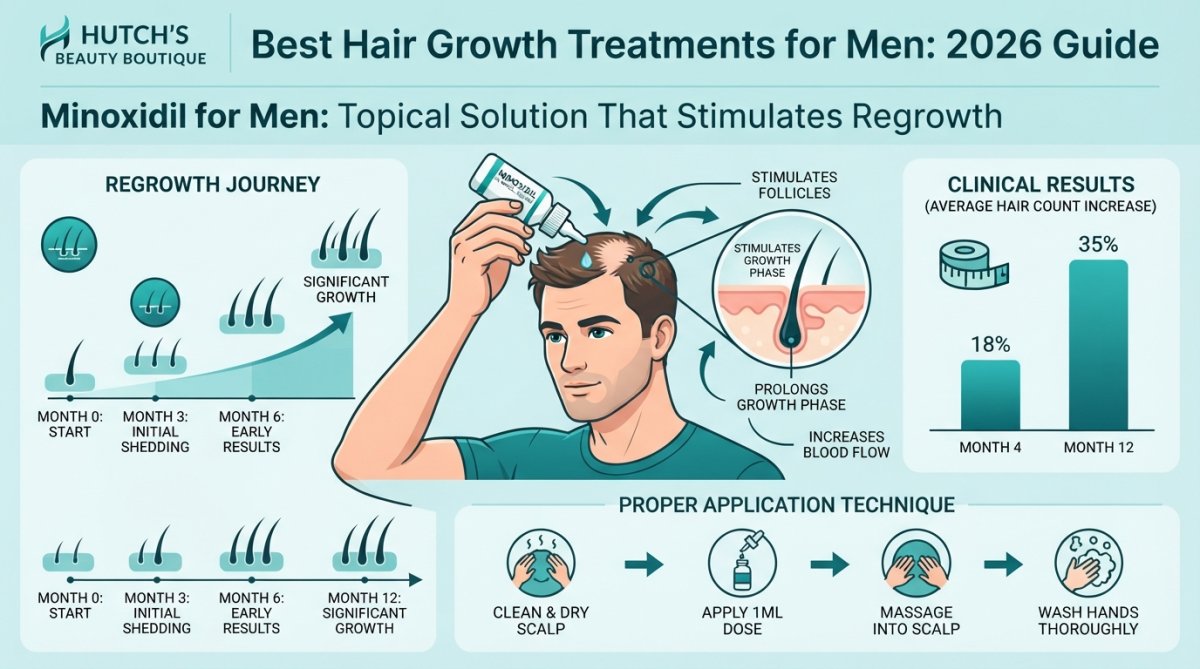
Minoxidil is an over-the-counter topical treatment that directly stimulates hair follicles and extends the growth phase of the hair cycle. It's one of only two FDA-approved medications for male pattern baldness and is widely available under brand names like Rogaine or through subscription services like Keeps.
How Minoxidil Works on Hair Follicles
Minoxidil functions as a vasodilator, widening blood vessels and increasing blood flow to the scalp. This enhanced circulation delivers more oxygen and nutrients to hair follicles, pushing them from the telogen (resting) phase into the anagen (growth) phase. The mechanism isn't fully understood, but research shows minoxidil works best on the crown and vertex areas and is less effective for receding hairlines compared to finasteride.
Application, Results Timeline, and Pros/Cons
Apply minoxidil twice daily directly to the scalp. The foam formulation is easier to apply than liquid solution. Most men see initial results between 3-4 months, though some experience temporary shedding in the first month as weaker hairs fall out.
Pros:
- No prescription needed; available over-the-counter
- Works well for crown and vertex thinning
- Can be combined with finasteride for enhanced results
- Relatively affordable at $11-35 per month
Cons:
- Requires twice-daily application indefinitely
- Less effective for receding hairlines
- May cause initial shedding that discourages users
- Results plateau after 12-18 months
Finasteride for Men: The DHT Blocker That Prevents Loss
Finasteride is a prescription oral medication that addresses the root hormonal cause of male pattern baldness by blocking the enzyme that converts testosterone into dihydrotestosterone (DHT), the hormone responsible for shrinking hair follicles in genetically predisposed men. Unlike minoxidil, which stimulates regrowth, finasteride primarily prevents further hair loss, though many men experience some regrowth after extended use.
How Finasteride Reduces DHT and Stops Hair Thinning
Finasteride reduces DHT levels by up to 70%, allowing follicles to remain in the growth phase longer. This halts the progression of hair thinning and can reverse early-stage loss. Results typically take 3-6 months because hair grows in cycles.
Prescription Requirements, Timeline, and Side Effects
Finasteride requires a prescription through a dermatologist or online telehealth services like Keeps or Hims. The standard dose is 1 mg daily, and you must maintain consistent use indefinitely. Stopping finasteride causes DHT levels to rebound within weeks, and hair loss typically resumes.
The most commonly reported side effect is sexual dysfunction, affecting approximately 1-2% of users. Other potential side effects include decreased libido and reduced ejaculate volume. These are reversible upon discontinuation. The medication is not suitable for women or men planning to father children in the near term.
Low-Level Laser Therapy Hair Growth: Non-Invasive Device Options
Low-level laser therapy (LLLT) uses medical-grade red and near-infrared light to stimulate hair follicles at the cellular level. FDA-cleared devices like Capillus and iRestore claim to increase hair density and reduce hair loss without medication or invasive procedures.
How Laser Caps Stimulate Hair Follicles
LLLT devices emit light wavelengths (typically 600-1000 nanometers) that penetrate the scalp and are absorbed by mitochondria in hair follicle cells. This stimulation increases ATP production, which theoretically promotes hair growth. Treatment is painless and requires only 6-20 minutes per day.
The evidence for LLLT is mixed. Some clinical studies show modest improvements in hair density and reduced shedding, but results are inconsistent across users and typically smaller than what minoxidil or finasteride deliver.
FDA-Cleared Devices and Cost-Benefit Analysis
The Capillus PRO (starting at $1,699) and iRestore Essential (starting at $499) are among the most popular FDA-cleared options. The cost-benefit calculation is important: you're paying $500-$1,700 upfront for a device that may deliver modest results over 6 months. Compare this to finasteride at $25/month or minoxidil at $11/month. LLLT makes sense if you want to avoid medications or if you're already using finasteride and minoxidil and want to add a third modality.
Natural Hair Growth Remedies for Men: Supplements and Scalp Care
Hair growth supplements offer a drug-free approach but deliver more modest results than prescription medications. Think of supplements as nutritional support for hair health rather than direct treatment for male pattern baldness.
Drug-Free Supplements: Biotin, Marine Complex, and Herbal Extracts
Popular hair growth supplements contain biotin, zinc, iron, and proprietary marine complexes. Nutrafol Men and Viviscal Men cost around $40-$79 per month. Biotin is a B-vitamin that supports keratin production, the primary protein in hair. While biotin deficiency can cause hair loss, supplementing biotin in people with adequate levels shows minimal benefit.
Results are inconsistent. Some men report thicker, fuller hair after 3-6 months. Others see no change, making it difficult to assess whether improvements come from the supplement or from placebo effect and natural variation in hair growth cycles.
Scalp Health and Ketoconazole Shampoo
A healthy scalp is foundational for hair growth. Ketoconazole shampoo (Nizoral) is an antifungal treatment that addresses dandruff and scalp inflammation, both of which can exacerbate hair loss. Using 1% ketoconazole shampoo 2-3 times per week improves scalp health and reduces shedding related to scalp conditions.
Combination Therapy Protocols: Why Stacking Treatments Works
The most effective hair loss regimens combine medications and therapies that address different mechanisms of hair loss. This "stacking" approach targets DHT suppression, follicle stimulation, and scalp health simultaneously.
Minoxidil + Finasteride: The Gold Standard Combination
The combination of minoxidil and finasteride is considered the gold standard for treating male pattern baldness. Finasteride blocks DHT production while minoxidil stimulates blood flow and extends the growth phase. Men using this combination see more significant regrowth and hair density improvement than those using either treatment alone. Costs run approximately $36-60 per month combined.
Adding Laser Therapy or Supplements to Your Regimen
Some men add LLLT devices or supplements to their finasteride + minoxidil regimen for incremental gains. This makes sense if you've plateaued after 12 months and want to push results further. The decision depends on your budget, patience, and satisfaction with current results.
Budget-Friendly vs. Premium Hair Growth Regimens
Hair loss treatments range from affordable over-the-counter options to expensive surgical procedures. Your budget doesn't have to limit your results.
Affordable Entry-Level Options Under $50/Month
Starting with minoxidil alone costs $11-35 per month. Generic finasteride through online pharmacies like Keeps costs around $25 per month. Combining generic finasteride ($25) with budget minoxidil ($11) brings your total to approximately $36 per month, significantly more effective than either treatment alone and still affordable for most men.
Premium Treatments and When They're Worth the Investment
Premium minoxidil formulations cost $30-35 per month and may include additives like azelaic acid or peptides. Premium supplements like Nutrafol Men cost $79 per month. Laser devices like Capillus PRO cost $1,699 upfront.
These premium options are worth considering if you've used budget treatments for 6+ months and plateaued, you have disposable income and want to maximize results, or you're specifically seeking to avoid side effects from finasteride. For most men starting treatment, begin with the affordable combination and assess results after 6 months.
The Psychological Impact of Hair Loss and Treatment Expectations
Hair loss affects more than your appearance, it impacts confidence, self-image, and mental health. The psychological benefit of treatment often precedes the physical results. Simply taking action and committing to a regimen can reduce anxiety and restore a sense of control.
Managing Expectations During the Maintenance Phase
Most men reach a plateau after 12-18 months of treatment. Your hair stabilizes at a thicker, fuller density, but continued improvement slows dramatically. This is the maintenance phase, where you're preventing further loss rather than regrowing hair. Stopping treatment causes DHT levels to rebound and hair loss to resume within weeks.
When to See a Dermatologist
Start with your primary care physician or a dermatologist if you're experiencing rapid hair loss, you have scalp inflammation or itching, you want to rule out underlying conditions like thyroid disease or nutritional deficiency, or you're considering prescription medications like finasteride.
A dermatologist can assess your specific type of hair loss and recommend a personalized treatment plan. For online consultation, services like Keeps and Hims connect you with licensed physicians who can prescribe finasteride after a brief questionnaire and photo review.
Comparison of Treatment Timelines and Realistic Expectations
| Treatment | Timeline to First Results | Full Results | Requires Ongoing Use | Best Combined With |
|---|---|---|---|---|
| Minoxidil | 3-4 months | 12-18 months | Yes, indefinitely | Finasteride |
| Finasteride | 3-6 months | 12-18 months | Yes, indefinitely | Minoxidil |
| Laser Therapy | 3-6 months | 6-12 months | Yes, ongoing | Minoxidil + Finasteride |
| Supplements | 3-6 months | 6-12 months | Yes, ongoing | Minoxidil + Finasteride |
| Hair Transplant | 6-9 months | 12-18 months | No, permanent | Finasteride (to protect remaining hair) |
Key Takeaways: Finding Your Best Hair Growth Treatment
The best hair growth treatments for men depend on your specific situation, but evidence strongly supports starting with finasteride and minoxidil combined. This dual approach addresses both the hormonal cause and the follicle stimulation needed for meaningful regrowth. Generic versions keep costs reasonable at around $36 per month.
If you're seeking drug-free alternatives, supplements and laser therapy offer options, though results are typically more modest. Scalp health matters too, addressing dandruff or inflammation with ketoconazole shampoo creates a better environment for hair growth.
Set realistic expectations. Hair loss treatments require 3-6 months to show results and 12-18 months to reach full potential. Consistency matters more than which specific product you choose. Track your progress with photos and consult a dermatologist if you have questions about side effects.
At Hutch's Beauty Boutique, we understand that finding effective hair loss solutions involves navigating confusing options and managing expectations. Our curated selection includes trusted brands and products that support hair health, from topical treatments to supplements and scalp care essentials. Whether you're starting your first regimen or optimizing an existing one, Hutch's Beauty Boutique brings everything you need, quality products, competitive pricing, and convenient access to trending health solutions, into one place. Explore our collection and take the first step toward reclaiming your confidence.
FDA-approved treatments for male pattern baldness
American Academy of Dermatology guidance on androgenetic alopecia
Clinical efficacy of minoxidil and finasteride in male pattern baldness
Frequently Asked Questions
What are the most effective FDA-approved hair growth treatments for men?
The most effective FDA-approved options are minoxidil (topical solution or foam) and finasteride (oral medication). Minoxidil stimulates hair follicles directly and can regrow hair, while finasteride blocks DHT, a hormone linked to male pattern baldness. Both are clinically proven. Low-level laser therapy devices like Capillus and iRestore are also FDA-cleared. Many men see better results combining minoxidil and finasteride together rather than using either alone.
How long does it take to see results from hair growth treatments?
Timeline varies by treatment type. Minoxidil typically shows results in 3-4 months, with best results after 6-12 months of consistent twice-daily application. Finasteride may take 3-4 months to slow hair loss and 6-12 months to see regrowth. Hair growth supplements and natural remedies require 3-6 months of daily use. Laser therapy devices need consistent use over 3-6 months. Patience and consistency are critical, stopping treatment reverses gains.
What are the side effects of finasteride and minoxidil?
Minoxidil side effects are mild and localized: scalp irritation, itching, or initial shedding (which is normal as weak hairs are replaced). Finasteride may cause sexual side effects in a small percentage of users, including decreased libido or erectile dysfunction, though these are reversible upon stopping. Both medications are generally well-tolerated. Natural supplements like Nutrafol and Viviscal have minimal side effects since they're drug-free and formulated without hormones or artificial additives.
Can natural remedies like biotin and supplements replace prescription medications for hair loss?
Natural hair growth remedies can support overall hair health but typically don't match the clinical efficacy of FDA-approved medications for male pattern baldness. Supplements like biotin, marine complex, and herbal extracts address nutritional deficiencies and stress, which contribute to shedding. However, they don't block DHT or directly stimulate follicles like finasteride and minoxidil do. Many men use natural supplements alongside prescription treatments as part of a combination therapy protocol for better results.
Is it better to combine hair growth treatments or use one alone?
Combination therapy protocols often deliver superior results. Pairing minoxidil (stimulates regrowth) with finasteride (prevents further loss) addresses hair loss from two angles. Adding supplements supports scalp health, while laser therapy enhances follicle stimulation. Clinical evidence suggests the minoxidil + finasteride combination is the gold standard for male pattern baldness. Budget matters, start with one affordable treatment and add others if results plateau after 6-12 months.
This article was written using GrandRanker


