Table of Contents
- What Is a Hair Transplant?
- Understanding Non-Surgical Hair Restoration
- Hair Transplant vs Non-Surgical: Key Differences
- Hair Transplant Recovery Timeline
- PRP Therapy for Hair Loss: How It Compares
- Cost of Hair Restoration Procedures
- Who Should Choose Surgery vs Non-Surgical Options
- Frequently Asked Questions
Last Updated: September 26, 2026
What Is a Hair Transplant?
A hair transplant is a surgical procedure where a dermatologist or hair restoration specialist removes hair follicles from one part of your scalp (the donor site) and implants them into areas experiencing thinning or baldness. The procedure creates a permanent solution to hair loss by relocating your own healthy hair to problem areas.
Two main surgical techniques exist: FUE (follicular unit extraction) and FUT (follicular unit transplantation). FUE extracts individual hair follicles one at a time, leaving minimal scarring. FUT removes a strip of scalp containing multiple follicles, then dissects and transplants them. Both methods produce natural-looking results, but they differ in recovery time, scarring, and cost.
The transplanted hair behaves like normal hair. It grows, sheds, and requires the same maintenance as the rest of your scalp. Most people see visible results within 6-12 months as the grafts establish blood supply and enter the growth cycle (the American Academy of Dermatology).
Understanding Non-Surgical Hair Restoration
Non-surgical treatments stimulate dormant follicles or block hair-loss hormones without surgery. They're accessible, reversible, and require no downtime, but demand consistent, ongoing use to maintain results.
Common approaches include FDA-approved minoxidil (increases blood flow) and finasteride (blocks DHT), plus PRP therapy, low-level laser therapy, and scalp treatments. These work best in early-stage thinning and are most effective when combined.
When Non-Surgical Treatments Don't Work
Understanding the limits of non-surgical options is as important as knowing their benefits. Several scenarios significantly reduce or eliminate their effectiveness:
Advanced hair loss (Norwood Scale 5-7). Non-surgical medications work only on dormant follicles and cannot restore permanently miniaturized ones. Patients with extensive baldness often waste months on medications before realizing surgery is their only option.
Finasteride contraindications. Finasteride is unsuitable for women of childbearing age due to teratogenic risks. This eliminates one of the two most effective medications, limiting women to minoxidil alone, which produces more modest results.
Medication side effects and intolerance. Approximately 1-2% of finasteride users experience sexual dysfunction. Minoxidil can cause scalp irritation, dermatitis, or unwanted facial hair growth. Patients with these contraindications must pursue alternatives.
Genetic non-responders. Hair loss from nutritional deficiencies, autoimmune conditions, or thyroid dysfunction won't respond to DHT-blocking medications. A dermatologist must identify the root cause first.
Rapid, aggressive hair loss. When hair loss progresses quickly (100+ hairs daily), non-surgical treatments often cannot keep pace. These patients typically require more aggressive intervention or surgical options.
Scalp conditions preventing topical application. Severe dermatitis or psoriasis can prevent minoxidil absorption or cause intolerable irritation, delaying treatment during critical early-stage windows.
Non-surgical options require indefinite maintenance and work only on existing follicles in early-to-moderate stages. Hair loss resumes within 3-6 months of stopping, making them impossible for those with contraindications or non-responsive conditions.
Hair Transplant vs Non-Surgical: Key Differences
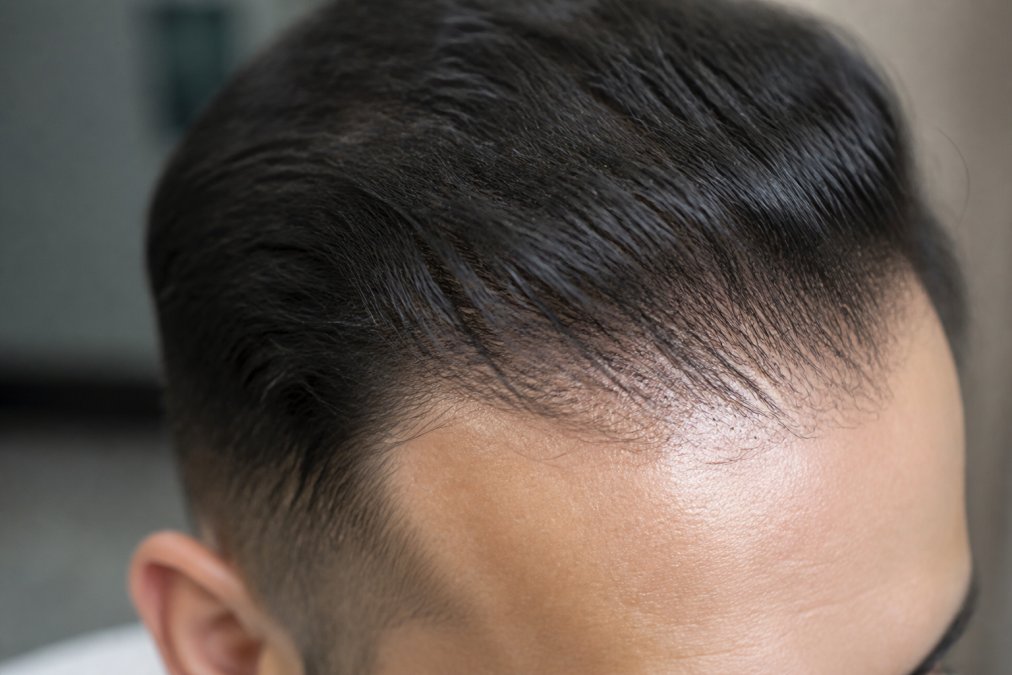
Understanding the core differences between hair transplant surgery and non-surgical treatments helps you make an informed decision based on your specific situation, timeline, and long-term goals.
Permanence and Long-Term Results
A hair transplant provides a permanent solution. Transplanted follicles continue producing hair for life and maintain their genetic resistance to hair loss.
Non-surgical treatments offer temporary results and only work with consistent use. Hair loss resumes within 3-6 months of stopping.
Downtime and Recovery Expectations
Non-surgical treatments require zero downtime. You apply minoxidil topically twice daily or take finasteride as a daily pill. PRP therapy involves three to six sessions spaced weeks apart, with minimal discomfort and no recovery period. You return to normal activities immediately.
Hair transplant surgery demands significant recovery. FUE requires 7-10 days before work (full healing 12-16 weeks); FUT requires 2-3 weeks. Expect scabbing, itching, and temporary shock loss. Strenuous exercise is off-limits for several weeks.
For people with demanding schedules or jobs requiring physical activity, non-surgical options offer clear convenience advantages.
Hair Transplant Recovery Timeline
Understanding the recovery process helps you plan time off work and manage expectations for results.
Weeks 1-2: Scabbing, itching, and redness occur. Return to desk work but avoid sweating and strenuous activity. Hair shedding begins (normal).
Weeks 3-4: Scabs fall away. Avoid picking. Redness diminishes.
Months 2-3: Transplanted hairs shed completely before regrowing (normal cycle).
Months 4-12: New growth accelerates. Visible improvement by month 6; full results by 12-18 months.
Year 2+: Hair thickens and matures. Final results stabilize around 18-24 months.
PRP Therapy for Hair Loss: How It Compares
PRP therapy uses concentrated blood plasma injected into thinning scalp areas to stimulate hair follicles.
Sessions take 30-45 minutes with no downtime.
Cost of Hair Restoration Procedures
Comparing costs between surgical and non-surgical options requires looking beyond the initial price tag and understanding the true financial commitment over your lifetime.
Hair Transplant Surgery: Upfront Investment Breakdown
The cost structure typically breaks down as follows:
Graft-based pricing. Surgeons charge $3-$10 per graft. FUE costs $6-$10 per graft; FUT costs $3-$6. A 2,000-graft FUE procedure costs $12,000-$20,000; FUT costs $6,000-$12,000.
Non-Surgical Treatments: Recurring Monthly Costs
Minoxidil (topical). Generic minoxidil 5% solution costs $15-$40 monthly when purchased over-the-counter. Brand-name Rogaine costs $40-$60 monthly. Most users apply twice daily indefinitely. Annual cost: $180-$720 for generic, $480-$720 for brand-name.
Long-Term Cost-Benefit Analysis: 5-Year and 10-Year Outlook
The financial advantage of surgery versus non-surgical treatments emerges clearly over longer time horizons.
Scenario 1: Hair transplant surgery (FUE, 2,000 grafts, $14,000) plus finasteride maintenance ($300/year).
- Year 1: $14,000 (surgery) + $300 (finasteride) = $14,300
- Year 5 total: $14,000 + ($300 × 5) = $15,500
- Year 10 total: $14,000 + ($300 × 10) = $17,000
- Per-year average (10 years): $1,700/year
Scenario 2: Minoxidil + finasteride (generic, $600/year) indefinitely.
- Year 1: $600
- Year 5 total: $600 × 5 = $3,000
- Year 10 total: $600 × 10 = $6,000
- Year 15 total: $600 × 15 = $9,000
- Year 20 total: $600 × 20 = $12,000
- Per-year average (10 years): $600/year initially, but compounds over time
Scenario 3: Minoxidil + finasteride (brand-name, $1,500/year) indefinitely.
- Year 5 total: $1,500 × 5 = $7,500
- Year 10 total: $1,500 × 10 = $15,000
- Year 15 total: $1,500 × 15 = $22,500
- Year 20 total: $1,500 × 20 = $30,000
- Per-year average (10 years): $1,500/year
Scenario 4: PRP therapy (initial $3,000 + $1,500/year maintenance) indefinitely.
- Year 1: $3,000 + $1,500 = $4,500
- Year 5 total: $3,000 + ($1,500 × 5) = $10,500
- Year 10 total: $3,000 + ($1,500 × 10) = $18,000
- Year 15 total: $3,000 + ($1,500 × 15) = $25,500
- Per-year average (10 years): $1,800/year
The Financial Inflection Point
For patients using generic minoxidil and finasteride, the break-even point versus a hair transplant occurs around year 20-25 of continuous use. For those using brand-name medications or adding PRP therapy, the break-even point arrives around year 10-12.
Who Should Choose Surgery vs Non-Surgical Options
Your choice depends on several personal factors: stage of hair loss, timeline expectations, lifestyle, and financial situation.
Choose hair transplant surgery if:
- You have stable hair loss (not rapidly progressing)
- You want a permanent solution requiring no ongoing maintenance
- You can afford the upfront cost and manage recovery time
- You've experienced hair loss for several years and want dramatic improvement
- You're willing to accept a recovery period with temporary side effects
Choose non-surgical treatments if:
- You're in early stages of hair thinning
- You prefer avoiding surgery and downtime
- You want to test whether treatment works before committing to surgery
- You can commit to daily medication use indefinitely
- You need results quickly (though non-surgical improvements take 3-6 months)
Consider combination approaches if:
- You're using non-surgical treatments but want more dramatic results
- You're preparing for or recovering from hair transplant surgery
- You want to maximize density in transplanted areas
- You're managing both transplanted and non-transplanted areas
Frequently Asked Questions
What are the primary differences between surgical hair transplants and non-surgical treatments?
Hair transplants are permanent surgical procedures that move hair follicles from donor areas to balding spots, providing lasting results. Non-surgical treatments like minoxidil, finasteride, and PRP therapy slow hair loss and stimulate regrowth but require ongoing maintenance. Transplants involve downtime and upfront costs; non-surgical options are less invasive but demand consistent, long-term commitment. Your choice depends on hair loss stage, budget, and desired permanence.
How long do results last from a hair transplant compared to non-surgical methods?
Hair transplant results are permanent because transplanted follicles retain their original characteristics and continue growing for life. Non-surgical treatments deliver results only while you use them. Stop minoxidil or finasteride, and hair loss typically resumes within months. PRP therapy also requires maintenance sessions to sustain benefits. For permanent hair restoration, transplants win; non-surgical options work best for early-stage hair loss or as complementary support.
What is the average cost difference between a hair transplant and ongoing non-surgical therapy?
Hair transplants cost $4,000 to $15,000 upfront, depending on graft count and technique. Non-surgical treatments like minoxidil and finasteride run $20 to $100 monthly. Over 10 years, non-surgical therapy can exceed $24,000 to $120,000 in maintenance costs alone, potentially matching or exceeding transplant prices. However, transplants require initial capital outlay, while non-surgical options spread costs over time. Evaluate your budget for both upfront investment and long-term commitment.
Can non-surgical treatments provide the same hair density as a hair transplant?
Non-surgical treatments slow progression and may regrow some hair, but they rarely match the density achieved by surgical transplants. Hair transplants create permanent, natural-looking density in targeted areas by moving healthy follicles directly to balding zones. Non-surgical options work best for early hair thinning or maintaining existing hair. For significant density restoration, especially in advanced hair loss, surgical intervention delivers superior, measurable results that non-surgical methods cannot replicate.


