Table of Contents
- Best Massage Tools for Stress Relief: Top Picks
- How to Use a Massage Gun for Stress Relief
- How Long Should You Use a Massager for Stress Relief
- Manual vs Electric Massage Tools: Which Works Best
- Psychological Impact of Tactile Stimulation
- Safety Precautions and Who Should Avoid Massage Tools
- Choosing the Right Massage Tool for Your Needs
- Conclusion
Best Massage Tools for Stress Relief: 2026 Guide
Last Updated: August 3, 2026
When tension builds up in your neck, shoulders, and lower back, reaching for the best massage tools for stress relief can transform your recovery routine in minutes. At Hutch's Beauty Boutique, we understand that stress manifests as physical knots, tight muscles, and restricted movement. This guide breaks down the most effective massage tools available today, from percussion guns to manual trigger point devices, so you can choose the right one for your needs.
Best Massage Tools for Stress Relief: Top Picks
Percussion Massage Guns for Deep Tissue Relief
Percussion therapy delivers rapid pulses into muscle tissue, increasing blood flow and breaking up tension patterns that manual massage alone can't reach.
The Theragun Elite stands out as the professional-grade option. With 16mm amplitude and speeds up to 2,400 percussions per minute, it penetrates deep tissue effectively. The OLED screen with force meter shows exactly how much pressure you're applying, preventing overuse injuries. Bluetooth app integration provides guided routines tailored to different body areas. At $429.99, it's an investment.
For portability, the Hypervolt Go 2 delivers serious results at a fraction of the cost. At 1.5 pounds, it's genuinely portable for desk drawers or gym bags. Three speed settings reach 3,200 pulsations per minute. QuietGlide technology keeps noise minimal for office use. At $149, it's ideal for stress relief focused on neck and shoulders.
The RENPHO R3 Massage Gun proves effective percussion doesn't require premium pricing. At $169.99, it includes five interchangeable heads, delivers speeds up to 3,200 RPM, and runs at just 45 decibels. The 150-minute battery life is exceptional at this price point.
The Mebak 3 Massage Gun sits between budget and capability. Seven interchangeable heads and 12mm amplitude provide versatility. Five speed settings range from 640 to 3,200 RPM. At $129.99, it offers more attachment variety while maintaining quiet operation (35-50dB).
Manual Trigger Point Tools and Foam Rollers
Manual tools require more effort but offer precision that percussion guns can't match. You control pressure, duration, and angle of application, ideal for targeting specific knots.
The TriggerPoint GRID 1.0 Foam Roller uses a patented multi-density surface with strategically placed zones that mimic a massage therapist's hands. At 13 inches long and 5.5 inches in diameter, it's portable enough for storage or gym use. At $39.99, it's one of the most affordable options.
The Thera Cane Massager uses six strategically placed massage balls along a cane-shaped handle, letting you reach areas like the upper back and shoulders that foam rollers can't access. At $35, it requires active effort and technique, but for chronic shoulder tension, it often delivers better results because you can hold pressure on stubborn knots for 30-60 seconds.
The Gaiam Restore Compact Foam Roller is the budget entry point at $14.98. The compact 6-inch length isolates single arms or legs. Use it as a supplementary tool, not your primary device.
How to Use a Massage Gun for Stress Relief
Proper technique separates effective stress relief from wasted effort or tissue damage.
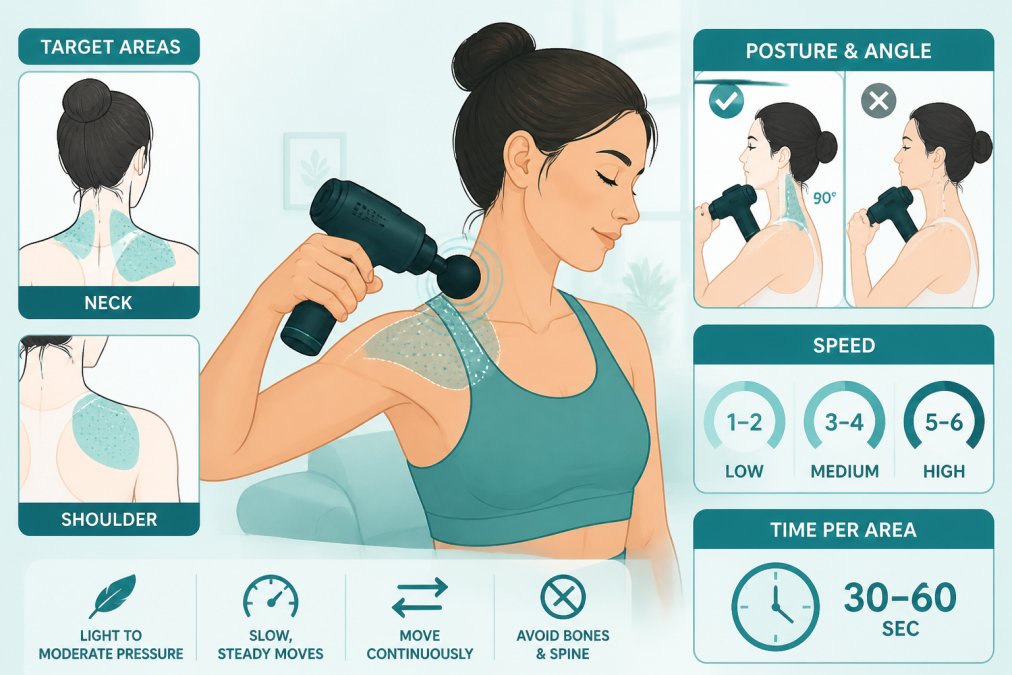
Start with the lowest speed setting. The goal isn't maximum intensity, it's consistent stimulation that encourages blood flow and tissue relaxation. Apply the massage head perpendicular to the muscle and let the tool do the work. You shouldn't need to press hard.
Move the gun slowly across muscle groups, spending 30-60 seconds on each area. For tension-prone zones like the upper trapezius, spend up to 90 seconds. Never apply percussion directly to bone, joints, or the spine. Focus on the muscle belly.
Proper Technique and Pressure Application
The most common mistake is treating the massage gun like a power drill. Aggressive pressure doesn't accelerate results and often creates micro-tears that increase soreness. Gentle, consistent application works better for stress relief because it activates the parasympathetic nervous system, your body's natural relaxation response.
For neck work, use the smallest head attachment and keep intensity moderate. Three to five minutes on neck tension is typically sufficient. Shoulders respond well to medium-intensity percussion. Spend 2-3 minutes per shoulder, two to three times weekly, to noticeably reduce tension headaches within a week.
Target Areas for Maximum Tension Release
The neck and shoulders hold the most stress for most people. The upper trapezius tightens in response to mental stress, poor posture, and screen time. Targeting this area with 2-3 minutes of percussion, three to four times per week, often produces noticeable relief within days.
The forearms deserve attention too. Tension in the forearms radiates up into the shoulders and neck. Spend 60-90 seconds on each forearm, focusing on the underside. The upper back between the shoulder blades accumulates tension from rounded-shoulder posture and responds well to percussion therapy.
How Long Should You Use a Massager for Stress Relief
Duration matters, but more isn't always better. Over-use can create irritation or inflammation.
Duration Guidelines by Tool Type
For percussion massage guns, 2-3 minutes per muscle group is optimal. A full-body session takes about 15 minutes. Foam rollers require slightly longer sessions, spend 60-90 seconds per muscle group, rolling slowly and pausing on tender spots. A comprehensive session takes 15-20 minutes.
Manual trigger point tools work best with sustained pressure. Hold pressure on a specific knot for 30-60 seconds, allowing tissue to gradually release. Handheld shiatsu massagers work best in 10-15 minute sessions.
Frequency and Recovery Timing
Daily use is safe for most people, but 4-5 sessions per week combined with other stress management practices yields better results. Space percussion gun sessions at least 4-6 hours apart on the same muscle group.
Foam rolling can be done daily without issue. The first week of any new massage tool often produces soreness similar to a workout. If soreness is severe, reduce frequency to every other day.
| Tool Type | Single Session Duration | Weekly Frequency | Best Time of Day |
|---|---|---|---|
| Percussion Gun | 10-15 minutes | 4-5 times | Evening (pre-sleep) |
| Foam Roller | 15-20 minutes | Daily | Morning or post-workout |
| Trigger Point Tool | 10-15 minutes | 4-5 times | Evening |
| Shiatsu Massager | 10-15 minutes | 4-5 times | Evening or anytime |
Manual vs Electric Massage Tools: Which Works Best
The choice depends on your priorities: convenience versus control, portability versus power.
Electric tools deliver consistent, automated stimulation. You don't need to apply technique or effort beyond positioning the device. This makes them ideal for people with limited time or those who struggle with consistency.
Manual tools require active participation. You control pressure, speed, and duration. This engagement benefits stress management because focused attention activates mindfulness, you're present with your body rather than distracted.
Effectiveness for Different Stress Types
Mental stress responds well to both approaches. The key is consistency and the ritual of self-care, which activates your parasympathetic nervous system regardless of tool type.
Physical stress from poor posture or repetitive strain benefits more from electric tools. Percussion guns deliver deeper penetration and more consistent pressure, important for breaking up stubborn knots. Chronic tension often requires a combination approach: start with a percussion gun to break up major knots, then use foam rolling or trigger point work to maintain flexibility.
Portability, Cost, and Ease of Use
Electric percussion guns are genuinely portable. The Hypervolt Go 2 at 1.5 pounds fits in a desk drawer. Foam rollers require floor space but store easily in closets. Trigger point tools are the most portable, weighing ounces.
Cost ranges from $14.98 (Gaiam compact roller) to $429.99 (Theragun Elite). For stress relief, you don't need to spend more than $150. The RENPHO R3 at $169.99 or Hypervolt Go 2 at $149 deliver 80% of premium model results. Ease of use favors electric tools, there's no learning curve.
Psychological Impact of Tactile Stimulation
The benefits of massage extend far beyond physical muscle relaxation. Tactile stimulation activates your nervous system in ways that reduce cortisol and activate relaxation responses.
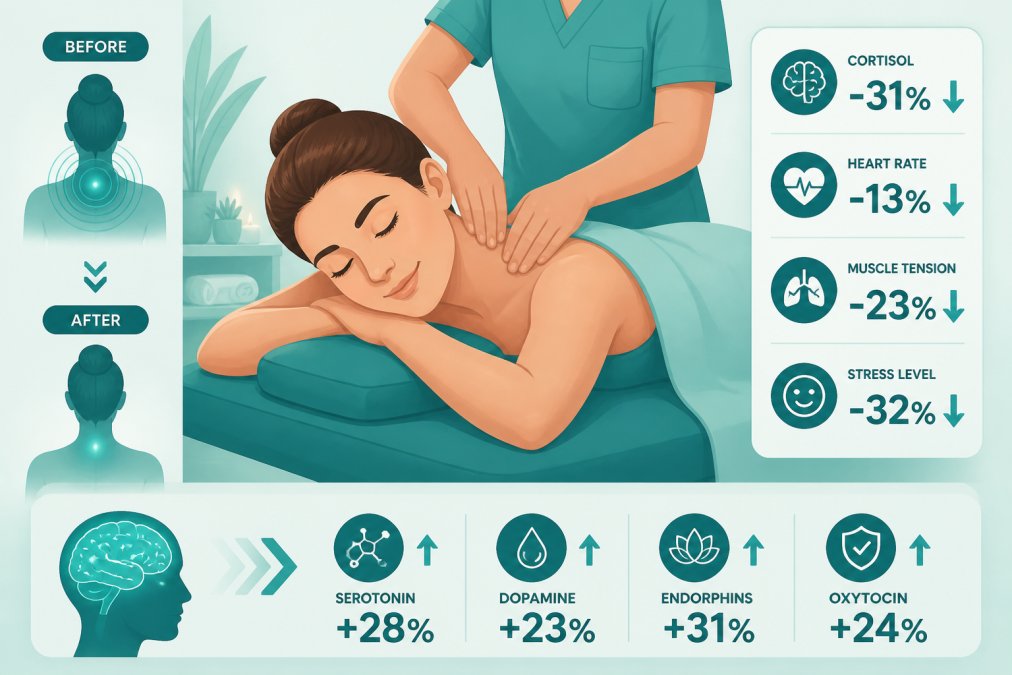
When you apply massage to your body, you send signals to your brain that you're safe. This activates the parasympathetic nervous system, your body's natural brake on stress. Heart rate drops, breathing slows, and your nervous system shifts into rest-and-digest mode.
Regular massage reduces cortisol, the primary stress hormone. Research shows consistent massage practice lowers cortisol levels measurably, with cascading benefits for sleep quality, immune function, and emotional regulation. The ritual of self-massage, carving out 15 minutes daily to focus on your body, is itself therapeutic. Combined with the physical benefits of tissue mobilization, this creates a powerful stress management tool. Integration with mindfulness practices amplifies benefits: use massage tools with full attention, noticing sensations, breathing deeply, and observing where tension lives.
Safety Precautions and Who Should Avoid Massage Tools
Most people can safely use massage tools, but certain conditions warrant caution.
Avoid percussion massage guns if you have acute injuries, inflammation, or swelling. Wait 48-72 hours after straining a muscle before applying percussion therapy. People with blood clotting disorders, those taking blood thinners, or those with a history of deep vein thrombosis should check with their healthcare provider first. Pregnancy also warrants caution.
Osteoporosis or severe arthritis means you should avoid foam rolling and intense percussion. Never apply massage tools directly to bone, joints, or the spine. Focus on muscle tissue exclusively.
If you experience sharp pain during or after massage, stop immediately. Sharp pain indicates potential injury, while dull soreness is normal adaptation.
Choosing the Right Massage Tool for Your Needs
Your decision comes down to three factors: your primary tension areas, your lifestyle, and your budget.
If tension centers on neck and shoulders, a portable percussion gun like the Hypervolt Go 2 or RENPHO R3 is ideal. If you need full-body coverage, a foam roller plus a trigger point tool gives comprehensive options. If you're budget-conscious and willing to invest effort, the Gaiam Compact Foam Roller at $14.98 plus the Thera Cane at $35 provide solid coverage for under $50.
Budget Considerations and Value
The best value for most people is the RENPHO R3 at $169.99. If budget allows $150, the Hypervolt Go 2 is worth the premium. The portability and quiet operation justify the extra cost, especially for workplace use. For those willing to spend $300+, the Theragun Elite offers app integration and force feedback, but for stress relief alone, this premium doesn't translate to meaningfully better results.
Portability and Storage
Percussion guns range from genuinely portable (Hypervolt Go 2 at 1.5 lbs) to moderately bulky (Theragun Elite at 2.1 lbs). Foam rollers need floor space but store easily in closets or under beds. Trigger point tools are the most storage-friendly.
Choose the tool you'll realistically use, not the one that sounds most impressive. A $400 percussion gun gathering dust is worse value than a $40 foam roller you use daily.
Stress lives in your body as much as your mind, and the best massage tools for stress relief address both simultaneously. Whether you choose a percussion gun for convenience, a foam roller for affordability, or a trigger point tool for precision, consistency matters more than equipment cost. At Hutch's Beauty Boutique, we recognize that effective stress management combines physical recovery with intentional self-care. Start with a tool that fits your budget and lifestyle, commit to 4-5 sessions weekly for two weeks, and notice how tension patterns shift when you prioritize your nervous system's recovery.
Frequently Asked Questions
What is the best massage tool for stress relief if I have limited space?
Compact percussion massage guns like the Hypervolt Go 2 or manual tools such as the Thera Cane work well for small spaces. Foam rollers are also portable options. The Gaiam Restore Compact Foam Roller is specifically designed for travel and storage. Choose based on whether you prefer electric percussion therapy or manual trigger point therapy. All these tools deliver effective myofascial release without requiring much room.
How long should you use a massager for stress relief without overdoing it?
Most percussion massage guns work best with 1-2 minutes per muscle group, totaling 10-15 minutes per session. Manual tools like foam rollers can be used for 30-60 seconds per area. Start with shorter sessions and increase gradually. Daily use is generally safe, but allow rest days if you experience soreness. Listen to your body and avoid using any massage tool on the same area for extended periods to prevent tissue irritation.
Are manual or electric massage tools better for daily stress relief?
Electric massage tools like percussion guns deliver consistent vibration frequency and require less effort, making them ideal for daily use and convenience. Manual tools like trigger point massagers give you control over pressure and allow targeted therapy, though they demand more physical effort. For stress relief specifically, electric tools reduce fatigue and allow longer sessions. However, manual tools integrate better with mindfulness practices since they require active participation and body awareness during use.
Can massage tools help reduce cortisol and anxiety?
Yes. Massage tools activate the parasympathetic nervous system, which helps lower cortisol levels and promotes relaxation. Percussion therapy and myofascial release improve circulatory stimulation and tissue mobilization, reducing physical tension that accompanies stress. Regular use can support stress management routines. However, massage tools work best alongside other wellness practices like mindfulness, exercise, and sleep. They are a useful component of stress relief, not a standalone solution.
What should I look for when choosing a massage tool for stress relief?
Consider adjustable intensity settings, ergonomic design, and portability for your lifestyle. Battery life matters for electric tools if you travel. Check amplitude and vibration frequency specifications for deep tissue impact. For neck and shoulder tension, look for tools with multiple attachment heads. Evaluate noise level if you'll use it in shared spaces. Budget-conscious shoppers should compare features across price points, as mid-range options often deliver excellent value without premium pricing.
This article was written using GrandRanker


