Table of Contents
- Why Affordable Daily Self-Care Tools Matter for Your Routine
- How We Selected These Affordable Daily Self-Care Tools
- Skincare and Facial Tools for Daily Self-Care
- Easy Self-Care Ideas at Home with Massage and Relaxation Tools
- Self-Care for Stress Relief Through Aromatherapy
- Mindfulness Tools for Beginners: Meditation and Mental Health
- Self-Care Journal Prompts and Creative Expression Tools
- DIY vs. Purchased Self-Care Tools: What Works Best for Your Budget
15 Affordable Daily Self-Care Tools That Actually Work
Last Updated: August 2, 2026
When self-care becomes another to-do list item, something's gone wrong. The truth is that affordable daily self-care tools don't need to be expensive or time-consuming to work, they just need to fit your actual life. At Hutch's Beauty Boutique, we've watched people spend hundreds on elaborate wellness routines only to abandon them after two weeks. The ones who stick with it start small with tools that deliver real results without friction. This guide walks you through 15 affordable daily self-care tools that move the needle on stress, sleep, skin health, and mental clarity without requiring a second mortgage or a PhD in wellness.
Most of these cost under $40. Some cost under $10. Unlike trendy wellness fads, these tools address the fundamentals of how your body and mind actually work.
Why Affordable Daily Self-Care Tools Matter for Your Routine
Self-care is maintenance. Your body and mind accumulate stress the same way your car accumulates miles, you either service them regularly or deal with expensive breakdowns later. The real problem isn't motivation; it's friction. People buy elaborate tools that require setup, learning curves, or 30-minute time blocks, then life happens and the tools sit unused.
Affordable daily self-care tools remove friction. A facial roller takes 60 seconds. A meditation app works in your car before work. A journal sits on your nightstand. These aren't lifestyle overhauls, they're small interventions that compound over months.
Research shows that consistency beats intensity when it comes to wellness outcomes. American Psychological Association research on stress management indicates that regular small practices outperform occasional intensive efforts. A 5-minute daily practice beats a monthly spa day. Affordability removes the guilt barrier too, when you spend $20 instead of $200, you're more likely to actually use it.
How We Selected These Affordable Daily Self-Care Tools
Each tool had to demonstrate real, measurable benefits supported by user experience and research. We prioritized tools that work for multiple use cases and don't require significant setup or ongoing costs. We focused on tools with staying power, items you'll reach for again tomorrow.
We also weighted for accessibility. The tools in this list work for most people, though we call out legitimate limitations where they exist.
| Tool Category | Price Range | Best For | Setup Time |
|---|---|---|---|
| Facial tools (rollers, gua sha) | $18-$24 | Daily skincare ritual | 2 minutes |
| Massage tools (scalp, acupressure) | $18-$30 | Tension relief, relaxation | 5 minutes |
| Bath soaks and aromatherapy | $5-$15 | Evening wind-down | 10 minutes |
| Meditation apps | Free-$10/month | Mental clarity, sleep | 1 minute |
| Journaling tools | $8-$15 | Self-reflection, goal tracking | 5 minutes |
| Portable humidifiers | $39 | Skin hydration, dry climates | 3 minutes |
Skincare and Facial Tools for Daily Self-Care
Facial tools improve circulation, reduce puffiness, and help products absorb deeper into skin. They're one of the easiest affordable daily self-care tools to use consistently because they feel good immediately. Keep your roller in the refrigerator, the cold reduces inflammation and makes the experience more luxurious.
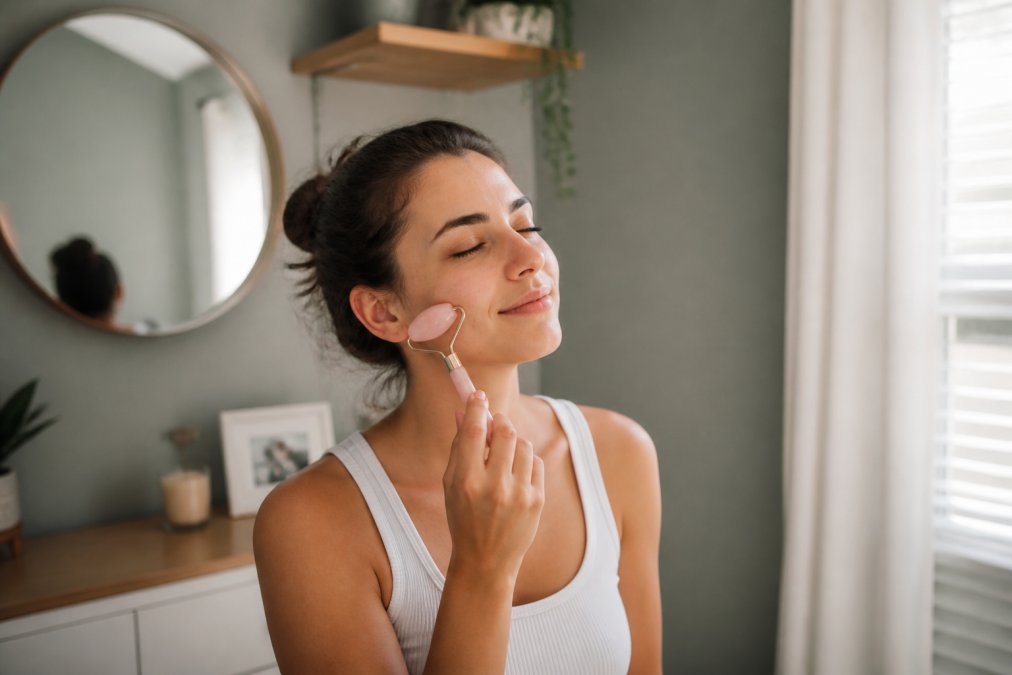
Rose Quartz Facial Roller
A rose quartz facial roller glides across your face in upward strokes to promote lymphatic drainage and reduce puffiness. The SEPHORA COLLECTION Rose Quartz Facial Roller costs $24. The rolling motion stimulates blood flow, which plumps fine lines and gives skin a subtle glow. The real benefit compounds over weeks of consistent use.
Use it after your moisturizer or serum. Roll upward from your jawline toward your temples, across your forehead, and down the bridge of your nose. Spend 60 seconds total.
Gua Sha Stone
A gua sha stone is a flat, smooth tool made from jade, rose quartz, or stainless steel. The SEPHORA COLLECTION Rose Quartz Gua Sha costs $18 and works best on the jawline, temples, and neck, areas where most people hold tension. Use the tool at a 45-degree angle with moderate pressure. Work the jawline from chin toward ears and hit temples with gentle circular motions.
Gua sha works best for people who hold stress in their face and neck. If you clench your jaw or wake up with tension headaches, this is the most affordable intervention that addresses the root cause.
Portable Facial Humidifier
The Hey Dewy Portable Facial Humidifier costs $39 and emits a fine mist of water or toner onto your face. It's designed for on-the-go hydration, particularly useful in dry climates or during air travel. The effect is temporary, lasting 2-3 hours, but for specific situations like before makeup or after flying, it's invaluable.
Easy Self-Care Ideas at Home with Massage and Relaxation Tools
Massage tools interrupt stress and tension with almost immediate physical relief. Keep them visible and accessible so you remember to use them.
Scalp Massager for Tension Relief
The Ceremonia Scalp Massager costs $18 and works on wet or dry hair. Most people don't realize how much tension they hold in their scalp until they use one. Benefits include immediate relaxation and improved circulation to hair follicles. Use it for 2-3 minutes while shampooing or as a standalone tool when you need to decompress.
Use gentle circular motions across your entire scalp, spending extra time on areas that feel tight. Most people carry tension at the base of the skull and temples.
Acupressure Mat and Pillow Set
The All In Motion Acupressure Mat and Pillow Set costs $29.99. The first time you lie on it feels uncomfortable, but within 2-3 minutes your body relaxes. Regular users report better sleep, less neck pain, and reduced overall stress. Acupressure stimulates nerve endings and increases blood flow, triggering relaxation.
Start with 10 minutes daily in the evening, ideally before bed. Your body adapts and you can extend to 20-30 minutes.
Epsom Salt Bath Soaks
Dr. Teal's Epsom Salt Soaking Solution costs $5-$10 for a large bag. Magnesium sulfate is absorbed through your skin and helps relax muscles, reduce inflammation, and calm your nervous system. Add essential oils like lavender or eucalyptus for a multi-sensory experience.
Soak in the evening, about 2 hours before bed. Your body temperature naturally drops after a warm bath, signaling your brain that it's time to sleep. This improves sleep quality for most people.
Self-Care for Stress Relief Through Aromatherapy
Scent connects directly to your limbic system, the part of your brain that controls emotion and memory. A single inhale can shift your nervous system state within seconds.
Essential Oils for Daily Aromatherapy
Plant Therapy Essential Oils are available starting at $7-$15 per bottle. The most useful oils for stress relief are lavender (calms anxiety, improves sleep), peppermint (increases alertness, improves focus), lemon (uplifts mood, improves clarity), and eucalyptus (clears sinuses, reduces tension).
Keep a bottle of lavender on your nightstand. When stress hits or you can't sleep, inhale deeply for 10 seconds. Repeat 3-4 times. A basic diffuser costs $15-$30 and fills a room with scent.
Mindfulness Tools for Beginners: Meditation and Mental Health
Meditation is one of the most researched self-care practices. Research from Johns Hopkins University on meditation benefits shows that consistent meditation reduces anxiety, improves focus, and literally changes brain structure over time.
Free Meditation App with Guided Sessions
Insight Timer is a meditation app with a freemium model. The free tier includes access to over 60,000 guided meditations, making it the most accessible entry point into mindfulness tools for beginners. Sessions range from 5 minutes to 45 minutes, so you can fit meditation into any schedule.
Meditate first thing in the morning, before checking your phone. Even 5 minutes sets your nervous system for the day. Within one week of consistent use, you'll notice the difference. Meditation isn't about clearing your mind, it's about noticing thoughts without judgment. When your mind wanders, simply notice and return to your breath.
Self-Care Journal Prompts and Creative Expression Tools
Journaling is self-care for your mind. When you externalize thoughts onto paper, you create distance from them. Anxiety loses power and patterns become visible.
Affordable Dotted Bullet Journal
The Artfan Dotted Bullet Journal costs $8 and is designed for flexible layouts. You can write, sketch, make lists, or create habit trackers. There's no "correct" way to use it, which means you'll actually use it.
The most effective self-care journal prompts are simple:
- Morning: What's one thing I want to accomplish today? How do I want to feel?
- Evening: What went well today? What am I grateful for?
- Weekly: What patterns am I noticing? What needs to change?
These prompts take 5 minutes. Over weeks, they create a feedback loop where you become more intentional about your life.
DIY vs. Purchased Self-Care Tools: What Works Best for Your Budget
Some affordable daily self-care tools you can make yourself. Others you need to buy.
DIY Self-Care Tools:
- Aromatherapy: Mix essential oils with carrier oil. Cost: $0.50 per use.
- Bath soaks: Combine epsom salt with dried herbs and essential oils. Cost: $1-$2 per bath.
- Journal prompts: Write your own based on what you need. Cost: $0.
- Meditation: Sit quietly and focus on your breath. Cost: $0.
Purchased Self-Care Tools:
- Facial rollers and gua sha: DIY versions are unreliable. Purchasing ensures proper weight and material. Cost: $18-$24. Worth it: yes.
- Scalp massagers: Nearly impossible to DIY effectively. Cost: $18. Worth it: yes.
- Meditation apps: Free tier available with guidance and variety. Cost: free. Worth it: yes.
- Quality journals: Encourages consistency. Cost: $8-$15. Worth it: probably.
DIY when the tool is simple and customization matters. Purchase when the tool requires specific engineering or when convenience drives consistency. A $20 tool you use daily is cheaper than a $5 DIY tool you abandon.
Building Your Personal Self-Care Toolkit
The mistake most people make is buying everything at once. The better approach: start with one tool that addresses your biggest pain point.
If you have chronic stress, start with meditation (free) or a scalp massager ($18).
If your skin is your concern, start with a facial roller ($24).
If you can't sleep, start with epsom salt soaks ($8) and a meditation app (free).
Use that tool daily for two weeks. Let it become a habit. Then add a second tool. This builds sustainable routines instead of overwhelming yourself.
Hutch's Beauty Boutique is your one-stop destination for a diverse range of beauty, health, and lifestyle essentials. We offer a curated selection of products, including trendy gadgets, jewelry, and specialized personal care items designed to enhance your daily routine. Whether you are looking for innovative beauty tools or practical household accessories, our boutique brings everything you need together in one convenient place. Discover quality items that cater to your personal style and wellness needs with our easy-to-navigate online catalog. Browse our collection and start with whatever resonates most.
Frequently Asked Questions
What are the most affordable daily self-care tools for beginners?
Start with tools under $25 that deliver real results: a facial roller ($18-24), a scalp massager ($18), or a dotted journal ($8). These items require no learning curve and integrate easily into existing routines. Meditation apps like Insight Timer offer free content, and essential oils from reputable brands cost $7-15 per bottle. Beginners often see the most benefit from consistency rather than expensive tools, so pick one or two items and use them daily for at least two weeks before adding more.
How can I practice self-care for stress relief without spending much money?
Free and low-cost stress relief methods include using a meditation app (Insight Timer has over 60,000 free sessions), taking an Epsom salt bath ($5-10), journaling with any notebook, or using essential oils you already own. Acupressure mats cost around $30 and provide lasting value. The key to stress relief is consistency and choosing tools that fit your lifestyle. A 10-minute meditation or 15-minute bath costs almost nothing but delivers measurable relaxation when done regularly.
What self-care journal prompts work best for daily mindfulness practice?
Effective daily prompts focus on gratitude, reflection, and intention-setting: 'What am I grateful for today?', 'How did I feel this morning and why?', 'What is one thing I did well today?', 'What will I prioritize tomorrow?'. Spend 5-10 minutes per day writing freely without judgment. A dotted journal ($8) gives you flexibility to format prompts your own way. Journaling combines creative expression with self-reflection, making it one of the most affordable wellness tools. Many people find that handwriting creates deeper mindfulness than typing.
Are budget-friendly self-care tools as effective as expensive ones?
Effectiveness depends on consistent use, not price. A $18 gua sha stone works the same way as a $60 version if used properly. A $8 journal builds the same self-reflection habits as a $40 luxury planner. What matters is choosing tools you'll actually use daily. Research shows that affordable tools often outperform expensive ones simply because people use them more frequently. The best tool is the one you'll commit to, regardless of cost. Start affordable and upgrade only if you exhaust a tool's potential or develop a specific preference.
Which affordable self-care tools work best for neurodivergent individuals?
Sensory-focused tools often work well for neurodivergent people: acupressure mats provide grounding through tactile input, essential oils offer olfactory regulation, and scalp massagers give targeted sensory feedback. Fidget-friendly journaling (dotted pages allow creative layouts), meditation apps with customizable timers, and tools without time pressure suit different processing styles. Avoid tools with strict routines or overwhelming sensory input. Many neurodivergent individuals prefer tools they can use on their own schedule without external pressure, making affordable, self-directed options ideal.
The difference between self-care that works and self-care that fails isn't motivation, it's friction. The tools that stick are the ones you use because they're easy, affordable, and deliver immediate results. Start small. Pick one tool. Use it daily. Then expand. Within a month, you'll have built a sustainable self-care practice that costs less than most people spend on coffee and delivers measurable improvements to your stress, sleep, and skin health.
This article was written using GrandRanker


