Table of Contents
- Why Transitioning to a Zero-Waste Beauty Routine Matters
- Step 1: Audit Your Current Products and Replace as They Run Out
- Step 2: Swap Single-Use Products for Solid Alternatives
- Step 3: Build a Zero-Waste Skincare Routine
- Step 4: Choose Sustainable Beauty Swaps Beyond Skincare
- Step 5: Select Refillable Skincare Products
- Step 6: Evaluate Packaging and Learn How to Recycle Beauty Product Packaging
- Common Mistakes to Avoid When Transitioning
- Frequently Asked Questions
Last Updated: October 12, 2026
Why Transitioning to a Zero-Waste Beauty Routine Matters
A zero-waste beauty routine means replacing single-use products with reusable, refillable, and sustainable alternatives that minimize packaging waste.
A typical beauty routine generates dozens of plastic bottles, jars, and applicators every year. Switching to a zero-waste approach doesn't mean throwing everything out today or buying expensive replacements all at once.
The smartest way to transition is gradual: replace products as they run out and choose sustainable alternatives when you restock.
Step 1: Audit Your Current Products and Replace as They Run Out
The biggest mistake is throwing away half-full products to "start fresh", that creates more waste than it prevents. Use what you have, replace only as things empty, and prioritize the swaps with the biggest impact.
Build your audit
List everything in your bathroom, cleanser, moisturizer, sunscreen, deodorant, shampoo, conditioner, makeup, oral care, and personal-care items. For each, note:
- How full it is (estimate weeks or months remaining)
- Whether you'll repurchase it
- What packaging it comes in (plastic bottle, tube, jar, aerosol)
A phone note or spreadsheet works fine, the goal is a clear picture of what you own and when each item runs out.
Sequence your replacements
Replace in this order, roughly:
- Highest-volume, fastest-emptying items first, cleanser, shampoo, body wash. These generate the most packaging waste per year, so swapping them early has the biggest payoff.
- Daily-use items next, moisturizer, deodorant, sunscreen.
- Occasional items last, treatments, masks, specialty products you use weekly or less.
This front-loads impact without forcing you to buy everything at once.
What to do with products you won't finish
- Use them up if they're safe and unexpired, almost always the lowest-waste option.
- Repurpose what you can, a gentle facial cleanser can become a body wash; an unloved face moisturizer can go on hands or feet.
- Donate unopened, unexpired items to shelters or community organizations that accept personal-care donations. Check local rules first; many only accept new, sealed products.
- Dispose responsibly only as a last resort. Some municipalities run household hazardous waste days for items like nail polish and aerosols.
Keep a running replacement list
As each product empties, note the zero-waste alternative you want to try. This turns a vague intention into a concrete to-do, spreads the cost across months, and gives you time to read reviews and confirm the product suits your skin type before you commit.
Step 2: Swap Single-Use Products for Solid Alternatives
Solid beauty products are an easy swap: they last longer than liquids, require minimal packaging, and take up less space.
Solid cleansers and soap bars
A solid cleanser bar replaces liquid face wash. They work for all skin types when you choose the right formula.
Look for bars made with natural ingredients like coconut oil, shea butter, or charcoal, which cleanse without stripping skin. Start with a small bar to test compatibility before buying larger quantities.
Store solid cleansers on a draining soap dish to keep them dry and extend their life.
Shampoo bars and solid conditioners
Shampoo bars eliminate plastic bottles from your shower routine, and they're compact for travel.
Solid conditioners work the same way: apply to damp hair, let sit a minute, then rinse. Hair adjusts within a few washes, and many people find it feels healthier afterward.
Choose bars matched to your hair type: moisturizing formulas for dry hair, clarifying bars for oily hair, and lightweight options for fine or thin hair.
Deodorant bars and solid fragrances
Deodorant bars replace spray and roll-on deodorants, take up minimal space, and produce no aerosol waste.
Solid fragrances (balms or wax sticks) work as perfume alternatives. Rub directly on pulse points like your wrists and neck.
Step 3: Build a Zero-Waste Skincare Routine
A complete skincare routine doesn't require many steps. Most skin improves with just a cleanser, moisturizer, and sunscreen. Adding a toner or treatment depends on your specific skin needs.
Moisturizers and face oils
Moisturizers come in glass jars or metal tins instead of plastic bottles. Face oils in glass bottles replace creamy moisturizers for many people.
Choose a moisturizer suited to your skin type. Oily skin often does better with lightweight oils like jojoba or squalane.
Apply moisturizer to damp skin for better absorption, this prevents dryness and keeps your skin barrier healthy. One good product handles morning and night.
Sunscreen and sun protection
Sunscreen comes in glass bottles, metal tins, or solid stick form. Mineral sunscreen (zinc oxide or titanium dioxide) offers better environmental protection than chemical formulas. Reapply every two hours outdoors.
Solid sunscreen sticks work like deodorant. Rub on your face and neck. They're convenient for reapplication throughout the day without opening a jar.
Don't skip sunscreen: sun damage causes premature aging and skin cancer, making it non-negotiable in any routine, zero-waste or not (the CDC).
Toners and treatments
Toners aren't essential for most people. If you have specific concerns like acne or sensitivity, a targeted treatment makes sense. Otherwise, cleanser and moisturizer cover your basics.
Treatments (serums, essences, or spot treatments) address specific issues. Vitamin C serums brighten skin. Niacinamide helps with pores and oil control. Hyaluronic acid hydrates dry skin.
Buy treatments in glass bottles with dropper tops. A few drops go a long way.
Step 4: Choose Sustainable Beauty Swaps Beyond Skincare
Your zero-waste beauty routine extends beyond skincare products. Reusable tools and refillable containers eliminate waste from makeup removal, application, and storage.
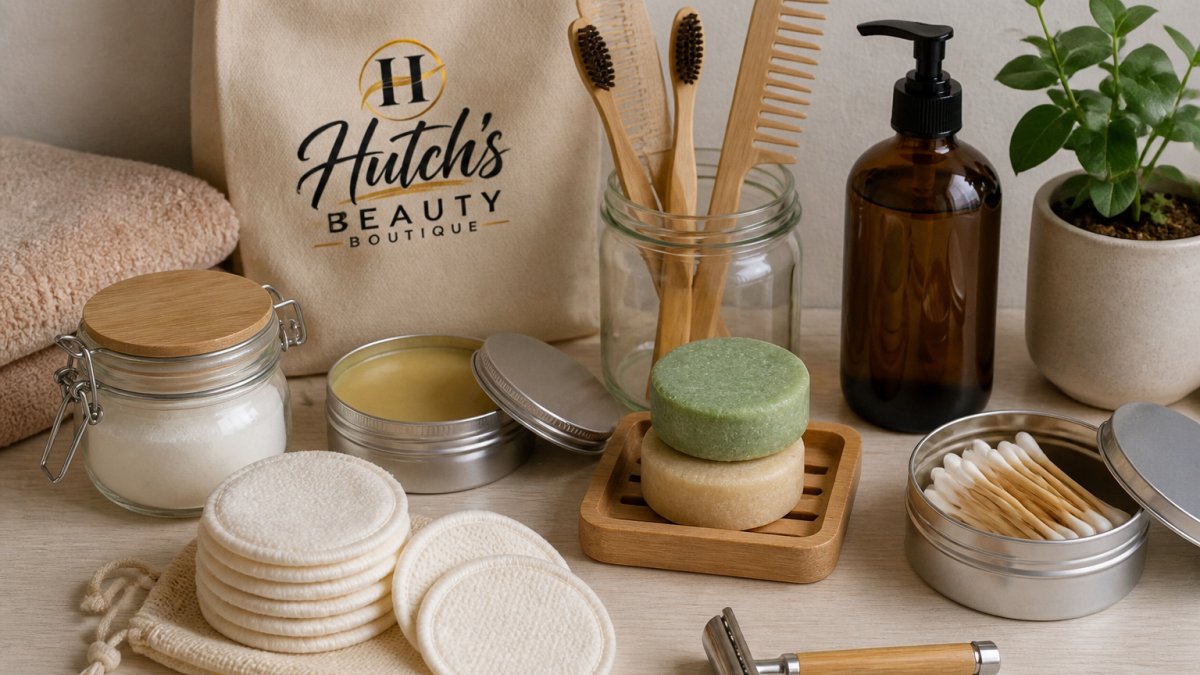
Reusable makeup-removal pads and cloths
Disposable makeup-removal wipes create enormous waste. Reusable cotton pads or microfiber cloths work well and cost less over time. Wash them weekly with your regular laundry.
Buy a set of 10-15 pads so you always have clean ones available.
Bamboo or organic cotton pads are better for the environment than synthetic materials. They're softer on skin and break down naturally at end of life.
Refillable containers and refill systems
Many beauty brands now offer refill systems: buy the container once, then refill it with product in minimal packaging. This reduces waste significantly over time.
Look for brands offering refills for your favorite moisturizers, serums, or treatments, and check whether any refill stations exist near you.
Glass jars and metal tins store products better than plastic, protecting them from light and air. Transfer products to attractive containers if you prefer, and reuse old jars.
Step 5: Select Refillable Skincare Products
Refillable skincare products cut packaging waste by up to 90% compared to buying new containers each time: purchase the container once, then buy refills as needed.
Many brands now offer refill programs, check if your favorite moisturizer or cleanser comes in a refillable option.
Start with one refillable product, then expand to other items once you see how it works. Building slowly prevents overwhelm.
Store refills in a cool, dry place. Check expiration dates before opening.
Step 6: Evaluate Packaging and Learn How to Recycle Beauty Product Packaging
Not all sustainable packaging is created equal: glass isn't always better than metal, and paper packaging sometimes contains plastic liners. Judge packaging on total impact, not on how "natural" it looks.
A simple framework for judging packaging
Ask four questions before you buy:
- How many times will this container be used? A refillable glass jar used for years beats a single-use compostable pouch every time.
- How heavy is it, and how far did it travel? Shipping heavy glass across the country can offset its recyclability benefits. Lighter formats that ship efficiently sometimes win.
- Will it actually be recycled or composted where you live? A material is only "recyclable" if your local program accepts it.
- What happens at end of life? Refill, reuse, recycle, compost, or landfill, in that order of preference.
Glass, paper, bamboo, and metal packaging
Glass is highly recyclable and protects products, but it's heavy and energy-intensive to ship. Metal tins and aluminum recycle well and are lighter, lowering shipping emissions. Paper and cardboard break down if uncoated, check for hidden plastic or wax liners. Bamboo is renewable but often laminated with adhesives that complicate composting.
Refill systems vs. recyclable vs. compostable
These three are not interchangeable:
- Refill systems, keep the primary container and buy product in minimal packaging. This delivers the largest reduction because the durable container is reused many times.
- Recyclable packaging, depends on your local program. Rigid plastics labeled #1 (PET) and #2 (HDPE) are accepted in most curbside programs; #3 through #7 often aren't. Small items like caps, pumps, and droppers frequently fall through sorting equipment and end up in landfill.
- Compostable packaging, most requires industrial composting, which reaches temperatures home bins don't. Without it, compostable packaging behaves like trash.
How to actually recycle beauty packaging
- Empty and rinse containers, residue contaminates recycling streams.
- Separate components. Remove pumps, droppers, and caps when required; many pumps contain metal springs and mixed plastics that aren't recyclable curbside.
- Check local guidelines. Rules vary widely by municipality.
- Use take-back programs. Some brands and retailers run mail-back or in-store take-back for empties, including items curbside programs reject.
- Look for third-party certifications like Cradle to Cradle or B Corp to verify claims, marketing language alone isn't reliable.
Track what you divert
Keep a running tally of containers you refill, reuse, or recycle instead of tossing. Even a phone note builds awareness and shows which swaps actually reduce your waste stream.
Common Mistakes to Avoid When Transitioning
The biggest mistake is throwing away usable products to start fresh. This wastes money and creates more waste.
Don't buy everything at once.
Avoid assuming expensive means better. Read reviews and check ingredients instead.
Don't expect perfection immediately. Your skin adjusts to new products. Hair needs time to adapt to solid shampoos.
| Mistake | Why It Matters | Better Approach |
|---|---|---|
| Throwing out half-full products | Creates waste and wastes money | Use products until empty, then replace |
| Buying everything at once | Wastes money on products that don't work | Replace one product at a time |
| Assuming expensive is better | High price doesn't equal better results | Read reviews and check ingredients |
| Switching products too quickly | Skin needs time to adjust | Give products 2-4 weeks minimum |
| Ignoring your skin type | Wrong products irritate skin | Choose products matched to your needs |
Transitioning to a zero-waste beauty routine doesn't happen overnight, and it shouldn't. The most sustainable approach is the one you actually maintain.
Frequently Asked Questions
How do I start a zero-waste beauty routine without throwing away products I already own?
Audit your current products and use them completely before replacing them. This phased approach prevents waste and spreads the cost of switching over time. As each product runs out, replace it with a zero-waste alternative. This method also lets you test new products gradually to ensure they work for your skin type and needs.
What are the best sustainable beauty swaps for a complete routine?
Start with solid cleansers and soap bars, then add shampoo bars, deodorant bars, and reusable makeup-removal pads. For skincare, choose refillable moisturizers and face oils in glass or metal packaging. Include solid sunscreen or sun protection sticks. Reusable cloths replace single-use cotton rounds. These swaps cover cleansing, moisturizing, sun protection, and makeup removal, the core of most routines.
How do I know if beauty product packaging is genuinely lower impact?
Look for glass, metal, paper, or bamboo packaging over plastic. Check if containers are refillable or designed for a refill system. Verify compostable claims by checking if the packaging is suitable for industrial composting. Research the brand's sourcing practices and whether they accept packaging back for recycling. Avoid greenwashing by questioning vague terms like 'eco-friendly', look for specific material details instead.
Are refillable skincare products better for the environment and my wallet?
Refillable products reduce packaging waste significantly since you reuse the same container. Over time, refills can be budget-friendly. However, upfront costs for the refillable container may be higher. Refillable systems work best for products you use regularly and are committed to repurchasing from the same brand.


