Table of Contents
- What a Minimalist Skincare Routine Actually Is
- How to Identify Your Skin Type
- Essential Skincare Steps for Beginners
- Skincare Routine Order of Application
- Morning vs. Evening Routines
- Ingredients to Look for and Avoid
- Transitioning to a Minimalist Routine
- Common Mistakes to Avoid
Last Updated: August 27, 2026
What a Minimalist Skincare Routine Actually Is
A minimalist skincare routine is a simplified approach to skincare that focuses on essential steps only, eliminating unnecessary products while maintaining skin health and appearance. Rather than juggling 10+ products daily, a minimalist routine typically includes three core steps: cleanse, treat, and protect. This approach prioritizes effectiveness over quantity, using fewer but higher-quality products tailored to your specific skin type.
The philosophy behind minimalism in skincare isn't about deprivation, it's about efficiency. Many people find that stripping back to basics actually improves their skin. When you use fewer products, you reduce the risk of irritation from product layering, lower the chance of clogged pores from excessive application, and make it easier to identify which ingredients actually work for your skin.
The concept of skin fasting, temporarily reducing your routine to just a gentle cleanser and moisturizer, has gained traction as people recognize that more products don't equal better results. Your skin barrier is designed to protect itself; when you overwhelm it with serums, essences, toners, and treatments, you're actually working against its natural processes. A minimalist routine works with your skin's biology rather than against it.
How to Identify Your Skin Type
Identifying your skin type is the foundation of any effective skincare routine, minimalist or otherwise. Your skin type determines which ingredients will benefit you and which ones might cause irritation or sensitivity. The five main skin types are normal, oily, dry, combination, and sensitive, though many people fall into more than one category depending on their climate, season, and age.
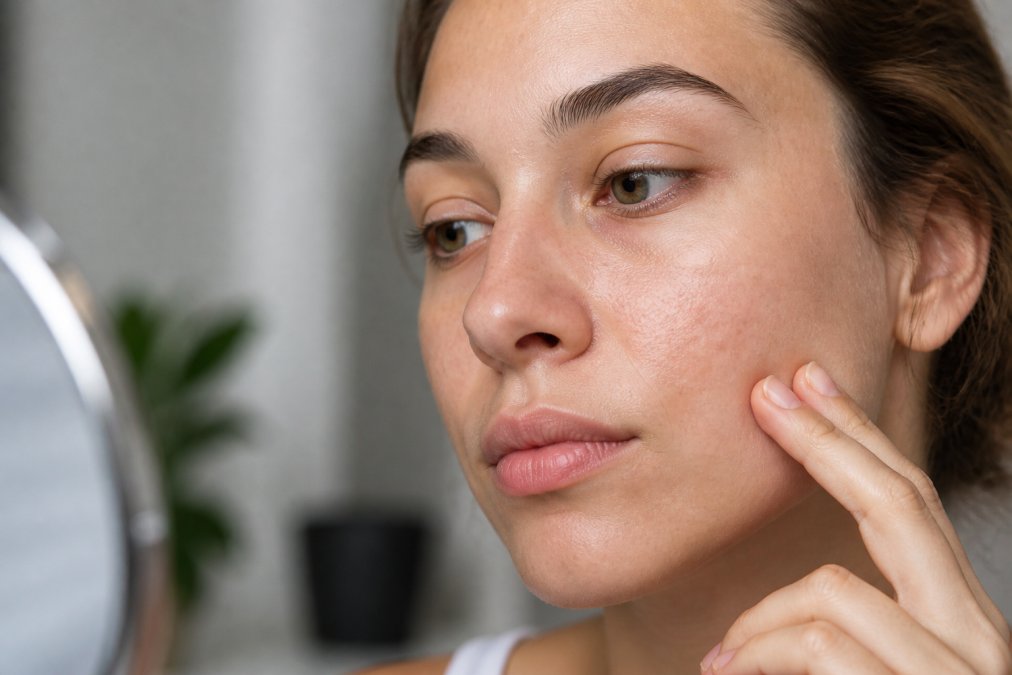
The simplest way to determine your skin type is the bare-face test. Wash your face with a gentle cleanser, pat dry, and wait 30 minutes without applying any products. Then observe: Does your skin feel tight and uncomfortable? You likely have dry skin. Does it look shiny across your entire face, particularly on your forehead, nose, and chin? You probably have oily skin. If your T-zone (forehead, nose, chin) is oily but your cheeks are normal or dry, you have combination skin. If your skin feels comfortable but you experience occasional redness or reactivity to products, you likely have sensitive skin.
Another assessment method involves blotting papers. Press blotting papers against different areas of your face, your forehead, nose, cheeks, and chin, and observe the oil transfer. Heavy oil on all papers indicates oily skin; minimal oil suggests dry skin; oil only on the T-zone indicates combination skin.
Consider also your skin's reaction history. If you've experienced redness, burning, or itching with multiple products, you likely have sensitive skin. If you break out easily or have visible congestion, your skin may be acne-prone (which can occur with any skin type). Understanding these patterns helps you choose products that won't trigger negative reactions.
Essential Skincare Steps for Beginners
A minimalist routine requires just three essential steps, each serving a specific purpose. These steps form the backbone of any effective skincare regimen, whether you eventually add more treatments or keep things simple long-term.
Step 1: Cleanse
Cleansing removes dirt, oil, makeup, and environmental pollutants that accumulate on your skin throughout the day. A gentle cleanser is non-negotiable, harsh cleansers strip your skin barrier, leading to irritation and paradoxically, more oil production as your skin tries to compensate for lost moisture.
Choose a cleanser formulated for your skin type. For oily skin, a foaming or gel cleanser works well. For dry skin, a cream or milk cleanser is gentler. For sensitive skin, look for fragrance-free options and avoid sulfates, which can be overly drying. Apply the cleanser to damp skin, massage gently for 30-60 seconds, and rinse thoroughly with lukewarm water. Over-cleansing is a common mistake, cleanse once in the morning and once at night, not multiple times daily.
Step 2: Treat
The treatment step is where you address specific skin concerns with active ingredients. This might be a serum, essence, or targeted treatment depending on your needs. If you have acne-prone skin, a treatment with salicylic acid or niacinamide can help. If you're concerned about aging, a retinoid or vitamin C serum provides benefits. If your skin is dehydrated, hyaluronic acid or ceramides boost hydration.
The key to the treatment step is restraint. Choose ONE active ingredient to start with, use it consistently for 4-6 weeks, and assess results before adding another product. Many people make the mistake of combining multiple actives too quickly, which overwhelms their skin barrier and causes sensitivity. Patch testing is essential, apply a small amount to your inner arm or behind your ear first to ensure you don't have an allergic reaction.
Step 3: Protect
Protection typically means applying a moisturizer and sunscreen. A moisturizer seals in hydration and supports your skin barrier, regardless of your skin type. Even oily skin needs moisture, just choose a lightweight, non-comedogenic formula. Apply moisturizer to damp skin for better absorption.
Sunscreen is non-negotiable, even on cloudy days. Sun damage accumulates over time and is the primary cause of premature aging, hyperpigmentation, and skin cancer risk (the CDC). Use a broad-spectrum SPF 30 or higher daily. Many people skip sunscreen in their minimalist routine, which undermines all other skincare efforts. This is where prevention becomes your most powerful tool.
Skincare Routine Order of Application
The order in which you apply products matters because it affects absorption and efficacy. Products should be applied from lightest to heaviest texture, allowing each layer to absorb before applying the next.
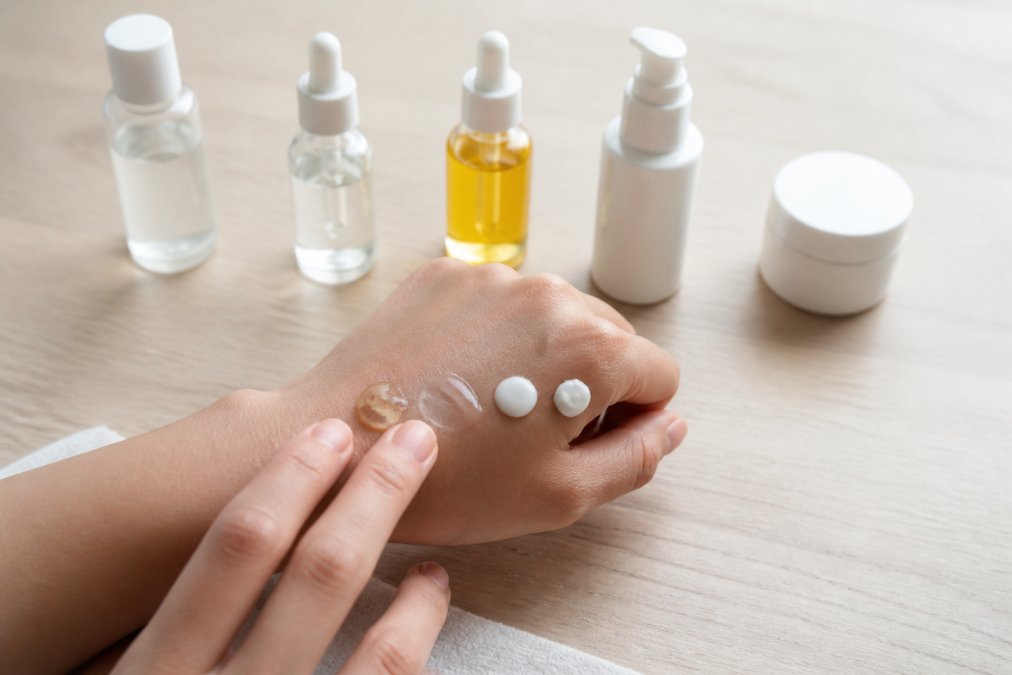
The standard order is:
- Cleanser - Remove surface impurities and prepare skin
- Toner or essence (optional) - Balance pH and add hydration
- Serum or treatment - Deliver active ingredients to deeper layers
- Moisturizer - Seal in hydration and support barrier function
- Sunscreen (morning only) - Protect against UV damage
Wait 30-60 seconds between steps to allow each product to absorb. Applying products to slightly damp skin can improve absorption, but avoid soaking wet skin, which dilutes the product. If you're using multiple serums, apply the thinnest one first, then move to thicker formulations.
A common mistake is applying products too quickly in succession. When you layer products before they've absorbed, they sit on top of each other rather than penetrating effectively. This can also increase the risk of pilling, where products ball up on your skin instead of sinking in. Patience during your routine yields better results than rushing.
Morning vs. Evening Routines
Your morning and evening routines serve different purposes, so they don't need to be identical. Your morning routine should be quick and focused on protection, while your evening routine can include more active treatments since your skin repairs itself during sleep.
Morning Routine:
- Gentle cleanser (or just rinse with water if your skin isn't oily)
- Lightweight serum or essence (optional)
- Moisturizer
- Broad-spectrum sunscreen
Keep your morning routine simplified, you're primarily protecting your skin from environmental damage and preparing it for the day ahead.
Evening Routine:
- Cleanser (or double cleanse if you wore makeup)
- Toner or essence (optional)
- Active treatment serum (retinoid, vitamin C, niacinamide, etc.)
- Heavier moisturizer or night cream
Your evening routine is where you can introduce more potent active ingredients because you're not exposing your skin to sun and environmental stressors afterward. Retinoids, in particular, should only be used at night since they increase sun sensitivity. Your skin's natural repair processes peak during sleep, so evening treatments have more time to work effectively.
The difference in sunscreen is crucial: morning routines must include broad-spectrum SPF protection, while evening routines skip it entirely. This distinction alone makes a significant difference in preventing sun damage and premature aging.
Ingredients to Look for and Avoid
Certain ingredients deliver proven benefits, while others can trigger sensitivity or irritation, especially when you're building a minimalist routine where each product carries more weight.
Ingredients to Prioritize:
Hyaluronic acid holds up to 1000 times its weight in water, making it excellent for hydration across all skin types (peer-reviewed research). Ceramides strengthen your skin barrier by filling gaps between skin cells. Niacinamide reduces inflammation, minimizes pore appearance, and regulates sebum production, beneficial for both oily and sensitive skin. Retinoids (including retinol and prescription retinoids like tretinoin) reduce fine lines, improve texture, and boost collagen production (peer-reviewed research). Vitamin C is a potent antioxidant that brightens skin and protects against environmental damage. Salicylic acid exfoliates inside pores, making it ideal for acne-prone skin. Glycerin is a humectant that draws moisture into the skin.
Ingredients to Approach Cautiously:
Fragrance, whether synthetic or natural, can irritate sensitive skin. Many minimalist advocates skip fragrance entirely to reduce irritation risk. Essential oils, while natural, are often irritating and unnecessary in skincare. Alcohol (especially denatured alcohol) can be drying and irritating, though some alcohols like cetyl alcohol are actually beneficial. Sulfates strip natural oils from skin, disrupting your skin barrier. Benzoyl peroxide is effective for acne but can be irritating, start with lower concentrations (2.5%) rather than 10%.
Reading ingredient lists helps you avoid products with ingredients that have triggered problems in the past. The ingredient list is ordered by concentration, so ingredients listed first are present in higher amounts. If an ingredient that bothers your skin is listed in the first five ingredients, it's worth skipping that product.
Transitioning to a Minimalist Routine
If you're currently using a complex 8-step routine and want to simplify, the transition requires strategy to avoid shocking your skin or experiencing a purge period where your skin temporarily worsens.
Start by identifying which products you genuinely love and which ones you use out of habit. Keep your cleanser and sunscreen, these are non-negotiable. Then choose ONE treatment product that addresses your primary concern. If you have multiple concerns, prioritize the one bothering you most. Use this simplified routine for 4-6 weeks to establish a baseline for how your skin responds.
After 4-6 weeks, assess your skin. Are you seeing improvement? Is your skin barrier feeling healthy? If yes, you can add a second treatment product if needed, but many people find they don't need it. The goal is finding the minimum number of products that keep your skin healthy and address your concerns, not achieving perfection with zero products.
Introduce new products one at a time, spacing them 2 weeks apart. This allows you to identify which product caused a reaction if your skin becomes irritated. Patch testing before full-face application is essential, particularly if you have sensitive skin.
A common concern during transition is experiencing a purge, temporary breakouts or flaking as your skin adjusts. This is normal and typically lasts 2-4 weeks. Resist the urge to add more products during this phase; instead, focus on gentle cleansing, hydration, and patience. Your skin barrier is healing, and adding more treatments will only complicate recovery.
Common Mistakes to Avoid
Understanding what not to do is as important as knowing what to do. These mistakes undermine even the best minimalist routine.
Over-exfoliation is rampant in skincare. Physical scrubs and chemical exfoliants feel like they're working because they create immediate smoothness, but overuse damages your skin barrier. Limit exfoliation to 1-2 times weekly maximum, and skip it entirely if your skin is sensitive or compromised. Your skin naturally sheds dead cells; you're just helping the process, not forcing it.
Skipping moisturizer under the assumption that it will make oily skin worse is counterproductive. Oily skin often occurs because skin is dehydrated and overcompensates by producing excess oil. A lightweight, non-comedogenic moisturizer actually helps regulate sebum production. Every skin type needs moisture.
Inconsistency sabotages results. Skincare requires 4-6 weeks minimum to show visible improvement. Many people switch products every 2 weeks, never giving anything time to work. Commit to a routine for at least a month before deciding if it's effective.
Ignoring the skin barrier by using too many active ingredients simultaneously causes sensitivity and irritation. Your skin barrier is your first line of defense against environmental damage and bacteria. When it's compromised, everything else becomes harder. Build your routine slowly, introducing one active at a time.
Using the wrong products for your skin type wastes money and causes frustration. An oily-skin formula on dry skin won't hydrate adequately. A rich cream on acne-prone skin can clog pores. Take time to identify your skin type accurately before purchasing products.
Neglecting sunscreen is perhaps the most damaging mistake. Sun damage is cumulative and irreversible. No other skincare product can undo the effects of chronic sun exposure. Broad-spectrum SPF 30+ daily is the single most important anti-aging step you can take.
Building a minimalist skincare routine doesn't mean settling for mediocre skin, it means being intentional about every product you use. When you simplify, you create space to understand what your skin actually needs rather than chasing trends or using products out of habit. At Hutch's Beauty Boutique, we stock a curated selection of skincare essentials designed for minimalist routines, from gentle cleansers to effective serums and broad-spectrum sunscreens. Browse our collection to find products that align with your skin type and concerns, and start your minimalist skincare journey with confidence.
Frequently Asked Questions
How do I know if a minimalist skincare routine is right for me?
A minimalist skincare routine works best when you focus on your skin's actual needs rather than trends. Start by identifying your skin type and any specific concerns like sensitivity or acne. If you currently use more than five products and see minimal results, simplifying often improves skin health. Dermatologists recommend minimalist routines because they reduce the risk of irritation and over-cleansing, which can damage your skin barrier. Your routine should address cleansing, treatment, and sun protection, anything beyond that is optional based on your skin's response.
What's the correct skincare routine order of application?
Apply products from thinnest to thickest consistency: start with cleanser, followed by toner or essence if using one, then serums and active ingredients, then moisturizer, and finish with sunscreen in the morning. This order allows each product to absorb properly and work effectively. Layering products correctly ensures they penetrate the skin and don't sit on the surface. If you're using retinoids or other actives, apply them to clean, dry skin before moisturizer. At night, skip sunscreen and follow the same sequence without it.
How long does it take to see results from a minimalist skincare routine?
Most people notice improvements in skin texture and hydration within 2-4 weeks of a consistent routine. However, addressing deeper concerns like acne or hyperpigmentation typically takes 6-12 weeks. Results depend on your skin type, the specific products you choose, and how consistently you follow your routine. A minimalist approach often shows faster results than complex routines because your skin isn't overwhelmed. Be patient and avoid switching products too frequently, as this prevents your skin from adjusting and responding.
Can a minimalist skincare routine help with acne?
Yes, minimalist routines often help acne-prone skin because they reduce irritation and over-cleansing, which can trigger breakouts. A simple routine focused on a gentle cleanser, targeted treatment like salicylic acid or niacinamide, and a lightweight, non-comedogenic moisturizer addresses acne without disrupting your skin barrier. Avoid over-treating with multiple actives, as this can increase sensitivity and worsen breakouts. If your acne is severe, consult a dermatologist to ensure your minimalist routine includes the right active ingredients for your specific condition.
This article was written using GrandRanker


