Table of Contents
- How to Identify Your Skin Type
- The Basic Steps of a Daily Skincare Routine
- Skincare Routine Order for Beginners
- Morning vs. Evening Skincare Routine Differences
- How Long to Wait Between Skincare Steps
- Layering Skincare Products and Application Order
- Building Your Routine Around Specific Skin Concerns
- Budget-Friendly vs. Luxury: Building a Routine That Works for Your Wallet
Last Updated: August 4, 2026
Learning how to build a daily skincare routine doesn't require expensive products or complicated steps, it requires understanding your skin and committing to consistency. Below, we'll show you exactly how to build a daily skincare routine that works for your skin type, schedule, and budget.
How to Identify Your Skin Type
Before building an effective routine, you need to know your skin type. Wash your face with a gentle cleanser and wait 30 minutes without applying anything. Then observe: Does your face feel tight? That's dry skin. Greasy all over? That's oily. Greasy in your T-zone (forehead, nose, chin) but normal elsewhere? That's combination. Comfortable but reactive to products? That's sensitive. Balanced? That's normal skin.
Understanding your skin type helps identify which active ingredients work best. Oily and acne-prone skin typically benefits from niacinamide and salicylic acid. Dry skin responds well to hyaluronic acid and ceramides. Sensitive skin needs gentle, fragrance-free formulas.
The Basic Steps of a Daily Skincare Routine
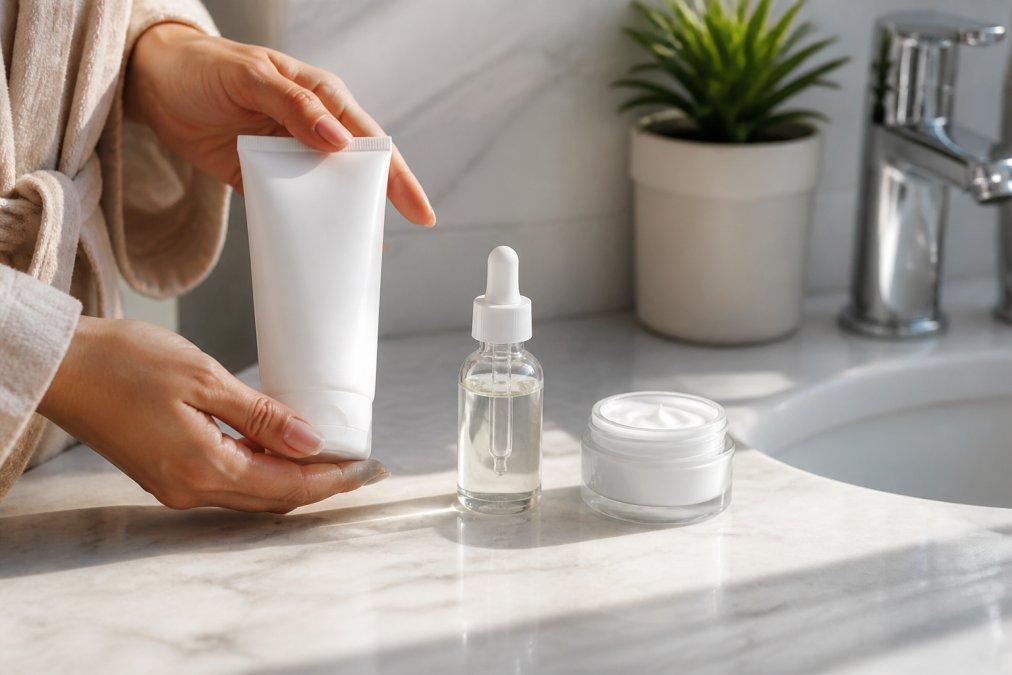
A complete daily skincare routine has three core steps: cleanse, treat, and moisturize. These steps work together to remove impurities, address specific skin concerns, and maintain your skin barrier.
Cleansing: The Foundation
Cleansing removes dead skin cells, excess sebum, makeup, and environmental pollutants. Without proper cleansing, other products can't penetrate effectively, and your skin barrier becomes compromised.
The best approach depends on your skin type. Oily and combination skin benefit from water-soluble or gel cleansers that remove excess oil without stripping. Dry and sensitive skin need gentler cream or milk cleansers. Many dermatologists recommend double cleansing at night: first with an oil-based cleanser to dissolve makeup, then with a water-based cleanser to remove residue.
Use lukewarm water, never hot, which damages the lipid barrier. Massage the cleanser gently for 30-60 seconds, then rinse thoroughly. Pat your skin dry rather than rubbing, which causes irritation.
Treating: Active Ingredients and Serums
After cleansing, your skin is primed to absorb active ingredients. Serums contain concentrated doses of beneficial compounds like retinoids, vitamin C, niacinamide, hyaluronic acid, and antioxidants that address specific concerns.
Serums are lightweight, water-based products designed to penetrate deeply. Apply them to damp skin immediately after cleansing. Common treatment ingredients include:
- Hyaluronic acid: Draws moisture into the skin, improving elasticity and hydration
- Niacinamide: Regulates sebum production, reduces pore appearance, and strengthens the skin barrier
- Retinoids: Accelerate cell turnover and boost collagen production, reducing fine lines and hyperpigmentation
- Vitamin C: A potent antioxidant that protects against free radical damage and brightens skin tone
- Salicylic acid: A beta-hydroxy acid that exfoliates inside pores, preventing acne and pore congestion
Introduce active ingredients gradually. Start with one new product 2-3 times per week for the first 2 weeks, then increase frequency if your skin tolerates it well. Patch testing on a small area before full application helps prevent adverse reactions.
Moisturizing and Protecting
Moisturizers lock in hydration and reinforce your skin barrier through humectants (which draw moisture in), emollients (which soften skin), and occlusives (which seal moisture). A good moisturizer should feel nourishing without clogging pores.
For oily skin, use lightweight gel or water-based moisturizers. For dry skin, richer creams with ceramides and oils provide deeper nourishment. Combination skin often benefits from lightweight lotions that hydrate without overloading oily areas.
Sunscreen is non-negotiable in your morning routine. SPF protection prevents photoaging, hyperpigmentation, and skin cancer. Use broad-spectrum SPF 30 or higher, and reapply every 2 hours if outdoors. Dermatologists consistently rank it as the single most important anti-aging product.
Skincare Routine Order for Beginners
The order in which you apply products affects absorption and efficacy. Apply products from lightest to heaviest: water-based products first, then oil-based products last.
A basic morning routine:
- Cleanser (30-60 seconds)
- Toner or essence (optional)
- Serum or treatment (wait 1-2 minutes)
- Moisturizer (wait 1-2 minutes)
- Sunscreen (wait 5-10 minutes before leaving home)
An evening routine:
- Oil cleanser or makeup remover (1-2 minutes)
- Water-based cleanser (30-60 seconds)
- Toner or essence (optional)
- Serum or treatment (wait 1-2 minutes)
- Night moisturizer or sleeping mask
Morning vs. Evening Skincare Routine Differences
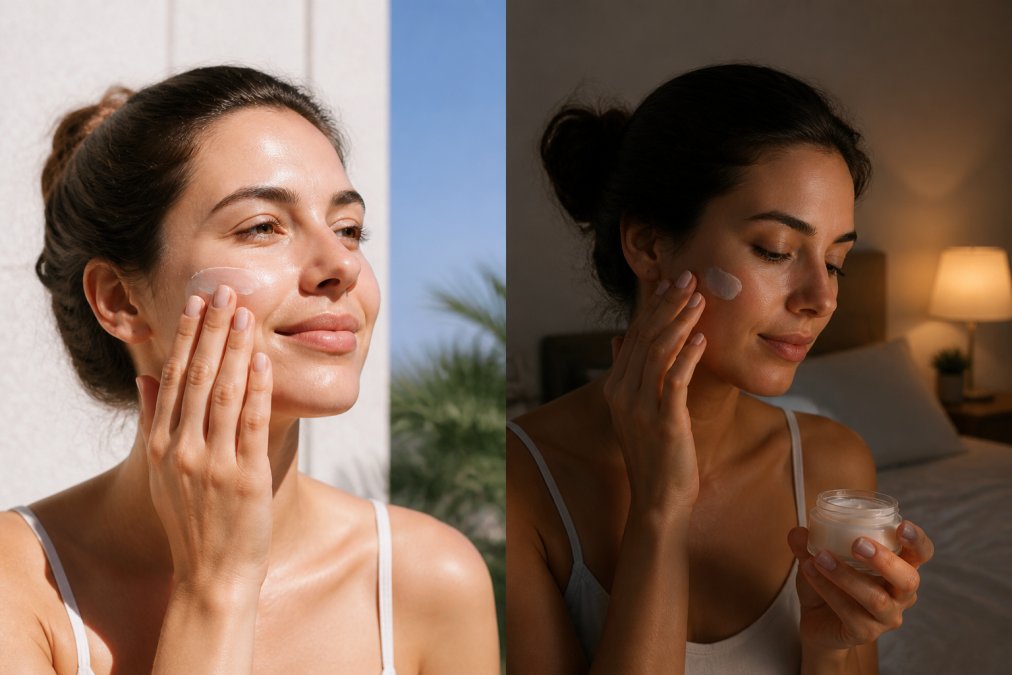
Your skin has different needs during the day versus night. Morning routines focus on protection and preparation for environmental stressors. Evening routines emphasize repair and treatment.
Your Morning Skincare Routine
Your morning routine should be quick and focused on protecting your skin from the day ahead. Environmental pollutants, UV rays, and free radical damage accelerate aging, so include antioxidants and SPF protection.
A typical morning routine takes 5-10 minutes:
- Cleanser (1-2 minutes): Rinse away sweat, oil, and bacteria from overnight
- Toner (optional, 1 minute): Hydrates and preps skin for serums
- Serum (2 minutes): Apply vitamin C or another antioxidant for free radical protection
- Moisturizer (1-2 minutes): Lock in hydration
- Sunscreen (2-3 minutes): Apply generously, most people don't use enough. You need about 1/4 teaspoon for your face
Morning serums should focus on antioxidants and hydration. Vitamin C serums brighten skin and provide photoprotection. Hyaluronic acid serums boost hydration. Niacinamide helps regulate sebum and strengthens your skin barrier against pollution.
Your Evening Skincare Routine
Evening is when your skin repairs itself. Cell turnover peaks at night, and your skin barrier becomes more permeable, meaning active ingredients penetrate more effectively. This is the time to use stronger treatments like retinoids and exfoliants.
A typical evening routine takes 10-15 minutes:
- Oil cleanser (1-2 minutes): Dissolves makeup and oil-soluble impurities
- Water cleanser (1-2 minutes): Removes remaining residue
- Toner (optional, 1 minute): Hydrates and balances pH
- Exfoliant or treatment (2-3 minutes, 2-3 times per week): Use chemical exfoliants or retinoids
- Serum (2 minutes): Apply hydrating or treatment serums
- Night moisturizer or mask (2-3 minutes): Use heavier formulas
Evening is when you should introduce stronger active ingredients. Retinoids accelerate cell turnover and boost collagen production, reducing fine lines and hyperpigmentation. Chemical exfoliants like AHAs and BHAs dissolve dead skin cells, revealing brighter, smoother skin. Start these treatments 1-2 times per week and gradually increase frequency as your skin adapts.
How Long to Wait Between Skincare Steps
Timing between steps affects how well products absorb and work together. Applying products too quickly can dilute their effectiveness or cause pilling.
The general rule is to wait 1-2 minutes between water-based products and 2-3 minutes before applying heavier products:
- After cleanser: Wait 30 seconds to 1 minute for your skin to dry slightly
- After toner or essence: Wait 1-2 minutes before applying serum
- After serum: Wait 1-2 minutes before applying moisturizer
- After moisturizer: Wait 5-10 minutes before applying sunscreen
- After night moisturizer: You can apply a sleeping mask immediately, but wait 2-3 minutes before a treatment serum
If you're in a rush, apply products while your skin is slightly damp, damp skin absorbs products faster. However, never apply sunscreen to damp skin; it won't provide adequate protection.
Layering Skincare Products and Application Order
Proper layering ensures each product absorbs fully and works synergistically with others. Apply products from thinnest to thickest consistency.
| Product Type | Consistency | Application Order | Wait Time |
|---|---|---|---|
| Cleanser | Varies | 1st | 30-60 sec |
| Toner/Essence | Watery | 2nd | 1-2 min |
| Serum | Lightweight liquid | 3rd | 1-2 min |
| Moisturizer | Medium | 4th | 1-2 min |
| Oil or mask | Heavy | 5th | 2-3 min |
| Sunscreen | Medium-heavy | 6th (morning only) | 5-10 min |
When layering multiple serums, apply them in order of molecular weight, smallest molecules first. Hyaluronic acid serums should go on damp skin before heavier serums. Vitamin C serums work best on clean, dry skin before hydrating serums.
Emollients and occlusives should always go last because they seal the skin barrier. If you apply a heavy cream before a lightweight serum, the serum won't penetrate.
Building Your Routine Around Specific Skin Concerns
Once you understand the basics, customize your routine to address your specific concerns. Different skin issues require different active ingredients.
Acne and Pore Congestion
Acne results from excess sebum production, bacteria, and dead skin cells clogging pores. The best approach combines gentle cleansing, exfoliation, and targeted treatments.
Salicylic acid is the gold standard for acne-prone skin. This beta-hydroxy acid penetrates into pores and dissolves sebum buildup. Use a salicylic acid cleanser or treatment 2-3 times per week, starting with lower concentrations (0.5-1%).
Niacinamide also helps regulate sebum production and reduce pore appearance. Many acne-prone individuals see improvement within 4-6 weeks of using niacinamide serums consistently.
For active breakouts, benzoyl peroxide is highly effective at killing acne-causing bacteria. Start with lower concentrations (2.5%) and use it 2-3 times per week initially, as it can be drying.
Hyperpigmentation and Uneven Tone
Hyperpigmentation occurs when melanin clusters in certain areas, creating dark spots from sun exposure, inflammation, or hormonal changes. Brightening your skin tone requires consistent use of ingredients that inhibit melanin production or accelerate cell turnover.
Vitamin C serums are highly effective for brightening. They inhibit tyrosinase, the enzyme responsible for melanin production, and provide antioxidant protection against free radical damage.
Retinoids accelerate cell turnover, helping shed pigmented cells faster. Over 12-16 weeks of consistent use, retinoids can significantly reduce the appearance of dark spots and uneven tone.
Niacinamide also helps reduce hyperpigmentation by regulating melanin production. The combination of niacinamide plus vitamin C plus retinoids creates a powerful brightening routine.
Sensitivity and Barrier Repair
Sensitive skin often has a compromised skin barrier, meaning the lipid barrier that protects against irritants and water loss is damaged. Rebuilding this barrier requires gentle, hydrating products without irritating ingredients.
Avoid physical exfoliants, strong acids, and fragrance. Focus instead on hydrating and barrier-repairing ingredients like ceramides, hyaluronic acid, and centella asiatica (cica). These ingredients strengthen the skin barrier and reduce trans-epidermal water loss.
Niacinamide is particularly helpful for sensitive skin because it reduces inflammation and strengthens barrier function. Use it consistently for 4-6 weeks to see improvement in redness and reactivity.
Avoid introducing multiple new products simultaneously. Add one product every 2 weeks and observe how your skin responds.
Budget-Friendly vs. Luxury: Building a Routine That Works for Your Wallet
You don't need expensive products to build an effective skincare routine. Many affordable drugstore brands deliver excellent results, while some luxury products offer primarily packaging and marketing rather than superior formulations.
Active ingredients like retinoids, vitamin C, and salicylic acid are equally effective whether they cost $15 or $150. The price difference typically reflects branding, packaging, and marketing costs rather than ingredient quality.
Where budget matters most is consistency. A simple routine with affordable products that you use every day outperforms an expensive routine you skip half the time. Start with basics: a gentle cleanser, a hydrating moisturizer, and sunscreen.
As your budget allows, add targeted treatments. A basic retinoid or vitamin C serum ($15-30) provides significant anti-aging benefits. A niacinamide serum ($10-20) helps with breakouts and barrier repair. These mid-range products deliver excellent results without breaking the bank.
At Hutch's Beauty Boutique, we curate a selection of products across all price points, from affordable essentials to premium treatments. Discover quality items that cater to your personal style and wellness needs with our easy-to-navigate online catalog.
Building a daily skincare routine requires understanding your skin type, committing to consistent steps, and choosing products with active ingredients that address your specific concerns. The most effective routine is one you'll actually follow, so start simple, be patient with results, and adjust as your skin evolves. According to dermatological research on skincare efficacy, most people see visible improvements in skin texture and clarity within 4-6 weeks of following a consistent routine. Visit Hutch's Beauty Boutique to explore our curated selection of cleansers, serums, moisturizers, and sunscreens designed for every skin type and budget. With our diverse product range and straightforward guidance, you'll find everything you need to build a routine that works, and stick with it.
Frequently Asked Questions
What is the correct order to apply skincare products in a daily skincare routine?
Apply products from thinnest to thickest consistency: cleanser, toner or essence, serums with active ingredients (like hyaluronic acid or retinoids), treatments, moisturizer, and sunscreen (morning only). This layering order allows each product to penetrate properly and prevents the skin barrier from blocking lighter formulas. Wait 30-60 seconds between steps for full absorption.
How do I determine my skin type for building the right routine?
Cleanse your face and wait 30 minutes without applying products. Blot your T-zone (forehead, nose, chin) with blotting paper: oily skin leaves visible oil, dry skin leaves nothing, combination skin shows oil in some areas only, and normal skin shows minimal shine. Observe how your skin feels: tight suggests dryness, greasy suggests oiliness. This determines which active ingredients and moisturizers suit you best.
Do I really need different morning and evening skincare routines?
Yes. Morning routines prioritize protection with SPF and lightweight hydration to prepare skin for sun exposure and environmental stressors. Evening routines focus on repair and cell turnover using retinoids, exfoliants, and richer moisturizers when the skin naturally regenerates. Skipping morning SPF leaves skin vulnerable to photoaging and free radical damage; skipping evening actives misses the optimal window for treating concerns like hyperpigmentation and fine lines.
How long does it take to see results from a new daily skincare routine?
Most skin improvements appear within 4-6 weeks of consistent use, though this varies by concern. Cell turnover takes about 28 days, so expect changes in texture and clarity by week 3-4. Hyperpigmentation and deeper concerns may need 8-12 weeks. Results depend on choosing dermatologist-recommended active ingredients suited to your skin type and maintaining consistency without over-treating, which can damage the skin barrier.
This article was written using GrandRanker


