Table of Contents
- Sonic Brush vs Silicone Facial Cleanser: Key Differences at a Glance
- The Best Facial Cleansing Brush for Sensitive Skin: What to Look For
- Hygiene Showdown: Bacterial Growth, Non-Porous Surfaces, and Device Sterilization
- How to Clean Facial Cleansing Brushes and Silicone Devices
- How Long to Use a Facial Cleansing Brush Without Damaging Your Skin Barrier
- Exfoliation vs Daily Cleansing: Risks of Micro-Tears and Over-Cleansing
- Pros and Cons: Sonic Brush vs Silicone Facial Cleanser Compared
- Frequently Asked Questions
Last Updated: September 11, 2026
Sonic Brush vs Silicone Facial Cleanser: Key Differences at a Glance
The sonic brush vs silicone facial cleanser debate comes down to one trade-off: mechanical exfoliation versus hygienic gentleness. A sonic brush uses oscillating nylon bristles to sweep away debris, while a silicone facial cleanser relies on non-porous silicone nubs and sonic pulsations to loosen buildup without abrasive scrubbing. Oily and congested skin usually fares better with bristles, while reactive skin prefers silicone.
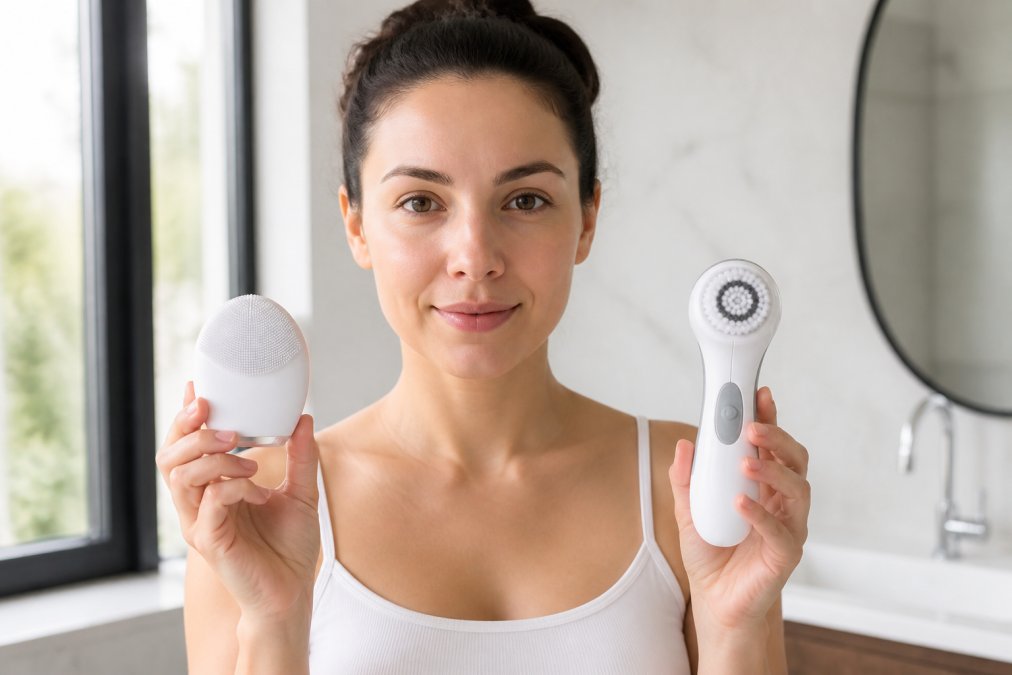
The core difference is friction: bristled brushes create friction against the skin surface, while silicone devices create pressure waves through the skin. That drives how clean your face feels, how much bacteria the device harbors, and how often you can safely use it.
| Feature | Sonic Brush | Silicone Facial Cleanser |
|---|---|---|
| Cleaning action | Oscillating nylon bristles | Sonic pulsations through silicone nubs |
| Surface type | Porous bristles | Non-porous, food-grade silicone |
| Exfoliation strength | Moderate to strong | Gentle |
| Bacteria risk | Higher without regular head changes | Low |
| Best for | Oily, congested, textured skin | Sensitive, reactive, dry skin |
How Sonic Vibrations and Silicone Pulsations Work
Sonic brushes operate at high frequencies, typically hundreds of oscillations per second, loosening sebum and dead cells from pore openings (PubMed). Silicone cleansers use similar vibrations but transmit them through soft silicone contact points rather than bristle tips, delivering deep cleansing without the abrasive edge. Most users find silicone gentler on first use, while bristles feel more "thorough" because you sense the scrub.
Bristle Material: Nylon vs Food-Grade Silicone
Nylon bristles remove sebum and makeup well, but their porous structure traps moisture, dead skin, and bacteria over time. Food-grade silicone is non-porous and hypoallergenic, so it rinses clean and dries fast, a difference that matters most for anyone prone to breakouts or irritation (the FDA). A bristled brush demands disciplined head replacement; a silicone device mostly needs a rinse.
The Best Facial Cleansing Brush for Sensitive Skin: What to Look For
The best facial cleansing brush for sensitive skin prioritizes gentleness and hygiene over scrubbing power. Look for soft, fine bristles or non-porous silicone, adjustable low-speed settings, and a waterproof, rechargeable build that's easy to rinse. Skip anything marketed purely on "deep pore extraction," since aggressive exfoliation triggers flare-ups.
Three things separate a sensitive-skin-safe device from a problem waiting to happen:
- Contact material: food-grade silicone or ultra-soft bristles, never stiff nylon
- Speed control: at least one low, gentle setting you can use daily
- Cleanability: waterproof and non-porous so bacterial growth stays low
A common mistake is buying the strongest brush available and using it twice a day, that's how people wreck their skin barrier in a week. Start on the lowest setting, at night only, and let your skin tell you whether it tolerates more.
Hygiene Showdown: Bacterial Growth, Non-Porous Surfaces, and Device Sterilization
Silicone wins the hygiene comparison, but the mechanism, not just "non-porous equals clean", determines how often you replace or deep-clean a device.
Nylon bristles are extruded filaments packed into a drilled head, creating two contamination zones: the bristle surface and the base where bristles meet the head plate. Sebum, foundation, and dead skin cells wick into that base by capillary action, and because the head sits damp between uses, that residue becomes a growth medium. A head that looks clean at the tips but smells musty at the base is colonized inside.
Silicone is a non-porous elastomer: water and product sit on the surface rather than soaking in, so there's no interior reservoir. That doesn't make silicone sterile, it makes it easier to sterilize. Left wet in a shower caddy, it will still grow surface film.
A Real Device Sterilization Protocol
Rinsing is not sanitizing. Here's a tiered protocol to reduce microbial load:
After every use (both device types):
- Rinse under warm running water while the device is still on, so vibration dislodges residue.
- Shake off excess water and dry the contact surface with a clean towel. Air-drying leaves nubs and bristle bases damp for hours.
- Store upright and uncovered; a closed travel case traps humidity.
Weekly (silicone devices):
- Wash the contact surface with a drop of mild, fragrance-free hand soap and warm water, working it into the nub pattern.
- Rinse thoroughly, leftover soap residue irritates reactive skin.
- For a deeper clean, wipe the nubs with a 70% isopropyl alcohol pad and let it evaporate fully. Check the manufacturer's instructions first; some silicone formulations and sealed housings don't tolerate repeated alcohol.
Weekly (bristled sonic brushes):
- Remove the head and rinse the bristles under warm water, working your thumb through the tufts from the base outward, the step most people skip.
- Wash with mild soap, then rinse until the water runs clear.
- Stand the head bristle-side down on a clean towel so water drains away from the base.
- Wipe the handle's connection point with an alcohol pad, since residue accumulates where the head seats.
Periodic (bristled brushes):
- Replace the head on the manufacturer's schedule, and sooner if bristles splay, discolor, or hold odor after washing. Splayed bristles change the contact angle and how aggressively the brush scrubs.
- Antimicrobial-treated heads, like those on the Michael Todd Beauty Soniclear Allure, slow surface growth but don't eliminate base contamination. Treatment is not a substitute for replacement.
The Practical Takeaway
The more porous the surface, the more disciplined your cleaning routine and the shorter the interval between replacements. Silicone shifts the burden from replacement cost to routine cleaning; bristles shift it the other way, cheaper to rinse, costlier over a year because heads are consumables.
How to Clean Facial Cleansing Brushes and Silicone Devices
Cleaning a facial cleansing brush takes under a minute, but skipping it is how devices turn against your skin. Silicone needs a quick rinse and dry; bristled brushes need deeper, more frequent attention.
How to clean a silicone facial cleanser:
- Rinse under warm water after every use
- Wipe with mild soap once or twice a week
- Pat dry and store upright, away from moisture
- Disinfect with rubbing alcohol monthly
How to clean a bristled sonic brush:
- Remove the head and rinse bristles thoroughly after each use
- Wash the head weekly with gentle soap and warm water
- Let it air-dry bristle-side up
- Replace the head every few months, or sooner if bristles fray
How Long to Use a Facial Cleansing Brush Without Damaging Your Skin Barrier
Cap device use at 60 seconds per session, once daily, and most skin tolerates it well. The skin barrier is a lipid layer that holds moisture in and irritants out, and over-cleansing strips it. Silicone devices generally tolerate daily use; bristled sonic brushes are best limited to a few times a week, especially for dry or sensitive skin.
How long to use a facial cleansing brush depends on your skin type, the device's abrasiveness, and how many other exfoliating products you use. If you also use retinol or chemical exfoliants, cut device sessions down, doubling up on exfoliation is the fastest route to a compromised lipid barrier, showing up as redness, stinging, and tightness.
Exfoliation vs Daily Cleansing: Risks of Micro-Tears and Over-Cleansing
Exfoliation removes dead surface cells; daily cleansing removes oil, sweat, and environmental debris. Confusing the two is where most routines go wrong, and the damage is cumulative, which is why people don't connect cause to symptom.
What Micro-Tears Actually Are
A bristled brush drags filaments across the stratum corneum, the outermost layer of dead, flattened cells. That friction produces the immediate smoothness, but it also disrupts the intercellular lipids cementing those cells together, and at higher pressure or longer sessions can create micro-tears: small mechanical disruptions in the surface layer.
Micro-tears aren't visible cuts, they're breaches that let irritants, fragrance, and bacteria reach living tissue below. The result shows up later as redness, stinging on products that previously felt fine, and a tight, reactive feeling after washing.
The Barrier Timeline: Why Damage Is Delayed
The lipid barrier is a mortar of ceramides, cholesterol, and fatty acids between skin cells that holds water in and irritants out. Mechanical disruption strips that mortar faster than skin can rebuild it.
A common pattern looks like this:
- Weeks 1-2: Skin feels smoother and looks brighter. The device seems to be working.
- Weeks 3-6: Occasional stinging when applying products. Mild flaking or tightness after cleansing.
- Weeks 6-12: Persistent redness, new sensitivity to products that were previously tolerated, and breakouts that look like congestion but are actually irritation.
The trap is that early results reinforce the habit that causes later damage. By the time the barrier is visibly compromised, the user has usually been over-cleansing for a month or more.
How Device Use Interacts With Retinoids and Acids
This is where routines fail hardest. Retinoids and chemical exfoliants (glycolic, lactic, salicylic) already accelerate cell turnover and thin the stratum corneum; layering a friction-based device on top stacks two exfoliating mechanisms on the same barrier.
Practical rules that most practitioners find workable:
- On retinoid nights: Skip the bristled device entirely. Cleanse manually with fingertips. The retinoid is doing the turnover work; the brush adds mechanical insult on top of chemical insult.
- On acid nights: Same logic. If you've applied an AHA or BHA, don't follow with a bristled brush. If you use the device in the same session, use it before the acid, not after, and only on a low setting.
- Silicone devices: Gentler, but not exempt. Sonic pulsations still create pressure waves through the skin. On active-ingredient nights, drop to the lowest setting or skip.
- Alternating schedule: Device use on non-active nights, active ingredients on the others, so each mechanism doesn't compound the other.
Session Limits and Frequency
Cap device use at 60 seconds per session, beyond that you're adding friction time, not getting cleaner. Silicone devices generally tolerate daily use; bristled sonic brushes are best limited to a few times a week, especially for dry or sensitive skin.
Signs you're overdoing it, in rough order of appearance: post-cleanse tightness, stinging when applying moisturizer, flaking around the nose and mouth, then persistent redness. Any of these means pull back frequency before adding products to fix it, adding actives to an irritated barrier usually makes it worse.
The Rebound Oil Myth
Over-cleansing strips natural oils, and the common claim is that skin then produces more oil to compensate. More accurately: stripping the barrier increases transepidermal water loss, and dehydrated skin often looks oilier because surface oil is more visible on a compromised surface. The fix is restoring the barrier, not adding more cleansing.
Pros and Cons: Sonic Brush vs Silicone Facial Cleanser Compared
Each device type has a clear best-fit user, and choosing wrong is the main reason people abandon facial cleansing tools. Here's how the leading options stack up.
NågraCoola Sonic Facial Cleansing Brush, around $35. A balanced sonic option with multiple intensity settings and a waterproof build, best for deep cleansing without a clinical price. The drawback: it needs regular charging to hold its sonic intensity.
Michael Todd Beauty Soniclear Allure, around $99. A professional-grade brush with antimicrobial bristles and a built-in timer, best for maximum exfoliation and hygiene features in one device. The catch is ongoing cost, since brush heads need periodic replacement.
EZBasics Facial Cleansing Brush, around $25. An entry-level electric brush with soft bristles and adjustable speeds, best for budget-conscious first-timers testing electric cleansing. Build quality is lighter than premium models.
Generic Silicone Sonic Facial Cleansing Device, around $30. A non-porous silicone tool with sonic massage and long battery life, best for sensitive skin that prioritizes hygiene and easy cleaning over deep exfoliation. It's less effective at heavy exfoliation.
For shoppers who want to compare these side by side, Ulta's guide to facial cleansing devices is a useful reference point.
If you'd rather browse a range of these tools in one place, Hutch's Beauty Boutique stocks silicone cleansers, sonic brushes, and other personal care gadgets together, so you can compare without hopping between stores.
Choosing between a sonic brush and a silicone facial cleanser is really a question about your skin, not the device. The wrong pick, a stiff brush on reactive skin or a gentle silicone tool on congested skin, leads to frustration either way. Hutch's Beauty Boutique carries both categories side by side, alongside the rest of your daily self-care essentials, at prices built for budget-conscious shoppers. Search our catalog to find the facial cleansing device that matches your skin type and routine.
Frequently Asked Questions
Do dermatologists recommend silicone face scrubbers over sonic brushes?
Many dermatologists favor silicone devices for sensitive or reactive skin because the non-porous surface resists bacterial growth and the soft pulsations are less abrasive than nylon bristles. For oily skin with frequent pore congestion, a sonic brush with antimicrobial bristles may be recommended for deeper sebum removal. The right choice depends on your skin type and how well you tolerate exfoliation.
Do sonic facial brushes really work for deep cleansing?
Sonic brushes use high-frequency vibrations to loosen dirt, oil, and makeup from pores more effectively than manual cleansing alone. They can improve skin texture and remove more sebum, but they also carry a higher risk of micro-tears and irritation if used too often. Limiting use to two or three times per week and following with a gentle moisturizer helps protect the lipid barrier.
How often should you replace a facial cleansing brush head?
Most manufacturers recommend replacing nylon brush heads every three months, or sooner if bristles look frayed or discolored. Silicone devices do not require head replacement because the non-porous surface can be washed and dried thoroughly after each use. If you notice skin irritation or a buildup of residue that does not rinse away, replace the head or deep-clean the silicone immediately.
Are silicone facial cleansing brushes good or bad for sensitive skin?
Silicone brushes are generally well tolerated by sensitive skin because they are hypoallergenic, non-porous, and less abrasive than bristled alternatives. They provide gentle pulsations that help with makeup removal without stripping the skin barrier. However, even silicone devices can cause irritation if pressed too hard or used with harsh cleansers, so keep the pressure light and limit sessions to once daily.
How long should I use a facial cleansing brush during each session?
Aim for 60 seconds total, divided into 15-second intervals across your forehead, nose and chin, and each cheek. Using the device longer than two minutes or pressing firmly can lead to over-cleansing, skin irritation, and a weakened lipid barrier. If your skin feels tight or looks red after cleansing, reduce the time or switch to every other day.


