Table of Contents
- Is It Safe to Buy Beauty Online? What You Need to Know
- How to Spot Fake Skincare Before You Buy
- How to Check Batch Codes on Cosmetics
- Buying Beauty Products on Amazon: What You Should Know
- Verify Authorized Retailers and Official Websites
- Dangers of Toxic Ingredients in Counterfeit Products
- Your Checklist for Safe Online Beauty Shopping
- Conclusion
Last Updated: August 10, 2026
Is It Safe to Buy Beauty Online? What You Need to Know
Buying beauty products online is convenient, but the risks are real. Counterfeit cosmetics flood e-commerce platforms, and third-party sellers often lack proper supply chain verification. The answer to whether it's safe to buy beauty online is nuanced: yes, but only if you know what to look for. Legitimate authorized retailers and official brand websites offer genuine products with proper dermatological safety standards. Unregulated grey market sellers and unauthorized third-party vendors, however, frequently sell products containing toxic ingredients like mercury, lead, hydroquinone, and undisclosed steroids that can cause serious adverse reactions.
This guide covers the verification steps most online shoppers skip, the red flags that signal counterfeit products, and how to protect yourself on major marketplaces. We'll walk you through batch code authentication, packaging inspection, and seller verification so you can buy beauty products with confidence.
The FDA's guidance on counterfeit cosmetics and health risks
How to Spot Fake Skincare Before You Buy
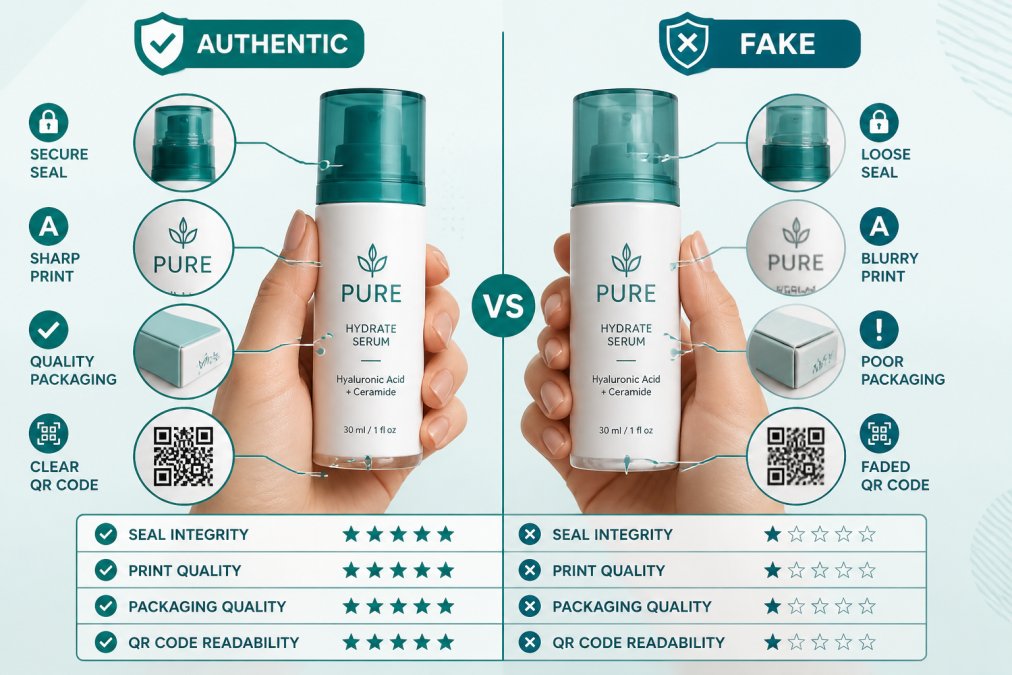
Counterfeit skincare is designed to look legitimate at first glance. The packaging quality, label printing, and seal integrity often reveal the truth. Fraudulent products typically have inconsistent fonts, misspelled ingredients, and poor-quality printing that real manufacturers would never allow.
Red Flags in Packaging and Labeling
Examine the physical product before opening. Authentic cosmetics have crisp, precise labeling with consistent font weights and spacing. Counterfeit versions often show blurry text, uneven ink application, or colors that don't match the official product images.
Check for these specific warning signs: misaligned labels, missing batch codes, illegible expiration dates, or ingredients listed in the wrong order. Real manufacturers follow strict labeling standards. If the ingredient list looks hastily printed or contains obvious misspellings, that's a major red flag.
The packaging material itself matters. Authentic products use consistent plastic quality, proper seals that don't come loose easily, and boxes with clean edges. Counterfeit packaging often feels flimsy, has loose seals, or shows signs of poor assembly.
Look at the product color and consistency through the container. If the formula looks significantly different from official product photos or appears separated or discolored, don't buy it. Unregulated manufacturing processes often result in inconsistent batches that authentic suppliers would reject.
Price Discrepancies and Grey Market Products
If a high-end skincare product costs 60-70% less than the official retail price, it's almost certainly counterfeit or a grey market product. Grey market items are authentic products diverted from authorized distribution channels, often from international markets with different pricing. While technically real, they may lack proper storage conditions, warranty coverage, or ingredient compliance with US standards.
Prices that are too good to be true almost always are. Authorized retailers maintain consistent pricing because manufacturers enforce minimum advertised prices. When a seller undercuts this significantly, they're either liquidating overstock (rare), operating illegally, or selling fakes.
Compare prices across multiple authorized retailers. If one seller is dramatically cheaper than every other legitimate source, verify that seller's authorization status directly with the brand. Some grey market sellers operate through Amazon or other platforms where consumer protection is limited.
How to Check Batch Codes on Cosmetics
Batch codes are the most reliable way to verify product authenticity. Every legitimate cosmetic has a unique batch code printed on the packaging, usually on the bottom or back. This code allows you to trace the product through the supply chain and confirm it came from an authorized manufacturer.
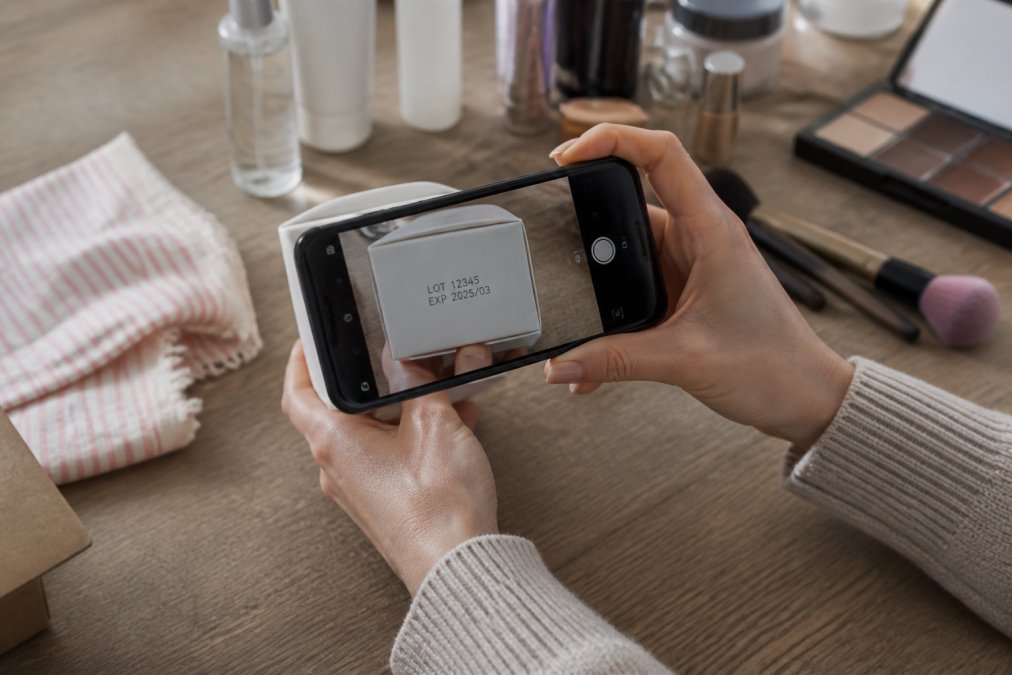
Most major brands offer batch code lookup tools on their official websites. Enter the code, and the system returns the manufacturing date, expiration date, and distribution information. If the code doesn't exist in their system, the product is counterfeit.
Write down the batch code before purchasing online. Ask the seller for a photo of the code if it's not visible in the product listing. Legitimate sellers have nothing to hide and will provide this information immediately. Sellers who refuse or claim they can't access the code should be avoided entirely.
Some brands use QR codes on packaging that link directly to product verification pages. Scan the code with your phone. If it doesn't load or directs you to a suspicious website, the product is fake. Authentic QR codes always direct to official brand domains.
Keep the batch code information after purchase. If you experience any adverse reaction or quality issues, you can report it directly to the manufacturer with proof of the batch code, which strengthens your consumer protection claim.
Buying Beauty Products on Amazon: What You Should Know
Amazon hosts millions of beauty products, but the platform's third-party seller model creates significant supply chain risks. Amazon itself doesn't manufacture or warehouse most beauty items. Instead, independent sellers list products, and Amazon handles fulfillment through its logistics network.
This structure means counterfeit products can reach customers even when Amazon's systems are working correctly. A seller with high ratings might source products from unauthorized distributors without knowing they're receiving fakes. By the time a customer discovers the issue, the product has already caused potential skin damage.
Third-Party Sellers and Supply Chain Risks
Third-party sellers on Amazon range from authorized distributors to individuals buying in bulk from grey market sources. You have no way to verify a seller's legitimacy just by looking at their storefront. A professional-looking Amazon seller page doesn't confirm they're authorized by the brand.
Check the seller's profile for authorization badges. Some brands have official Amazon storefronts marked "Ships from and sold by [Brand Name]." These are your safest option. When a product says "Ships from [Third-Party Seller] and fulfilled by Amazon," you're taking on additional risk.
Read recent customer reviews carefully, especially one-star and two-star ratings. Look for patterns. If multiple customers report receiving products with damaged packaging, missing batch codes, or adverse skin reactions, that's a strong signal of counterfeit sourcing. Fraudulent products often generate clusters of complaints within a short timeframe.
The supply chain risk increases when sellers offer deep discounts. They're often purchasing overstock from liquidators or unauthorized distributors abroad. These products may have been stored improperly, exposed to temperature fluctuations, or manufactured in unregulated facilities that don't meet US safety standards.
Verifying Seller Ratings and Return Policies
Seller ratings on Amazon reflect overall performance, not product authenticity. A seller with 4.8 stars might still be selling counterfeit beauty products if their other inventory is legitimate. Don't rely on star ratings alone.
Look at the return policy explicitly. Authorized sellers typically offer 30-day returns with prepaid shipping labels. If a seller requires you to pay for return shipping or offers no returns on beauty products, that's a red flag. Legitimate businesses stand behind their products.
Check how long the seller has been active. New sellers (less than 90 days on the platform) are higher risk. Counterfeit operations often create new accounts to avoid account bans after getting reported. Established sellers with multi-year histories are generally safer, though not foolproof.
Contact the seller before purchasing. Ask directly if the product is sourced from an authorized distributor and request a batch code photo. Legitimate sellers respond promptly with detailed information. Evasive responses or delays are warning signs.
Verify Authorized Retailers and Official Websites
The safest way to buy beauty online is directly from the brand's official website or authorized retailers they publicly list. Most major beauty brands maintain a list of approved sellers on their websites. Check this list before purchasing anywhere else.
Official brand websites always use secure checkout (look for the padlock icon in your browser address bar). They offer clear return policies, customer service contact information, and product guarantees. Buying directly eliminates the middleman and reduces counterfeit risk to nearly zero.
Authorized retailers like Ulta, Sephora, and Dermstore have strict product sourcing requirements. They conduct regular audits of their suppliers and remove sellers who fail verification. These retailers invest heavily in supply chain transparency because their reputation depends on it.
Verify a retailer's authorization directly with the brand. Don't rely on the retailer's claims. Visit the brand's official website, find their "Where to Buy" section, and confirm the retailer is listed. Some counterfeit operations create fake "authorized retailer" pages that look legitimate but aren't.
Be cautious with subscription services and discount beauty retailers. Some operate legitimately, but others source from grey market suppliers. Check customer reviews specifically mentioning product authenticity and batch code verification. If reviews mention counterfeit concerns, avoid that retailer.
Consumer Reports guidance on identifying counterfeit beauty products
Dangers of Toxic Ingredients in Counterfeit Products
Counterfeit beauty products frequently contain dangerous ingredients banned or heavily regulated in the United States. Mercury appears in some fake skin-lightening creams and can cause kidney damage with prolonged use. Lead contamination in counterfeit eyeshadows and lipsticks accumulates in the body over time.
Hydroquinone, a prescription-strength skin-bleaching agent, shows up in counterfeit products marketed as "natural" or "gentle." Unregulated use causes ochronosis, a permanent darkening of the skin that cannot be reversed. Undisclosed steroids in fake anti-aging creams cause skin atrophy, rosacea, and dependency.
Unregulated manufacturing facilities don't follow good manufacturing practices. Counterfeit products may contain bacterial contamination, mold, or allergens that trigger severe dermatological reactions. Some fake products have caused chemical burns, severe allergic reactions, and permanent skin damage.
The problem intensifies because counterfeit products don't list actual ingredients. You're applying unknown substances to your skin without knowing what they are. People with sensitive skin, allergies, or existing skin conditions face amplified risk.
American Academy of Dermatology resources on counterfeit cosmetics dangers
Your Checklist for Safe Online Beauty Shopping
Before completing any online beauty purchase, work through this verification process:
| Verification Step | What to Check | Red Flag |
|---|---|---|
| Seller Authorization | Is the seller on the brand's official "Where to Buy" list? | Seller not listed or claims authorization without proof |
| Batch Code | Does the product have a visible batch code? Can you look it up on the brand's website? | Missing code, code doesn't exist in brand's system |
| Packaging Quality | Is printing crisp and consistent? Are labels aligned properly? | Blurry text, misspelled words, loose seals |
| Price Comparison | Does the price match authorized retailers within 10-15%? | Price is 50%+ below official retail price |
| Seller Reviews | Do recent reviews mention authenticity concerns or adverse reactions? | Multiple complaints about counterfeit products or skin damage |
| Return Policy | Does the seller offer 30+ day returns with prepaid shipping? | No returns offered or customer pays return shipping |
| Payment Security | Does checkout use HTTPS and show a padlock icon? | Unsecured payment page or suspicious payment methods |
| Official Website | Can you find this exact product on the brand's official site? | Product only available through third-party sellers |
Start with the seller authorization check. If they're not on the official list, stop and shop elsewhere. Authorized retailers have already done the supply chain verification for you.
Next, request a batch code photo before purchasing. This takes 30 seconds and eliminates most counterfeit risk. If the seller won't provide it, that's your answer.
Compare pricing across multiple authorized sources. One significantly cheaper option suggests grey market sourcing or counterfeits. Legitimate businesses maintain consistent pricing.
Read recent one-star and two-star reviews specifically. Look for patterns mentioning packaging quality, batch codes, or skin reactions. A few negative reviews are normal; clusters of authenticity concerns are not.
Check the return policy in writing before checkout. Screenshot it. If you later discover the product is counterfeit, you'll have proof of what the policy promised.
Verify the checkout page is secure. Your browser should show a padlock icon and the URL should start with HTTPS, not HTTP. Never enter payment information on unsecured pages.
Finally, cross-reference the product on the brand's official website. If it's not there, it may be a discontinued item being liquidated through grey market channels, or it's counterfeit.
Buying beauty products online safely requires verification at every step, but it's absolutely doable. The process takes minutes and protects your skin and wallet. Start with authorized retailers, verify batch codes, and trust your instincts when something feels off. Your skin deserves products that are genuine, safe, and effective.
Frequently Asked Questions
Is it safe to buy beauty products on Amazon?
Buying beauty on Amazon carries real risks because third-party sellers often source from unauthorized distributors or grey market suppliers. Counterfeit skincare and cosmetics are common on large marketplaces. Stick to Amazon's official beauty brand stores when possible, check seller ratings carefully, and verify the product's batch code before using it. If you notice unusual packaging or suspect a fake, use Amazon's return policy immediately.
How can you tell if a beauty product is counterfeit?
Counterfeit beauty products often have spelling errors on labels, inconsistent fonts, or poor-quality packaging. The batch code may be printed rather than embossed, or it may not match the brand's verification system. Prices significantly lower than authorized retailers are a red flag. Check the official brand website for what legitimate packaging should look like, and compare side by side. If the product feels cheap or smells off, don't use it.
What are the risks of using fake skincare products?
Counterfeit skincare often contains toxic ingredients like mercury, lead, hydroquinone (in unauthorized concentrations), or unregulated steroids that can cause severe skin sensitivity, allergic reactions, and long-term health damage. These products lack dermatological safety testing and quality control. Adverse reactions can range from rashes and burns to systemic toxicity. Always verify product authenticity and buy from authorized retailers to ensure product integrity and consumer protection.
How do I check if a beauty website is legitimate?
Verify the website is the official brand domain or an authorized retailer listed on the brand's website. Check for secure payment options (look for HTTPS and a padlock icon), clear return policies, and customer reviews on independent sites. Legitimate retailers display contact information, business registration details, and transparent shipping costs. Avoid sites with poor grammar, vague product descriptions, or pressure to buy immediately. Cross-reference pricing with authorized retailers to spot suspiciously low prices.
This article was written using GrandRanker


