Table of Contents
- Why Counterfeit Beauty Products Matter
- Step 1: Examine the Packaging Integrity and Label Quality
- Step 2: How to Check Batch Codes on Beauty Products
- Step 3: Analyze Product Texture, Consistency, and Scent
- Step 4: Verify the Source and Authorized Retailer Status
- Step 5: Use Barcode Verification and Digital Tools
- Reporting Counterfeit Beauty Products to the FDA
- How to Spot Fake Beauty Products: Your Action Plan
Last Updated: August 11, 2026
Why Counterfeit Beauty Products Matter
Counterfeit cosmetics represent a serious consumer safety issue that extends far beyond wasted money. When you purchase a fake beauty product, you're exposing your skin to unknown ingredients, potential microbial contamination, and heavy metals that legitimate manufacturers would never allow near their formulations. Fraudulent manufacturers skip critical safety testing, quality control processes, and regulatory compliance checks. Your skin is your body's largest organ, and what you apply to it gets absorbed into your bloodstream. Counterfeit products may contain harmful substances banned in legitimate manufacturing, including lead-based pigments in eyeshadows, mercury in skin-lightening creams, or bacteria that cause serious infections. Learning how to spot fake beauty products isn't just about protecting your wallet, it's about protecting yourself.
Step 1: Examine the Packaging Integrity and Label Quality
The first defense against counterfeit beauty products starts with careful examination of the packaging itself. Authentic brands invest heavily in packaging design, printing quality, and structural integrity. Hold the product in natural light and examine the overall construction. Legitimate packaging feels substantial and well-made, with sturdy boxes, clean edges, and no visible glue seeping from seams. Counterfeit packaging often feels flimsy, with uneven edges, poor adhesive application, or visible gaps where pieces don't fit together properly.
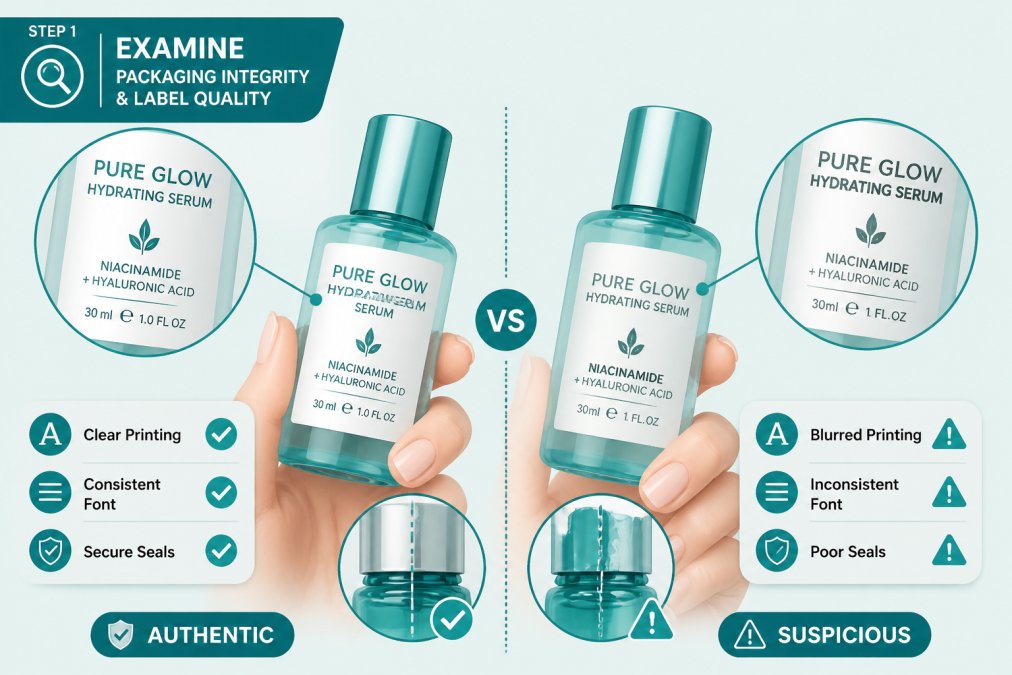
Check for font inconsistencies and spelling errors
Typography reveals counterfeit operations immediately. Legitimate brands maintain strict brand standards with identical fonts, spacing, and text alignment across all packaging. Open the authentic product's official website and compare the packaging text directly. Look for inconsistent font sizes or weights, blurry or pixelated text, spelling errors or grammatical mistakes, and inconsistent spacing between letters or words. Counterfeiters often use low-quality printing equipment or outdated artwork files. Compare the logo on your product against the official brand website, logos should be identical in every detail, color, proportions, and font styling.
Inspect the safety seal and fill level
Examine the safety seal closely; it should be intact, properly aligned, and impossible to remove without obvious damage. Many authentic brands use holographic seals or special adhesive that tears in specific ways. Check the fill level by weighing the product or comparing it against an authentic version. Shake the product gently, you shouldn't hear liquid sloshing around inside a properly filled container. Inspect the cap or closure mechanism. Authentic products have smooth, precisely-fitted closures that screw or snap together without wobbling. Counterfeit caps often fit loosely, have rough threads, or don't seal properly.
Step 2: How to Check Batch Codes on Beauty Products
Every legitimate beauty product includes a batch number (also called a lot code) that identifies when and where the product was manufactured. This alphanumeric code serves as a direct verification tool and represents one of the most reliable ways to spot fake beauty products.
Decoding lot codes and batch numbers
Batch codes typically appear on the back or bottom of the packaging, printed directly on the container or on a sticker. The format varies by brand, but most use a combination of letters and numbers. Visit the brand's official website and look for their batch code decoder tool. Most major beauty brands offer this service specifically to help consumers verify authenticity. Enter your batch code and the tool will confirm whether the code is valid for that product. If the brand doesn't offer an online decoder, contact their customer service directly.
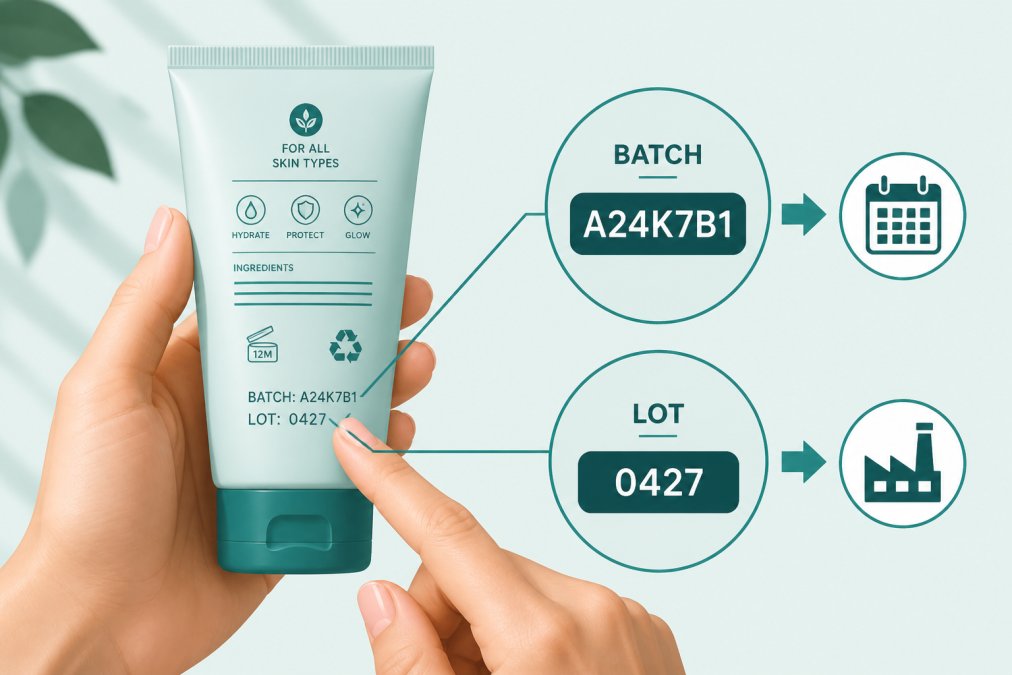
Counterfeit products often have batch codes that don't match any legitimate manufacturing run. The code might be completely fabricated, copied from an authentic product (which means multiple products share identical batch codes), or missing entirely.
Verifying expiration dates and shelf life
Legitimate beauty products display clear expiration dates or "use by" dates. Some show a specific date, while others display a "period after opening" symbol (typically a jar with a number and the letter M, indicating months). Check that the expiration date makes sense relative to the manufacturing date. A product manufactured in January 2026 shouldn't expire in February 2026. Counterfeiters sometimes use old batch codes from years past, which means the product might already be expired when you purchase it.
Step 3: Analyze Product Texture, Consistency, and Scent
Once you've verified the packaging and batch codes, examine the actual product itself. Legitimate beauty products have consistent texture and specific scent profiles that counterfeiters struggle to replicate accurately.
Foundation should have a smooth, uniform consistency without visible separation, graininess, or clumping. Authentic foundation blends seamlessly and doesn't feel gritty. Eyeshadow should have a buttery, finely-milled texture that applies smoothly with rich pigmentation. Counterfeit eyeshadow often feels chalky, doesn't blend well, and appears patchy when applied. Lipstick should feel creamy and glide smoothly across your lips without tugging or breaking. Moisturizers and serums should have the correct consistency for their type, a lightweight serum shouldn't feel oily, and a rich moisturizer shouldn't feel thin or watery. Pay attention to scent. Legitimate products have consistent, recognizable scents. If a product smells off, chemical, or nothing like what you expected, it's likely counterfeit.
Step 4: Verify the Source and Authorized Retailer Status
Where you purchase a beauty product matters enormously. Counterfeit products flood unauthorized channels, third-party marketplaces, and unauthorized sellers.
Shopping safely on online marketplaces
Before purchasing from any marketplace vendor, check their seller rating and read customer reviews carefully. Look for reviews mentioning authenticity concerns or quality issues. Verify that the marketplace itself has authenticity guarantees. Check whether the seller is authorized by the brand, many brands maintain lists of authorized retailers on their official websites. Be suspicious of prices that seem too good to be true. A luxury foundation that normally costs $48 selling for $15 from an unfamiliar seller is almost certainly counterfeit.
Checking the official website and brand logo authenticity
The safest way to purchase authentic products is directly from the brand's official website or from authorized retailers listed on that website. Check the URL carefully, counterfeiters sometimes create websites with URLs that look similar to legitimate ones. Verify the website's security certificate by looking for the padlock icon in your browser's address bar. Examine the brand logo on your product against the official website version. Logos should be identical in every detail. Check the brand's official social media accounts and contact their customer service with questions. Legitimate brands respond to authenticity inquiries.
Step 5: Use Barcode Verification and Digital Tools
Modern technology provides additional verification methods that go beyond visual inspection. Every legitimate product includes a barcode (UPC code in the United States) that links to product information. Use a barcode scanner app on your smartphone to scan the barcode on your product. The app should return information matching the product you're holding. If the barcode returns no information or incorrect information, the product is counterfeit.
Some brands have implemented QR codes on packaging that link to authentication verification pages. Scan the QR code with your smartphone camera, it should direct you to the brand's official authentication portal. Enter your batch code and the system will confirm whether that batch code is legitimate. Brands like Estée Lauder and L'Oréal have partnered with authentication services that allow consumers to verify products through their websites or mobile apps. Counterfeiters can't easily replicate these digital systems because they require backend integration with the brand's legitimate supply chain.
Reporting Counterfeit Beauty Products to the FDA
If you've purchased a counterfeit beauty product, report it. Consumer reports help regulatory agencies identify counterfeit operations and protect other consumers. Report counterfeit products through the FDA's official website. Provide detailed information including the product name and brand, where you purchased it, the batch code or lot number, photos of the packaging and product, and any adverse reactions or quality issues you experienced.
If you purchased the counterfeit product from an online marketplace, also report it to that platform. Most marketplaces have policies against counterfeit products and will investigate seller accounts. Report the unauthorized seller to the brand's official customer service team. Legitimate brands track counterfeit operations and work with law enforcement to shut them down.
How to Spot Fake Beauty Products: Your Action Plan
Learning how to spot fake beauty products requires attention to multiple verification points. Start with packaging integrity, examining construction quality, font consistency, spelling accuracy, and safety seals. Move to batch code verification using the brand's official decoder tool. Analyze the product itself by checking texture, consistency, and scent. Verify your source by purchasing from official brand websites or authorized retailers. Use digital verification tools like barcode scanners and QR code authentication when available. If something feels off, trust your instincts and avoid the purchase.
When you shop at Hutch's Beauty Boutique, you're purchasing from a curated selection of authentic products from legitimate brands. We prioritize consumer safety by working exclusively with authorized suppliers and maintaining strict quality standards. Our commitment to authentic products means you can shop with confidence, knowing that every item in our boutique meets real brand standards and regulatory requirements.
Report counterfeit products to the FDA and the brand's customer service team. Your reports help protect other consumers and support enforcement efforts against counterfeit operations. Counterfeit beauty products represent a real health risk. When you choose authentic products from Hutch's Beauty Boutique, you're choosing quality, safety, and products that actually deliver the results you expect. Start verifying your beauty purchases today, your skin will thank you.
Frequently Asked Questions
What are the main dangers of counterfeit cosmetics?
Counterfeit cosmetics can contain harmful chemicals, heavy metals, and microbial contamination that cause skin reactions, infections, and long-term health issues. Fraudulent products lack regulatory compliance and quality control, putting your skin at serious risk. Using fake beauty products may also void any guarantees or protections you'd have with authentic items purchased from authorized retailers.
How do I check batch codes on beauty products to verify authenticity?
Locate the batch number or lot code on the packaging, usually printed on the back or bottom. Visit the brand's official website to verify the code format and check their batch code verification tool if available. Authentic batch codes follow consistent formatting specific to each brand. Mismatched fonts, missing codes, or codes that don't match the brand's system are red flags for counterfeit products.
Are there fake beauty products on Amazon and other online marketplaces?
Yes, unauthorized sellers on third-party marketplaces frequently list counterfeit beauty products. To avoid fakes, shop directly from the official brand website or verified authorized retailers. Check seller ratings and reviews carefully, and look for the 'Ships from and sold by' label. When in doubt, purchase from established retailers with strong reputations for product authenticity.
What should I do if I discover a counterfeit beauty product?
Report counterfeit beauty products to the FDA through their MedWatch program or online complaint portal. Document the product details, packaging, batch number, and where you purchased it. Contact the brand directly to report the fraudulent listing. If you bought it on a marketplace, report the unauthorized seller to the platform. Keeping records helps protect other consumers from the same fake products.
This article was written using GrandRanker


