Table of Contents
- Why Simplifying Your Home Routine Matters
- Assess Your Current Situation Before You Start
- Must Have Gadgets for Home Organization
- Create a Decluttering Checklist for Beginners
- Build Daily Habits for a Clean Home
- Establish Routines That Stick
- Address Psychological Barriers to Simplifying
- Maintain Your Simplified Home Routine
Last Updated: August 17, 2026
Why Simplifying Your Home Routine Matters
A cluttered home drains mental energy and creates decision fatigue, making basic tasks take twice as long. At Hutch's Beauty Boutique, we understand that simplifying your home routine isn't about perfection, it's about reclaiming time and mental clarity for what matters.
Visual clutter creates cognitive load. Your brain constantly processes unnecessary information, leaving fewer mental resources for work, relationships, and self-care. A simplified home routine reduces that burden significantly and creates a foundation for sustainable habits. Rather than fighting disorder daily, you establish systems that maintain themselves.
Assess Your Current Situation Before You Start
Before decluttering, establish an honest baseline. Walk through each room and take inventory without judgment. What categories dominate? Where are the problem zones?
Identify your biggest pain points. Which areas create the most stress? Which rooms take longest to clean? Understanding these reveals where simplifying will have the biggest impact.
Consider your household dynamics too. If you live with others, are shared responsibilities being managed? Do different people have different organization standards? Finally, assess your psychological relationship with possessions. Do you keep things out of guilt or "just in case" thinking? Understanding these barriers now prevents building a system that won't work.
Must Have Gadgets for Home Organization
The right organizational tools make simplifying dramatically easier. Clear storage containers let you see contents without opening them, preventing duplicate purchases. Drawer dividers prevent chaos, and label makers create accountability.
For kitchens, tiered shelf risers maximize vertical space and improve accessibility. Over-the-door organizers capture unused wall space. Magazine holders work well for organizing cleaning supplies, paperwork, and snacks.
For closets and bedrooms, slim velvet hangers take up 40% less space while preventing clothes from slipping. Shelf dividers keep folded items from toppling over. Under-bed storage boxes capture dead space.
At Hutch's Beauty Boutique, we curate practical household accessories designed to simplify your home routine. Choose tools that solve actual friction points in your daily routine, not items that simply look nice.
Create a Decluttering Checklist for Beginners
A decluttering checklist transforms an overwhelming project into manageable steps. Organize by room or category, starting with one small area, a single drawer, shelf, or corner. Completing a small space builds momentum.
For each area, follow this sequence:
- Remove everything from the space
- Clean the empty surface
- Sort items into three piles: keep, donate, and discard
- Return only "keep" items, organized intentionally
- Put donation items in your car or a designated box
- Dispose of discarded items immediately
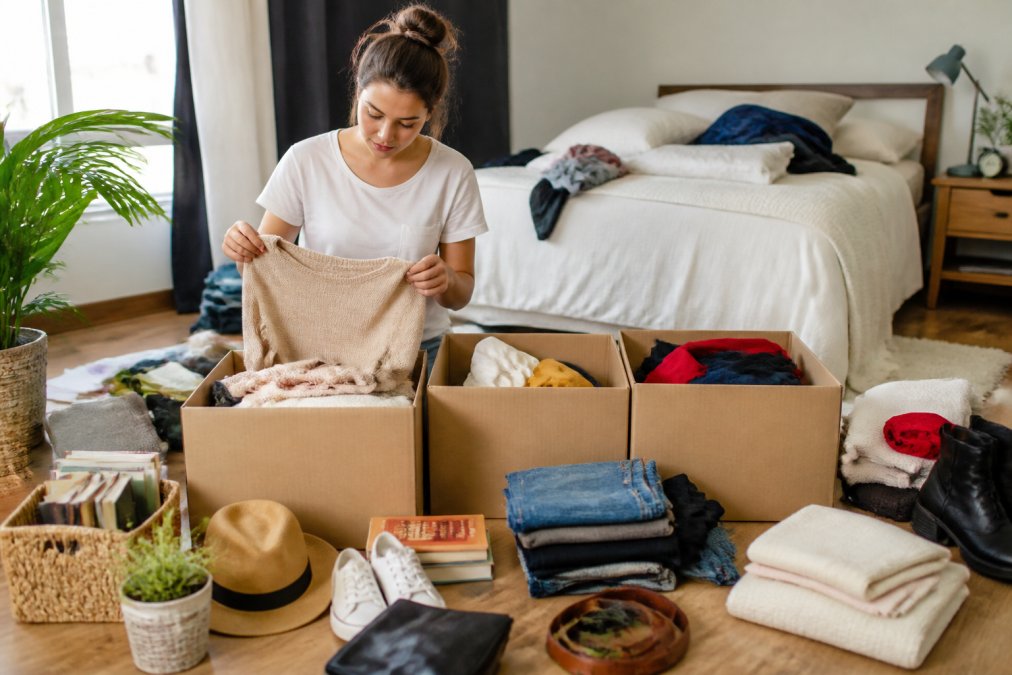
The one-in-one-out rule prevents re-accumulation. When you bring something new into your home, something of equal or greater size leaves. This rule sustains a simplified home routine long-term.
The One-In-One-Out Rule
Every time you acquire a new item, one item of similar or larger size leaves your home. This maintains equilibrium and forces intentional purchasing decisions.
This rule works because it addresses the root cause of re-accumulation. Most people declutter once, then gradually fill the space again because acquisition habits haven't changed. The one-in-one-out rule changes the habit itself. Implement it consistently for three months. You'll notice you're more selective about what enters your home and think twice before buying something.
Category-Based Organization
Organizing by category rather than location makes your routine more efficient. Gather all items of one category together first to see your full inventory. This visibility often triggers purging decisions, you realize you have seven coffee mugs but use only two.
Once you've consolidated and decluttered a category, assign it a permanent home. All kitchen gadgets go in one drawer, all cleaning supplies in one closet. This consistency makes maintenance automatic.
Build Daily Habits for a Clean Home
A simplified home routine succeeds only if you build daily habits that prevent clutter from returning. The "one-touch rule" eliminates accumulation: when you pick something up, deal with it immediately. Put mail directly into recycling, dirty clothes into the hamper, dishes into the dishwasher.
The "surfaces rule" keeps all flat surfaces clear except for daily-use items. This creates visual calm and makes cleaning faster. Create a daily 10-minute reset each evening to return items to their homes and prepare for the next day.
Habit Stacking for Easier Maintenance
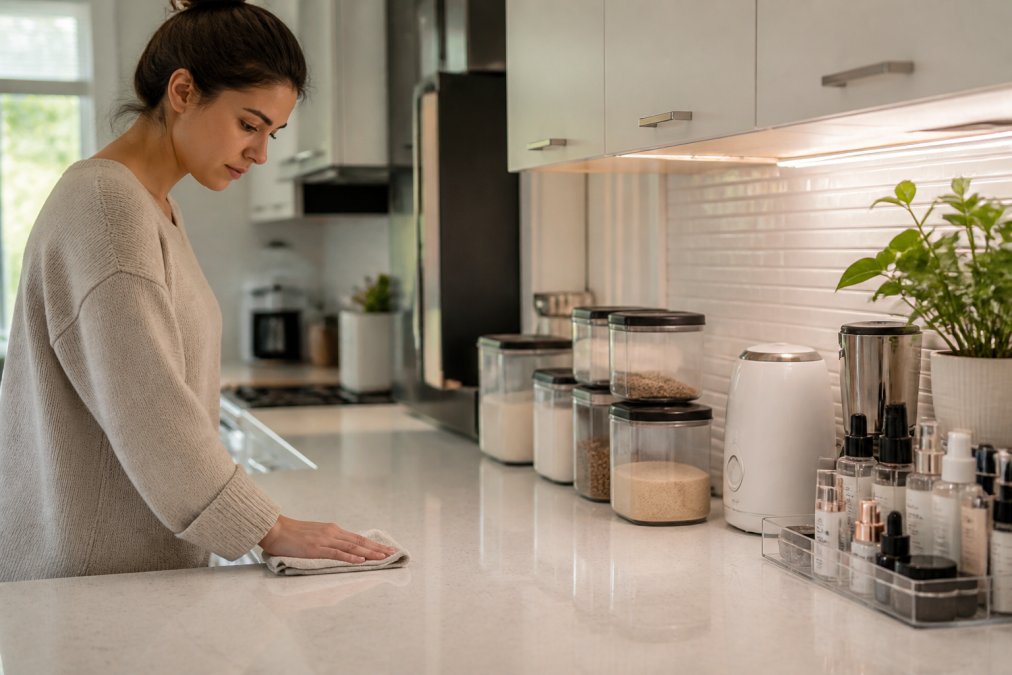
Habit stacking attaches new behaviors to existing routines, making them automatic. Stack your morning routine: after pouring coffee, wipe the kitchen counter; after getting dressed, put yesterday's clothes in the hamper; after breakfast, load the dishwasher.
Stack your evening routine: after dinner, do dishes immediately; after changing clothes, put items away; before bed, spend five minutes returning items to their homes. You're not adding new time to your day, you're layering behaviors onto existing anchors your brain already remembers.
Weekly Planning and Shared Responsibilities
Weekly planning prevents chaos from building. Every Sunday evening, spend 15 minutes reviewing the week and assigning household chores. Create a simple chart showing weekly chores and who's responsible. Rotate assignments weekly or monthly so no one carries the load.
For households with multiple people, this structure is essential. Clear assignments create accountability without constant reminding.
Establish Routines That Stick
Routines are more powerful than motivation. Start small, pick one habit and practice it for two weeks until it's automatic, then add the next. Time routines strategically: morning routines should be quick and energizing, evening routines calming and restorative.
Make routines visible by writing them down and tracking them for the first month. This external accountability helps new routines stick during the vulnerable early phase.
Address Psychological Barriers to Simplifying
Most people fail at simplifying not from lack of skills but from unaddressed psychological barriers. Many struggle with guilt around disposal. Reframe this: keeping something you don't use is the actual waste. The money is already spent.
Fear of scarcity drives "just in case" thinking. Assess actual probability. If you haven't used something in two years, you probably won't. Keep items that genuinely bring joy or have meaningful purpose; donate or discard items kept only from obligation.
Identity attachment is subtle but powerful, you keep items representing who you think you should be rather than who you are. Let go of the fantasy version and embrace your actual life. Perfectionism often prevents starting. Permission to begin imperfectly and iterate is essential.
Maintain Your Simplified Home Routine
Maintenance is where most people fail. They successfully declutter, then watch their space deteriorate back to chaos. Prevention requires ongoing systems, not occasional deep cleaning.
Your maintenance routine should match your actual situation. The weekly reset is your most important tool, 30 minutes on Sunday prevents disorder from building. Quarterly reviews catch problems before they become overwhelming. When you notice clutter building in a specific area, address it immediately rather than waiting.
Remember that maintaining a simplified home routine is an ongoing practice, not a destination. Your needs change, and your systems should evolve too. The goal isn't perfection, it's a functional, calm home environment that supports your actual life.
Maintaining a simplified home routine takes consistency, but the payoff is substantial: reduced stress, faster cleaning, and a home that works for you. Start with one small area, master the one-in-one-out principle, and build daily habits that prevent clutter from returning. At Hutch's Beauty Boutique, we know that a well-organized home starts with the right tools and systems. Explore our curated selection of practical household accessories designed to support your simplified home routine and help you maintain the calm, functional space you deserve.
Frequently Asked Questions
How do I start simplifying my home when I feel overwhelmed?
Start small with one category or one room corner instead of tackling everything at once. Set a 15-minute timer and focus on that area only. Identify items you genuinely use and love, then decide what to keep. Use a simple decluttering checklist for beginners to guide your decisions. Breaking the process into manageable steps reduces decision fatigue and builds momentum for larger changes.
What are the best gadgets to help maintain an organized home?
Must have gadgets for home organization include label makers, drawer dividers, over-the-door organizers, and storage bins with clear visibility. Timer gadgets help establish daily habits for a clean home by reminding you when to tidy surfaces. Hutch's Beauty Boutique carries practical household accessories that work alongside your routine. Choose gadgets that address your specific pain points, whether that's clutter-free surfaces, inventory management, or accessible storage.
What is the one-in-one-out rule for maintaining a simplified home?
The one-in-one-out rule means for every new item you bring into your home, you remove one similar item. This prevents clutter from accumulating again after you've decluttered. It's a sustainable habit that supports intentional living and mindful consumption. Apply it consistently to clothing, kitchen items, and home accessories to maintain the simplified environment you've created.
How can I simplify my home routine if I have neurodivergent household members?
Create visual systems using labels, color-coding, and clear storage containers so items are easy to locate without searching. Establish predictable daily routines with specific times for household chores. Use timers and checklists to support time management and prioritization. Keep frequently used items in accessible, designated spots. Reduce visual noise by minimizing decorative items on surfaces. These strategies support accessibility and reduce cognitive load for everyone in the household.
This article was written using GrandRanker


