Table of Contents
- Understanding Hair Density and Treatment Recovery
- Scalp Care for Hair Growth and Follicle Health
- Daily Hair Maintenance Habits to Preserve Density
- Best Vitamins for Hair Thickness and Strand Strength
- How to Prevent Hair Thinning After Treatment
- Lifestyle Factors That Support Long-Term Hair Density
- Monitoring Progress and Adjusting Your Routine
- Frequently Asked Questions
Last Updated: September 28, 2026
Understanding Hair Density and Treatment Recovery
Hair density refers to how many individual hair strands grow per square inch of scalp. After treatment, whether chemical, thermal, or medical, your hair needs time to recover and regain its fullness. To maintain hair density, the recovery process requires intentional daily habits that support follicle health and strand strength.
Treatment temporarily reduces density by stressing the hair shaft and scalp. With proper care, you can maintain hair density after treatment.
Daily habits matter more than expensive products. Scalp health, washing frequency, and how you handle wet hair make the biggest difference.
Scalp Care for Hair Growth and Follicle Health
A healthy scalp produces healthy follicles, which directly affects hair density after treatment.
Massage your scalp with fingertips in circular motions for 2-3 minutes to increase blood flow. Avoid harsh scrubbing or brushes, which damage follicles.
Use sulfate- and paraben-free shampoo designed for treated hair. Apply moisturizing conditioner from mid-shaft to ends to prevent buildup and maintain hydration.
Massage your scalp daily for 5 minutes to improve circulation and reduce inflammation, supporting stronger hair growth.
Daily Hair Maintenance Habits to Preserve Density
Washing and conditioning frequency
Wash 2-3 times per week to balance cleansing without over-stripping natural oils.
Use lukewarm water to cleanse gently while keeping the hair cuticle closed and preserving moisture.
Apply conditioner to mid-shaft and ends for 2-3 minutes. Consider leave-in conditioner for extra hydration and reduced breakage.
Detangling and handling techniques
Handle wet hair gently. Use a wide-tooth comb starting at the ends, working upward slowly to detangle.
Avoid tight ponytails, braids, and clips, they create tension that reduces density. Wear loose styles instead.
Sleep on a silk or satin pillowcase. Cotton pillowcases create friction that causes breakage. Silk reduces friction and keeps your hair smoother overnight. This simple change prevents breakage while you sleep.
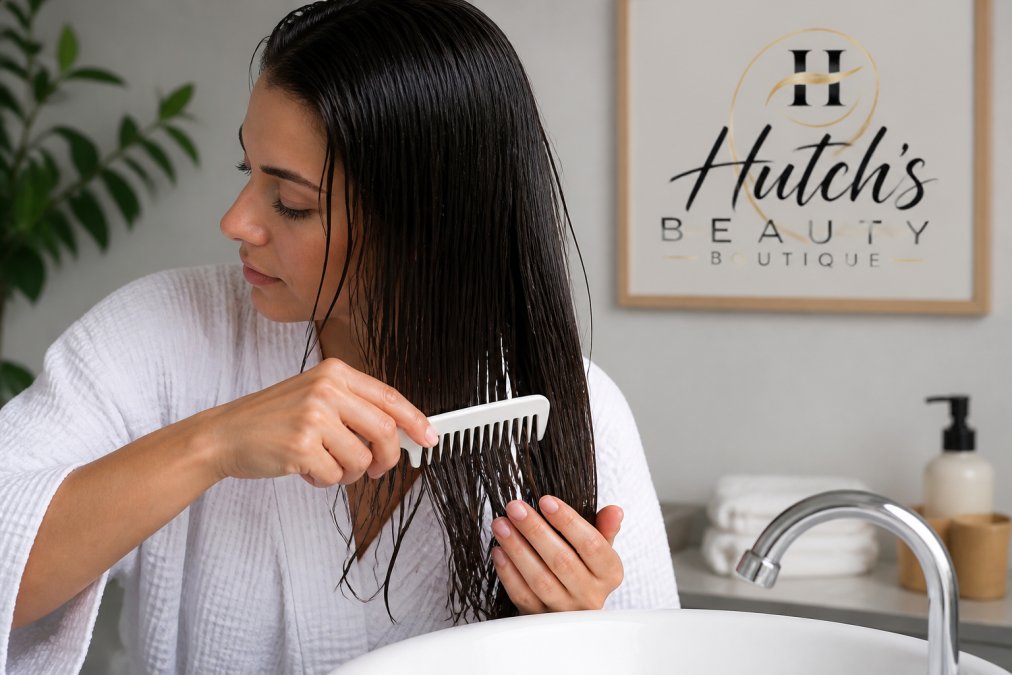
Air-dry when possible. If blow-drying, use heat protectant spray, low heat, and keep the dryer 6 inches away.
Best Vitamins for Hair Thickness and Strand Strength
Vitamins and minerals support hair growth, but supplement strategically based on actual deficiencies, not blindly.
Biotin supports keratin synthesis and prevents brittleness. Found in eggs, nuts, seeds, and sweet potatoes. Supplement 2.5-5 mg daily if hair breaks constantly; results take 3-6 months.
Vitamin D regulates the hair growth cycle. Get 10-15 minutes of midday sun daily, or supplement 1,000-2,000 IU if you live in a cloudy climate or work indoors.
Iron carries oxygen to hair follicles. Get blood work done before supplementing; iron without deficiency causes digestive issues.
Zinc supports protein synthesis and scalp health. Don't exceed 40 mg daily, as excess interferes with copper absorption.
B vitamins support metabolic processes that build hair. Vegans and those over 50 should consider B12 supplementation (1,000 mcg weekly).
Protein is essential, hair is made of keratin. Aim for 0.8-1.0 grams per pound of body weight daily, spread across meals.
Hydration supports hair growth. Drink at least 8 glasses of water daily; increase if you exercise or live in a dry climate.
What to avoid: High-dose biotin is poorly absorbed. Choose supplements with biotin under 5 mg combined with B vitamins and minerals. Avoid caffeine and stimulants, which increase cortisol.
Avoid DHT-blocking supplements lacking clinical evidence. See a dermatologist if you suspect hormonal hair loss.
How to Prevent Hair Thinning After Treatment
Hair thinning happens when breakage exceeds growth. Prevention means reducing breakage while supporting new growth. You already know about gentle handling and scalp care. Here are additional strategies:
Avoid chemical treatments for 3 months after initial treatment to allow recovery time.
Trim ends every 6-8 weeks to prevent split ends from traveling up the shaft and causing breakage.
Minimize heat styling. Always use heat protectant spray before blow-drying, flat-ironing, or curling.
Use soft scrunchies instead of rubber bands. Wear loose styles most days to reduce tension on follicles.
Sleep on a silk pillowcase or wrap hair in a silk scarf to reduce friction and breakage.
Lifestyle Factors That Support Long-Term Hair Density
The stress-to-hair-loss cycle: Understanding cortisol and telogen effluvium
Stress releases cortisol, which pushes hair prematurely into the shedding phase (telogen effluvium), reducing density (pubmed.ncbi.nlm.nih.gov).
Here's the timeline: stress occurs → cortisol spikes → hair follicles shift to shedding phase → 6-12 weeks later, you notice increased shedding and thinning. This lag is why people often don't connect stress to hair loss, the cause and effect are separated by weeks.
The good news: this is reversible. Once you lower cortisol, hair returns to the growth phase. But recovery takes time. Expect 3-6 months of normal shedding before you see density improvement.
Manage stress actively and measurably:
Exercise: 20-30 minutes of moderate activity (walking, cycling, swimming) lowers cortisol within hours. Do this 4-5 times per week. Consistency matters more than intensity. A daily 20-minute walk beats sporadic intense workouts.
Meditation and breathing: Even 5-10 minutes daily reduces cortisol. Try box breathing: inhale for 4 counts, hold for 4, exhale for 4, hold for 4. Repeat 5-10 times. Apps like Insight Timer or Calm provide guided sessions. Research shows 8 weeks of regular practice measurably lowers cortisol.
Social connection: Spend time with people you enjoy. Laughing and talking lower cortisol naturally. Isolation increases it. If you're stressed about hair loss, talk to someone. Bottling up stress makes it worse.
Journaling: Writing about stress for 10 minutes daily reduces cortisol and anxiety. You don't need to be eloquent, just write what you're feeling.
Sleep quality and pillowcase material
Sleep is where your body repairs cells and produces growth hormones. Poor sleep slows these processes, which means slower hair growth and weaker hair shafts. During deep sleep, your body increases blood flow to the scalp and increases growth hormone production, both essential for hair density.
Establish a sleep routine:
- Go to bed at the same time each night (even weekends)
- Avoid screens 30-60 minutes before sleep
- Keep your bedroom cool (65-68°F is ideal)
- Avoid caffeine after 2 PM
- Avoid alcohol close to bedtime (it disrupts deep sleep)
Creating a stress-recovery timeline
Weeks 1-4: Start stress management and sleep improvements immediately. You won't see hair changes yet, but cortisol begins to normalize. Track your stress levels daily (rate 1-10). Aim to lower your baseline by 2-3 points.
Monitoring Progress and Adjusting Your Routine
Track your results. Take photos of your hair every month under the same lighting. This shows progress that daily mirrors might miss. You'll notice density improvements before they feel obvious.
Keep a simple log of what you're doing. Write down:
- How often you wash
- Products you use
- Heat styling frequency
- Supplements you take
- Sleep and stress levels
Adjust based on results. If your hair still feels thin after 3 months, try:
- Adding a leave-in conditioner
- Increasing biotin or vitamin D
- Reducing heat styling further
- Improving sleep quality
| Strategy | Timeline | Frequency |
|---|---|---|
| Scalp massage | Ongoing | Daily (5 minutes) |
| Gentle washing | Ongoing | 2-3 times per week |
| Conditioning | Ongoing | With every wash |
| Trim split ends | Every 6-8 weeks | Every 6-8 weeks |
| Sleep on silk | Ongoing | Every night |
| Stress management | Ongoing | Daily |
| Vitamin intake | Ongoing | Daily |
| Progress photos | Monthly | Every 30 days |
Frequently Asked Questions
Can lost hair density be regained after treatment?
Hair density can improve with consistent maintenance, though the timeline depends on your treatment type and individual factors. Follicles that remain active respond well to proper scalp care, moisturizing treatments, and lifestyle adjustments. If follicles have been dormant for extended periods, regaining full density takes longer. Working with a dermatologist helps you understand realistic expectations for your specific situation and treatment outcome.
What vitamins are essential for maintaining hair density?
Biotin, vitamin D, iron, and B-complex vitamins support hair strand integrity and follicle health. Biotin strengthens the hair shaft, vitamin D promotes follicle stimulation, and iron carries oxygen to hair roots. B vitamins regulate the hair growth cycle. Most people get adequate amounts through diet, but supplementation may help if you have deficiencies. Consult a healthcare provider before starting supplements to ensure they won't interact with your treatment.
How do I know if my hair density is improving?
Track density by taking monthly photos under consistent lighting from the same angle at your scalp. You'll notice fewer visible scalp areas, fuller appearance at the hairline, and reduced shedding during washing and brushing. Hair texture often becomes smoother as strand integrity improves. Most people see visible changes within 3-6 months of consistent maintenance. Keep a simple log of your routine to correlate habits with improvements.
What lifestyle habits negatively impact hair density?
Chronic stress, poor sleep quality, smoking, excessive heat styling, and tight hairstyles all reduce hair density. Stress elevates cortisol, disrupting the hair growth cycle. Sleep deprivation impairs follicle function and scalp health. Friction from rough pillowcases and constant tension on hair strands causes breakage and thinning. Nutrition gaps, particularly low iron or protein, also weaken follicle health. Addressing these habits often produces faster results than product changes alone.


