Table of Contents
- How Facial Steaming Affects Clogged Pores
- How to Steam Your Face Safely
- How Long to Steam Your Face for Best Results
- Facial Steaming for Blackheads and Debris Removal
- Facial Steamer vs Bowl of Hot Water: Which Works Better
- What to Do After Steaming Your Face
- Who Should Avoid Facial Steaming
- Steaming vs Other Clogged-Pore Treatments
- Frequently Asked Questions
Last Updated: October 4, 2026
How Facial Steaming Affects Clogged Pores
Facial steaming benefits clogged pores by using warm steam to soften skin and loosen the buildup of oil, dirt, and dead skin cells trapped in your pores. The heat from steam doesn't actually open or close pores (they don't have muscles), but it does warm the skin and make debris easier to remove during cleansing.
When you steam your face, the warm moisture softens the outer layer of skin. This softening helps break down sebum and other impurities stuck inside pores. The result is skin that's easier to cleanse and extract, which is why facial steaming is often used before professional facials or at-home extraction routines.
At Hutch's Beauty Boutique, we recommend steaming as part of a regular skincare routine for people dealing with clogged pores, blackheads, and congested skin. The key is understanding what steaming actually does: it prepares your skin for cleansing, not a standalone treatment.
The benefits include:
- Softened skin texture that's easier to cleanse
- Loosened oil and debris in pores
- Improved product absorption after steaming
- Reduced friction during extraction or cleansing
- Relaxation and improved circulation to facial skin
However, steaming isn't a cure for acne or clogged pores. It's a preparation step that makes your existing skincare routine more effective.
How to Steam Your Face Safely
Facial steaming for clogged pores is straightforward, but technique matters. Improper steaming can irritate sensitive skin or cause burns. Here's how to do it safely.
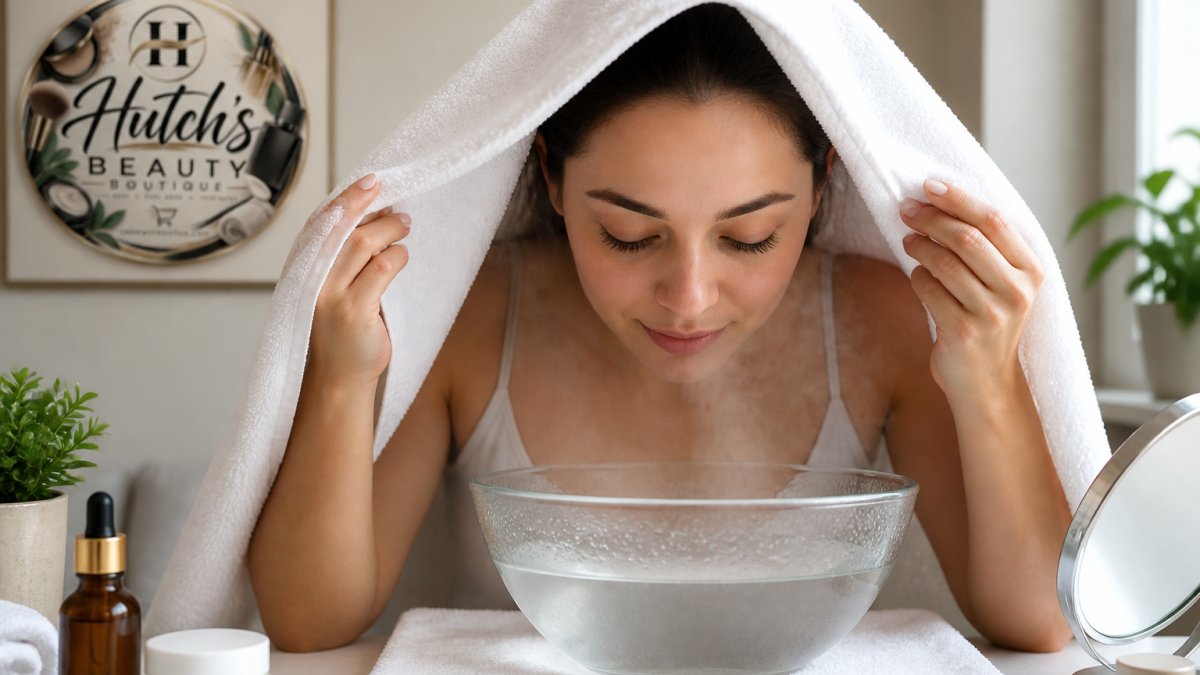
Step-by-Step Instructions
Start with clean skin. Wash your face with a gentle cleanser and pat dry. Fill a bowl with hot (not boiling) water. The water should be hot enough to produce visible steam, but you should be able to hold your hand over it comfortably.
Position your face 6-8 inches above the bowl. Drape a clean towel over your head and the bowl to trap the steam around your face. Keep your eyes closed during steaming.
Breathe normally and relax. Steam your face for 5-10 minutes. Don't rush this step. The longer you steam, the more time the heat has to soften your skin and loosen debris.
After steaming, pat your skin dry gently. Your pores will be soft and your skin receptive to treatment. This is the ideal time to:
- Apply a clay mask
- Perform gentle extractions
- Use targeted acne products
- Apply serums or moisturizers for better absorption
What to Avoid
Never position your face too close to boiling water. Steam burns happen fast and can damage delicate facial skin. The 6-8 inch distance is your safety zone.
Don't steam for longer than 15 minutes. Extended steaming can over-hydrate skin and cause irritation, especially for sensitive or acne-prone complexions.
Avoid steaming if you have:
- Active rosacea or broken capillaries
- Severe sunburn
- Open wounds or active infections
- Very sensitive skin prone to irritation
Never steam immediately before going outside. Your skin will be more sensitive to sun exposure for a short time after steaming. Wait at least 30 minutes before sun exposure.
Skip steaming if you're using certain medications like tretinoin or other prescription acne treatments without checking with your dermatologist first. These can increase skin sensitivity.
How Long to Steam Your Face for Best Results
The ideal duration for facial steaming clogged pores is 5-10 minutes for most people. This timeframe is long enough to soften skin and loosen debris without over-hydrating or irritating your complexion.
Beginners should start at 5 minutes and observe how their skin responds. If your skin tolerates it well, you can gradually increase to 8-10 minutes on future sessions.
Don't exceed 15 minutes. Beyond this point, you risk:
- Excessive skin hydration
- Increased irritation and redness
- Potential damage to delicate facial capillaries
- Disruption of your skin's natural moisture barrier
Frequency matters too. Steam your face 1-2 times per week for best results. More frequent steaming can irritate skin and disrupt your natural oil balance. If you have very sensitive skin, limit steaming to once weekly.
The best time to steam is at night, before bed. Your skin will have time to recover and rebalance overnight. Steaming in the morning is fine too, just allow extra time before applying makeup.
Facial Steaming for Blackheads and Debris Removal
Blackheads form when pores become clogged with sebum and dead skin cells that oxidize and turn dark. Facial steaming for clogged pores is particularly effective for blackheads because the heat and moisture directly target this buildup.
Steaming softens the skin around blackheads, making the debris easier to release. After steaming, the blackhead material is closer to the skin's surface and less likely to cause damage during removal.
Here's the process:
- Steam your face for 5-10 minutes as described above
- Pat skin dry gently
- Use a clean extraction tool or your fingers wrapped in clean tissue
- Apply gentle, downward pressure around the blackhead
- Never force extraction. If it doesn't release easily, stop
- Cleanse the area with a gentle product
- Apply a targeted treatment or moisturizer
The key to safe extraction is patience. Steaming makes removal easier, but forcing a blackhead that resists gentle pressure causes scarring and inflammation.
After extraction, apply a product containing salicylic acid or niacinamide to help prevent future blockages. These ingredients work best on skin that's been prepared by steaming.
Facial Steamer vs Bowl of Hot Water: Which Works Better
Both facial steamers and bowls of hot water deliver warm steam to your skin. The main difference is convenience and consistency.
A bowl of hot water is free or nearly free if you already have the supplies. You control the temperature and can easily adjust distance and duration. The downside is that the steam cools quickly, and you need to reheat the water partway through longer sessions.
A facial steamer is a device designed specifically for this purpose. Most plug in and maintain consistent steam temperature throughout your session. They're compact, easy to use, and eliminate the risk of spilling hot water.
For facial steaming clogged pores, either method works. Choose based on your budget and preferences:
- Use a bowl if: You're on a tight budget, prefer simplicity, or want to try steaming before investing in a device
- Use a steamer if: You steam regularly, want consistent results, or prefer a hands-free approach
Quality steamers range in price and features. Basic models deliver warm steam effectively. Premium models may include adjustable settings or aromatherapy options, but these extras aren't necessary for cleansing clogged pores.
If you choose a steamer, look for one with:
- Adjustable steam settings
- Consistent heat maintenance
- Easy water refilling
- A timer function
- Durable construction
What to Do After Steaming Your Face
The minutes immediately after steaming are critical. Your skin is warm, soft, and most receptive to treatment. This is when your skincare products will absorb most effectively.
First, pat your skin dry with a clean towel. Don't rub. Your skin is delicate and warm right now.
Next, apply your treatment products in this order:
- Targeted serums (vitamin C, niacinamide, or acne treatments)
- Moisturizer appropriate for your skin type
- Sunscreen if it's daytime
If you plan to extract blackheads or use a clay mask, do that immediately after steaming while skin is still warm and soft.
Avoid these mistakes after steaming:
- Don't apply heavy oils or occlusive products immediately. Wait 10-15 minutes
- Don't expose skin to cold air or cold water right away. This can shock your system
- Don't apply makeup for at least 30 minutes
- Don't go outside into direct sun without sunscreen
Your skin will be more sensitive to sun exposure for a few hours after steaming. UV protection is essential. Use a broad-spectrum sunscreen with at least SPF 30.
If you steamed at night, skip the sunscreen and just apply your regular nighttime routine. Your skin will continue to benefit from steaming's effects as you sleep.
Who Should Avoid Facial Steaming
While facial steaming benefits clogged pores for many people, some skin types and conditions require caution or avoidance.
Avoid steaming if you have:
- Rosacea or persistent redness: Heat triggers rosacea flare-ups and can worsen visible blood vessels
- Active acne with inflammation: Heat can temporarily increase inflammation and bacteria activity
- Severe sunburn: Steaming adds stress to already-damaged skin
- Eczema or dermatitis: Heat can trigger itching and irritation
- Broken capillaries or spider veins on the face: Steam dilates blood vessels and can worsen their appearance
- Very sensitive skin: If your skin reacts to most products or environmental changes, steaming may be too intense
Use caution if you have:
- Combination skin (steam works for oily zones, but may dry out dry areas)
- Skin prone to dehydration
- Reactive or easily irritated complexion
If you're unsure whether steaming is safe for your skin, consult a dermatologist. They can assess your specific skin condition and recommend whether steaming is appropriate.
Even people who can tolerate steaming should monitor their skin's response. If you experience increased redness, irritation, or breakouts after steaming, stop and give your skin a break for a few days.
Steaming vs Other Clogged-Pore Treatments
Facial steaming is one approach to managing clogged pores. Other treatments exist, and the best choice depends on your skin type, severity of congestion, and preferences.
Chemical exfoliants (salicylic acid, glycolic acid) dissolve dead skin cells and sebum inside pores. They work well for mild to moderate congestion and can be used several times weekly. They don't require any equipment and work while you go about your day.
Physical exfoliants (scrubs, brushes) remove dead skin cells from the surface. They provide immediate results but can irritate sensitive skin. Overuse causes inflammation and damage.
Clay masks draw out impurities and oil. They're effective for oily, congested skin but can be drying. Use once or twice weekly.
Professional extractions by an esthetician or dermatologist are the most effective for stubborn blackheads and clogged pores. A professional has specialized tools and training to extract safely without causing damage.
Retinoids (prescription or over-the-counter) increase cell turnover and prevent pore blockages. They require consistent use over weeks to see results but address the root cause of congestion.
Facial steaming works best as a preparation step combined with other treatments. It softens skin and loosens debris, making other treatments more effective. It's not a standalone solution for severe congestion.
The most effective approach combines steaming with other treatments:
- Steam, then use a chemical exfoliant
- Steam, then apply a clay mask
- Steam, then perform gentle extractions
- Steam, then use a retinoid for long-term improvement
For mild congestion, steaming alone may be sufficient. For moderate to severe clogged pores, combine steaming with targeted treatments for best results.
| Treatment | Best For | Frequency | Results Timeline |
|---|---|---|---|
| Facial steaming | Preparation, mild congestion | 1-2x weekly | Immediate softening |
| Chemical exfoliants | Ongoing maintenance | 2-3x weekly | 2-4 weeks |
| Clay masks | Oily, congested skin | 1-2x weekly | Immediate to 1 week |
| Professional extractions | Stubborn blackheads | As needed | Immediate |
| Retinoids | Long-term prevention | Daily | 6-8 weeks |
Clogged pores don't require expensive treatments or complicated routines. Facial steaming benefits clogged pores by preparing your skin for cleansing and making existing treatments work better. Combined with consistent skincare and the right products, steaming helps you maintain clear, smooth skin.
Frequently Asked Questions
Can facial steaming actually unclog pores?
Facial steaming softens skin and loosens oil, dirt, and dead skin cells trapped in pores, making them easier to cleanse or extract. The warmth increases blood flow and hydration, which helps debris release more readily. However, pores don't literally open or close, steaming prepares them for more effective cleansing, not a permanent unclogging.
How long should you steam your face to see benefits?
Most people benefit from 5 to 10 minutes of facial steaming. Start with 5 minutes if you have sensitive skin, and work up to 10 if your skin tolerates it well. Steaming longer than 15 minutes can irritate skin and strip natural oils. Consistency matters more than duration, regular, shorter sessions work better than occasional long ones.
Is a facial steamer better than using a bowl of hot water?
Both work, but they differ in convenience and control. A dedicated facial steamer maintains consistent warmth and moisture, making it easier to relax and steam for the full duration. A bowl of hot water is cheaper and accessible but requires more attention to prevent burns and maintain steam contact. Choose based on your budget and comfort level.
What skin types should avoid facial steaming?
People with active acne, rosacea, eczema, or very sensitive skin should skip steaming or use it sparingly, heat can trigger flare-ups or increase inflammation. Those with extremely dry skin may find steaming strips moisture if not followed by proper hydration. If you have any skin condition, test steaming on a small area first or consult a dermatologist before adding it to your routine.


