Table of Contents
- Budget-Friendly Skincare Routines: The Foundation for Glowing Skin
- Your Morning Skincare Routine: Start Your Day Right
- Your Nighttime Skincare Routine: Repair While You Sleep
- Affordable Skincare Routine for Combination Skin
- Skincare Routine Under $20: Proven Budget Picks
- Essential Ingredients for a Glowing Complexion
- Common Mistakes That Sabotage Your Glow
- Building Consistency: Your Path to Visible Results
- Frequently Asked Questions
Last Updated: October 10, 2026
Budget-Friendly Skincare Routines: The Foundation for Glowing Skin
Building budget-friendly skincare routines doesn't mean sacrificing results. A solid routine built on gentle cleansing, targeted hydration, and daily sun protection can transform your complexion without emptying your wallet.
Focus on essentials: removing daily buildup, maintaining hydration, and protecting against sun damage. These three pillars form the foundation of any effective skincare routine for glowing skin.
Your Morning Skincare Routine: Start Your Day Right
Your morning routine should take five minutes: remove overnight oil, hydrate, and protect your skin.
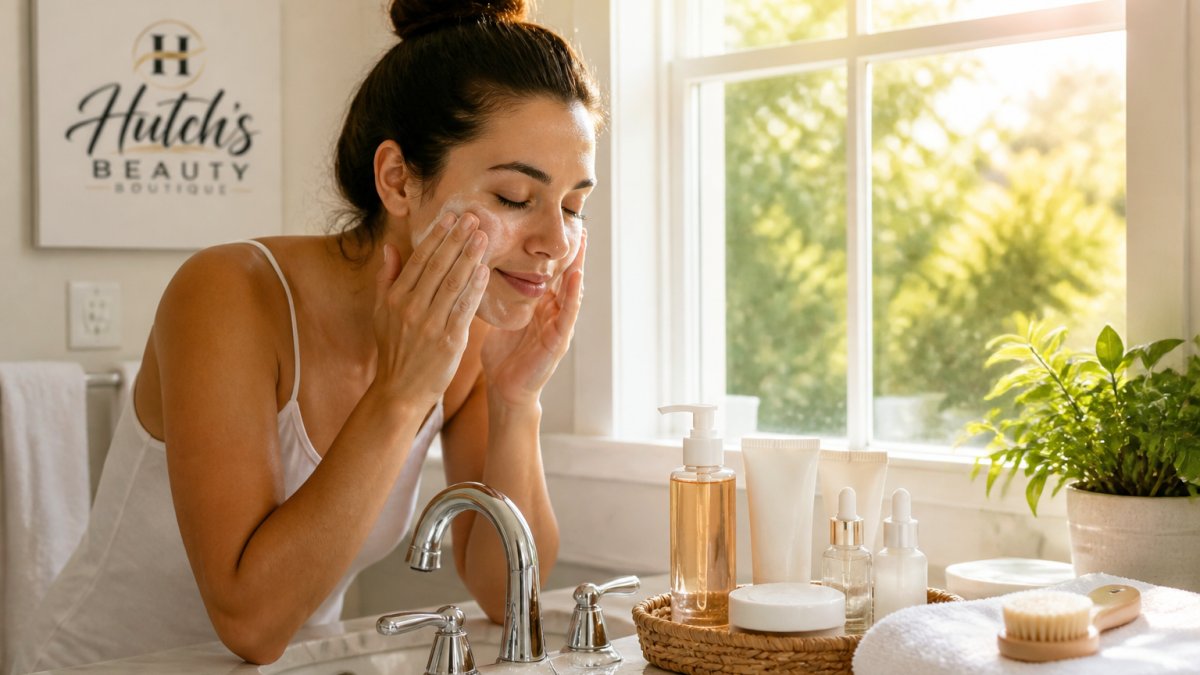
Step 1: Gentle Cleanser
Start with a gentle, fragrance-free cleanser designed for sensitive skin, these work for all skin types. It removes overnight oil and residue without disrupting your skin barrier.
Massage onto damp skin for 30 seconds, rinse with lukewarm water, and pat dry gently.
Step 2: Moisturizer and Sunscreen
Apply lightweight moisturizer to damp skin, then follow with SPF 30+ sunscreen.
Daily sunscreen prevents more skin issues than any expensive treatment.
Your Nighttime Skincare Routine: Repair While You Sleep
Your evening routine repairs skin and addresses specific concerns like dullness or uneven tone.
Step 1: Gentle Cleanser to Remove the Day
Use the same gentle cleanser to remove makeup, sunscreen, pollution, and accumulated oil. Thorough cleansing prevents clogged pores and breakouts.
Step 2: Serum or Treatment Product
A serum with active ingredients like vitamin C addresses brightness, texture, or firmness. Apply a few drops to clean, damp skin.
Start with two nights per week, increasing gradually as your skin adapts.
Step 3: Night Moisturizer
Finish with a richer night moisturizer than your daytime formula. Your skin loses more water at night, and a heavier cream supports your skin barrier while you sleep. Apply to damp skin for maximum absorption.
| Routine Step | Morning | Evening |
|---|---|---|
| Cleanser | Gentle, 30 seconds | Gentle, 45 seconds |
| Active Treatment | None | Serum 2-3x weekly |
| Moisturizer | Lightweight | Rich/nourishing |
| Sun Protection | SPF 30+ daily | Not needed |
Affordable Skincare Routine for Combination Skin
Combination skin requires balance. Your T-zone (forehead, nose, chin) tends toward oily, while cheeks and temples run dry or normal. A one-size-fits-all routine frustrates combination skin types.
Why Combination Skin Needs a Balanced Approach
Heavy creams worsen T-zone oiliness; lightweight formulas leave dry areas tight. Use strategic layering instead.
Use a gentle cleanser, lightweight moisturizer on entire face, and richer cream only on dry zones.
Complete Routine Steps and Product Recommendations
Morning: Gentle cleanser → lightweight moisturizer → SPF 30+ sunscreen.
Evening: Gentle cleanser → hydrating serum (if using active ingredients) → lightweight moisturizer on entire face, plus richer cream on dry areas.
Skincare Routine Under $20: Proven Budget Picks
Building a complete skincare routine under $20 is possible if you prioritize correctly.
Complete Routine Breakdown: Under $20 Total
Here's a realistic path to a complete routine at or under $20:
Cleanser: $6-10. A fragrance-free, sulfate-free cleanser removes oil and makeup without stripping.
Moisturizer: $5-8. A lightweight moisturizer with glycerin or hyaluronic acid hydrates without heaviness.
Sunscreen: $6-10. SPF 30+ is essential daily; skipping it wastes money on other products.
Optional serum: $3-5. A vitamin C or hydrating serum adds targeted treatment if budget allows.
Realistic total: $17-28. Buy one good product per step rather than multiple mediocre ones.
How to Identify Quality at Low Price Points
Affordable products perform identically to expensive ones with the same ingredients. Look for:
- Cleansers: Sodium lauryl sulfate-free formulas; glycerin or ceramides listed in the first five ingredients.
- Moisturizers: Glycerin, hyaluronic acid, or ceramides as primary hydrators; fragrance-free options.
- Sunscreen: Zinc oxide or titanium dioxide (mineral) or avobenzone/octinoxate (chemical); SPF 30 minimum; water-resistant formulation.
These ingredients are inexpensive to produce, which is why budget brands can include them without premium pricing.
Where Budget Routines Fail (and How to Avoid It)
Buying too many products at once leads to inconsistent use and no results. Three core products used daily for 6 weeks produces clear improvement.
Start with cleanser, moisturizer, and sunscreen for 4-6 weeks. Add a serum only after seeing results.
The Real Cost of Consistency
Consistency beats luxury. A $15 routine used daily outperforms a $60 routine used twice weekly.
Most people see measurable improvements within 30 days of consistent use. Skin barrier improves in 2-3 weeks; dullness lifts in 1-2 weeks.
Essential Ingredients for a Glowing Complexion
Certain ingredients support a glowing complexion, but effectiveness depends on correct introduction and safe combinations.
Vitamin C for Brightness and Even Tone
Vitamin C brightens dull skin, fades hyperpigmentation, and supports collagen production when used correctly.
Start with 10% vitamin C twice weekly on clean, dry skin. Increase to three times weekly after 2 weeks, then daily after 4 weeks.
Expect brighter skin in 4-6 weeks, dark spot fading in 8-12 weeks, and texture improvement in 6-8 weeks.
Vitamin C works with moisturizers and sunscreen. Avoid combining with retinol, niacinamide, or acids initially; introduce separately.
Hydration and Moisturizers for Soft, Smooth Skin
Hydrated skin appears plump and luminous; dehydration causes dullness and fine lines. Hydration is the fastest way to improve appearance.
Key hydrating ingredients:
- Glycerin: A humectant that draws water into the skin; 3-5% concentration is effective and affordable.
- Hyaluronic acid: Holds up to 1000 times its weight in water; works best on damp skin where it can absorb moisture.
- Ceramides: Lipids that support skin barrier function and prevent water loss; essential for dry or compromised skin.
Apply moisturizer to damp skin, water acts as a hydration vehicle and improves absorption.
Dullness improves in 3-7 days; texture smoothing takes 2-3 weeks.
Hydrating moisturizers are safe with any product and prevent irritation from actives. Layer rather than skip.
Sunscreen: Non-Negotiable for Daily Protection
Daily sunscreen prevents 80% of visible skin aging. A routine without it is incomplete.
UV exposure causes inflammation and dark spots. Sunscreen prevents damage and allows other products to work effectively.
Apply SPF 30+ daily, even on cloudy days.
Sunscreen is preventive. Combined with vitamin C and hydration, it improves tone evenness and radiance in 8-12 weeks.
Apply sunscreen last, after serums and moisturizers dry. It's safe for all skin types.
Safe Introduction Protocol: Preventing Irritation and Wasted Money
Introducing actives too quickly causes irritation and wasted money. Your skin barrier needs time to adapt.
The safe introduction timeline:
- Weeks 1-2: Introduce one new active ingredient at 2-3 applications per week. Monitor for irritation, redness, or sensitivity.
- Weeks 3-4: If no irritation, increase to 4-5 applications per week.
- Weeks 5+: Move to daily use if desired, or maintain 4-5x weekly if that's your preference.
- Wait 2-3 weeks before adding a second active ingredient. This prevents overwhelming your skin barrier and allows you to identify which product causes any issues.
If you experience redness, stinging, or sensitivity, reduce frequency to 2x weekly.
Patch testing: Before applying a new product to your entire face, test it on a small area (inner arm or behind your ear) for 24 hours. This catches allergic reactions before they affect your face.
Realistic Expectations: When You'll See Results
Different concerns improve on different timelines. Understanding these timelines prevents disappointment and premature product abandonment.
- Hydration and dullness: 3-7 days with consistent moisturizing on damp skin.
- Texture smoothing: 2-3 weeks with hydration and gentle exfoliation (if using).
- Brightness and radiance: 4-6 weeks with vitamin C and sunscreen.
- Dark spot fading: 8-12 weeks with vitamin C and strict sun protection.
- Overall skin barrier improvement: 4-6 weeks with consistent gentle cleansing and moisturizing.
These timelines assume daily, consistent use. Sporadic use delays results proportionally. A person using their routine 5 days per week will see results in roughly 1.4x the time of someone using it daily.
Common Mistakes That Sabotage Your Glow
Most people sabotage their own results through preventable mistakes. Knowing what to avoid saves time, money, and frustration.
Skipping Sunscreen and Daily Sun Protection
This is the #1 mistake. People spend money on serums and treatments, then skip the one product that prevents damage. UV exposure causes more visible skin problems than any other factor. Skipping sunscreen guarantees dull, uneven, aged-looking skin within months.
Make sunscreen automatic. Apply it every morning without exception. Your future self will thank you.
Introducing Too Many Active Ingredients at Once
Impatience causes sensitivity and irritation. Adding vitamin C, retinol, and acids simultaneously overwhelms your skin barrier. You can't tell which product caused problems, and you've wasted money.
Introduce one active ingredient at a time, waiting 2-3 weeks between additions. This approach reveals which products work for you and prevents painful, inflamed skin.
Using the Wrong Product for Your Skin Type
Oily skin doesn't need heavy creams. Dry skin doesn't benefit from lightweight serums alone. Using mismatched products wastes money and produces poor results.
Identify your skin type honestly. Oily skin needs lightweight hydration and gentle cleansing. Dry skin needs richer moisturizers and barrier-supporting ingredients. Combination skin needs strategic layering. Match your products to your actual needs.
Building Consistency: Your Path to Visible Results
Consistency matters more than product quality. A budget routine used daily beats an expensive routine used sporadically.
Set a specific time for your routine. Morning skincare takes five minutes. Evening skincare takes five to ten minutes.
Track what you're using and how your skin responds. Take photos every two weeks to document changes.
Most people see results within 30 days of consistent use. Skin texture smooths, tone evens, and that coveted glow emerges.
A budget-friendly skincare routine for glowing skin works because it focuses on fundamentals: gentle cleansing, hydration, sun protection, and consistency. Your glowing complexion is waiting. Dermatology research on UV protection and skin aging confirms that daily sunscreen is the single most effective anti-aging strategy. Journal of the American Academy of Dermatology studies on skincare routines show that consistent basic routines outperform inconsistent complex ones. FDA guidance on over-the-counter skincare ingredients provides verified information on what actually works in affordable products.
Frequently Asked Questions
What is the best skincare routine for the morning?
A morning skincare routine should cleanse, hydrate, and protect. Use a gentle cleanser to remove overnight oils, apply a lightweight moisturizer suited to your skin type, and finish with sunscreen for daily sun protection. This three-step routine takes just five minutes and keeps your skin healthy and glowing throughout the day.
How can I build a budget-friendly skincare routine for combination skin?
Combination skin benefits from a balanced approach. Use a gentle cleanser, a lightweight moisturizer for hydrated areas, and a serum for overall brightness. Focus on fragrance-free products that won't irritate sensitive zones. This targeted routine delivers results without overspending.
What is a simple nighttime skincare routine on a budget?
Your nighttime routine should cleanse, treat, and restore. Start with a gentle cleanser to remove the day's buildup, apply a treatment serum if your skin needs it, and finish with a nourishing moisturizer. This three-step approach allows your skin barrier to repair overnight while keeping costs low and your routine manageable.
Which affordable skincare ingredients help skin look brighter?
Vitamin C is one of the most effective brightening ingredients and is available in affordable formulas. Hyaluronic acid adds hydration for a plumper, glowing appearance. Look for serums that include these ingredients to maximize brightness without spending on multiple products.
How do I simplify my skincare routine without sacrificing results?
A minimalist routine of three to four steps works for most skin types: cleanse, treat (optional serum), moisturize, and protect with sunscreen. Consistency matters more than complexity. Using the same affordable products daily will deliver visible improvements in skin texture, hydration, and glow faster than a complicated routine you skip.


