Table of Contents
- What a Facial Cleansing Routine for Acne-Prone Skin Actually Requires
- How Often to Wash Face with Acne (and Why More Is Not Better)
- The Best Cleanser for Acne-Prone Skin: How to Choose by Type
- Step-by-Step: How to Wash Your Face Without Triggering Breakouts
- Acne Skin Care Routine Morning and Night: What Changes
- Should You Use a Face Cleansing Brush for Acne-Prone Skin?
- Common Cleansing Mistakes and When to See a Dermatologist
- Frequently Asked Questions
Last Updated: October 13, 2026
What a Facial Cleansing Routine for Acne-Prone Skin Actually Requires
A facial cleansing routine for acne-prone skin is a twice-daily process that removes oil, sweat, and dead skin cells without stripping your skin barrier.
This guide covers the best facial cleansing routine for acne prone skin: how often to wash, which cleanser fits your skin, and the mistakes that trigger irritation.
The American Academy of Dermatology recommends gentle cleansing twice daily for acne-prone skin, using products labeled non-comedogenic. That guidance shapes everything below.
How Often to Wash Face with Acne (and Why More Is Not Better)
Washing your face twice a day is enough for most people with acne. Morning and night cleansing removes buildup without stripping the skin barrier.
The Two-Cleanses-a-Day Rule
Two washes per day keeps oil and dead skin cells from clogging pores; more backfires.
- Morning: Clear away overnight oil and prep skin for treatment and sunscreen.
- Evening: Remove makeup, sunscreen, sweat, and the day's grime.
- After heavy sweating: A quick rinse with lukewarm water is fine. Skip a full cleanse.
Signs You Are Over-Cleansing
Over-cleansing strips your skin barrier, triggering redness, tightness, more oil, and more breakouts.
Watch for these signals:
- Skin feels tight or squeaky right after washing
- Redness or stinging that lingers
- Flaking or dryness alongside oily patches
The Best Cleanser for Acne-Prone Skin: How to Choose by Type
The best cleanser for acne-prone skin is a gentle, non-comedogenic formula matched to your skin type, breakout pattern, and sensitivity level, not the strongest one on the shelf.
A Decision Guide: Match the Cleanser to Your Skin
Use this table to narrow your options before you buy anything.
| Your Skin Situation | Cleanser Texture to Choose | Actives to Consider | What to Avoid |
|---|---|---|---|
| Oily, all-over shine, visible blackheads | Foaming or gel | Salicylic acid (BHA) | Heavy cream cleansers, oil cleansers as a solo step |
| Combination (oily T-zone, normal cheeks) | Gel | Low-dose salicylic acid | Twice-daily foaming, which dries the cheeks |
| Dry or dehydrated but still breaking out | Cream or hydrating gel | None, or a very low-strength AHA | Foaming cleansers, benzoyl peroxide washes |
| Sensitive, reactive, red or stinging | Cream or milky lotion | None at first | Fragrance, essential oils, menthol, scrubs |
| Inflamed, painful, cystic breakouts | Gentle cream, short contact only | Benzoyl peroxide as a short-contact wash | Daily use of strong actives |
| Clogged pores and blackheads, no inflammation | Gel with BHA | Salicylic acid | Physical scrubs and pore strips |
If unsure, start with the gentlest option that fits your skin type. You can add an active later; you cannot easily undo a damaged skin barrier.
Foaming, Gel, Cream, and Oil Cleansers Compared
Each cleanser type suits a different skin situation.
- Foaming cleansers use surfactants that lift oil and debris quickly. They suit oily, congested skin, but used twice daily they can leave skin tight and trigger rebound oil.
- Gel cleansers feel lighter and rinse clean without much residue. They work well for combination and oily skin, though they can feel drying in cold, dry weather.
- Cream cleansers rely on emollients and mild surfactants. They suit dry or sensitive acne-prone skin, but they may not fully remove heavy makeup or water-resistant sunscreen on their own.
People with oily skin often reach for the harshest foaming wash, then wonder why their skin feels tight and produces more oil by midday. The mismatch, not the cleanser, is the problem.
Actives to Look For: Salicylic Acid, Benzoyl Peroxide, and Glycolic Acid
Cleanser actives do real work, but only if the formula stays gentle. Because a cleanser is a rinse-off product, contact time is short and the effect is milder than a leave-on treatment.
- Salicylic acid (BHA): Oil-soluble, so it can get into the pore lining and loosen dead skin cells. Best for blackheads and clogged pores. Typical rinse-off concentrations run around 0.5% to 2%.
- Benzoyl peroxide: Targets acne bacteria and helps reduce inflammation. It is more effective as a short-contact wash (leave it on for one to two minutes, then rinse) than as a daily all-over cleanser, especially for sensitive skin. It also bleaches towels and pillowcases.
- Glycolic acid (AHA): A water-soluble exfoliant that smooths surface texture. It does not penetrate pores the way BHA does, so it is better for dullness and post-acne marks than for active breakouts.
How Cleanser Actives Fit With Your Leave-On Treatments
If you already use a leave-on salicylic acid serum, a retinoid, or a prescription treatment, adding a medicated cleanser stacks irritation without much benefit. Keep one exfoliating step at a time: if your leave-on treatment is doing the work, your cleanser's only job is to clean gently.
A Note on Product Names
Specific products come and go, and formulas get reformulated. Rather than chase a single "best" bottle, read the ingredient list and match it to the table above. Look for "non-comedogenic" and "fragrance-free" on the label, and check the active percentage if the product is medicated.
Step-by-Step: How to Wash Your Face Without Triggering Breakouts
Follow this sequence every time you cleanse. It takes about 60 seconds and protects your skin barrier while removing what clogs pores.
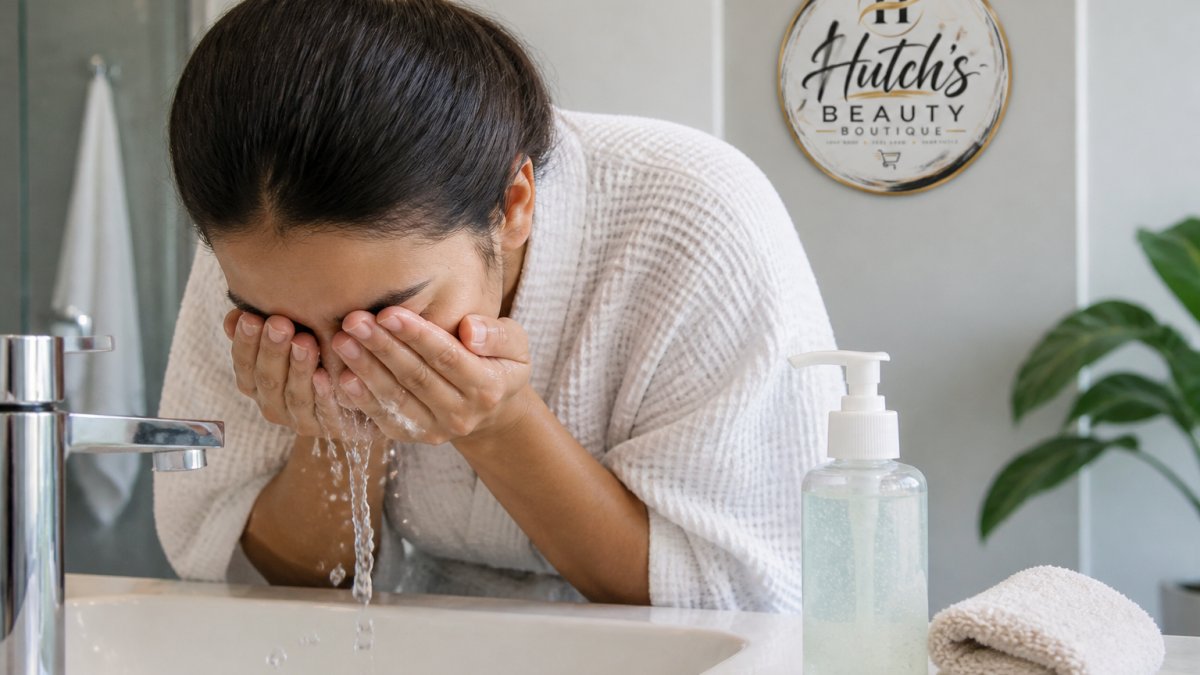
- Wash your hands first. Your hands carry oil, bacteria, and whatever you touched last. Cleansing with dirty hands just moves that onto your skin.
- Wet your face with lukewarm water. Aim for roughly 98°F to 100°F, close to body temperature. Hot water dissolves barrier lipids faster than grime, leaving skin tight and reactive; cold water does not rinse cleanser off effectively.
- Apply a small amount of cleanser. A dime-sized amount is plenty for a gel or foaming formula; a cream cleanser may need a pearl-sized amount. More product means more residue to rinse off, not a deeper clean.
- Massage with your fingertips for 30 to 60 seconds. Washcloths, sponges, and rough scrubbing create micro-tears that let bacteria in and inflame breakouts. Keep the pressure light, you are dissolving oil, not scrubbing a pan.
- Rinse thoroughly with lukewarm water. Work from the hairline down, and check the jawline, the sides of the nose, and behind the ears. Leftover cleanser commonly causes irritation and small bumps along the hairline.
- Pat dry with a clean towel. Never rub. Use a recently washed towel, and keep a separate one for your face if you can, damp, reused towels harbor bacteria.
- Follow with moisturizer within one minute. While skin is still slightly damp, a non-comedogenic moisturizer seals in water and supports the barrier. This step is not optional for acne-prone skin, a dry barrier produces more oil.
How the Steps Change for Double Cleansing
On days you wear makeup or water-resistant sunscreen, add one step at the front:
- First cleanse (oil-based or micellar water): Massage onto dry skin for about 30 seconds to dissolve makeup and sunscreen. Emulsify with a splash of water if the product calls for it, then rinse.
- Second cleanse (water-based): Follow steps 1 through 7 above. This removes the oil residue and any debris the first cleanse loosened.
On no-makeup, no-sunscreen days, skip the first cleanse. One gentle cleanse is enough; a second "just in case" is a common way to over-cleanse.
Water Temperature, Duration, and Pressure at a Glance
| Variable | Target | Why It Matters |
|---|---|---|
| Water temperature | Lukewarm, about 98°F to 100°F | Hot water strips barrier lipids; cold water rinses poorly |
| Cleanse duration | 30 to 60 seconds | Enough contact time to lift oil without over-drying |
| Pressure | Light, fingertips only | Prevents micro-tears and inflammation |
| Rinse | Thorough, hairline to jaw | Leftover cleanser causes irritation and bumps |
| Post-cleanse | Moisturize within 1 minute | Locks in hydration and supports the barrier |
Hygiene Details That Quietly Affect Breakouts
Small habits around the sink add up. Wash your hands before touching your face, swap your towel every few days, and clean and dry any cleansing brush after each use. Keep your phone screen and pillowcases clean too, both contact your face for hours. None of these replace a good routine, but each removes a source of irritation a cleanser alone cannot fix.
Acne Skin Care Routine Morning and Night: What Changes
An acne skin care routine morning and night follows the same cleanse, treat, moisturize, protect order. The difference is what you add: sunscreen in the morning, makeup and sunscreen removal at night.
Morning: Cleanse, Treat, Moisturize, Protect
Your morning routine sets up the day.
- Cleanse with your gentle cleanser and lukewarm water.
- Treat with a thin layer of your acne treatment, such as a benzoyl peroxide or retinoid product.
- Moisturize with a non-comedogenic moisturizer.
Sunscreen matters more than most people think: many acne treatments make skin more sun-sensitive, and sun damage can darken marks left by old breakouts.
Evening: Makeup and Sunscreen Removal
Nighttime is where double cleansing earns its place.
Double cleansing means an oil-based cleanser or micellar water first, then a gentle water-based cleanser. It is for days you wear makeup, heavy sunscreen, or both.
On no-makeup days, one gentle cleanse is enough. Over-cleansing at night is just as damaging as over-cleansing in the morning.
Should You Use a Face Cleansing Brush for Acne-Prone Skin?
A face cleansing brush for acne-prone skin can help, but only if you use it gently and not every day. These devices remove dead skin cells and excess oil, yet aggressive use causes irritation and micro-tears that worsen breakouts.
If you want to try one:
- Use a soft brush head made for sensitive skin
- Limit use to two or three times per week
- Skip it on active, inflamed breakouts
For many people, fingertips do the job just as well. A brush is a nice extra, not a requirement.
Common Cleansing Mistakes and When to See a Dermatologist
Most acne that does not improve comes down to a few fixable mistakes.
| Mistake | Fix | Why It Matters |
|---|---|---|
| Washing more than twice a day | Cap it at morning and night | Protects the skin barrier |
| Using hot water | Switch to lukewarm | Prevents dryness and irritation |
| Scrubbing with rough cloths | Use fingertips only | Avoids micro-tears |
| Skipping moisturizer | Apply within one minute | Keeps skin hydrated |
| Mixing too many actives | Introduce one at a time | Lowers irritation risk |
| Sleeping in makeup | Always remove at night | Prevents clogged pores |
See a dermatologist if you have deep, painful cysts, breakouts that scar, or acne that has not improved after several weeks of a consistent routine.
Over-the-counter cleansers and treatments handle mild to moderate acne. Persistent or severe acne needs medical care, and there is no shame in asking for it.
Frequently Asked Questions
How often should you wash your face if you have acne-prone skin?
Twice a day works for most people: once in the morning and once at night. If your skin feels tight, stings, or flakes after cleansing, drop to once daily and rinse with lukewarm water in the morning. Washing more than twice a day strips the skin barrier, which can trigger more oil production and more breakouts. If you sweat heavily or wear heavy sunscreen, a gentle third rinse is fine, but keep it short and skip harsh scrubbing.
What is the best cleanser for acne-prone skin?
There is no single winner, but the best cleanser for acne-prone skin matches your skin type. Oily skin often does well with a foaming or gel cleanser; dry or sensitive skin usually prefers a creamy, hydrating formula. Look for non-comedogenic labels and, if you want active ingredients, salicylic acid or benzoyl peroxide. Patch-test any new product for a week before committing.
Can washing your face too much make acne worse?
Yes. Over-cleansing removes the natural oils that keep your skin barrier intact. When that barrier weakens, skin loses moisture, becomes irritated, and may produce more sebum to compensate. Signs include redness, stinging, flaking, and breakouts that appear in new areas. Cut back to twice daily at most, use lukewarm water instead of hot, and swap any scrubbing cleanser for a gentle one. Give your skin one to two weeks to recover before judging results.
Should you use a cleansing brush if you have acne-prone skin?
A face cleansing brush for acne-prone skin can help with clogged pores and blackheads, but only if you use it correctly. Choose a soft-bristle or silicone brush, use it two to three times a week rather than daily, and avoid pressing hard. Skip it entirely on active, inflamed breakouts or cystic acne, since friction can worsen inflammation. If you use a medicated cleanser with salicylic acid or benzoyl peroxide, alternate days so you are not exfoliating and treating at the same time.
Acne-prone skin does not need a complicated routine. It needs consistency, a gentle cleanser matched to your skin type, and the patience to let a simple plan work. Hutch's Beauty Boutique brings your beauty and self-care essentials together in one place, with a curated mix of cleansers, tools, and wellness items at competitive prices. Search our catalog to build a routine that fits your skin and your budget.


