Table of Contents
- How Sonic Facial Brushes Work on Acne-Prone Skin
- Key Benefits of Sonic Facial Brush for Acne
- Sonic Cleansing vs Manual Washing: Which Wins for Acne?
- How to Use a Sonic Facial Brush for Acne Without Irritation
- How Often to Replace Your Facial Brush Head
- Sonic Brushes and Active Acne Treatments: What to Avoid
- Conclusion
- Frequently Asked Questions
Last Updated: September 18, 2026
How Sonic Facial Brushes Work on Acne-Prone Skin
A sonic facial brush is a cleansing device that uses high-frequency vibration, typically hundreds of movements per second, to loosen debris from pores without scrubbing. Acne-prone shoppers ask whether the vibration actually clears pores or is just a fancy way to wash your face.
Sonic Vibration and Pore Congestion
Pore congestion builds when sebum production outpaces the skin's ability to shed dead cells. Sonic vibration targets that bottleneck: oscillation loosens the plug at the pore opening while the brush head sweeps away the loosened material.
Key Benefits of Sonic Facial Brush for Acne
The benefits of sonic facial brush use for acne break down into what happens inside the pore and what happens to the skin's surface over time.
| Benefit | What It Does | What to Expect |
|---|---|---|
| Deep pore cleansing | Loosens sebum and debris inside pores | Fewer clogged pores over 2-4 weeks |
| Comedone removal | Lifts keratin plugs at the surface | Smoother texture, less bumpiness |
| Micro-exfoliation | Removes dead cells without scrubbing | Brighter tone, better topical absorption |
| Dermal circulation | Vibration stimulates blood flow | Healthier-looking skin over time |
Deep Pore Cleansing and Comedone Removal
Deep cleansing is where sonic devices outperform fingertips. Manual washing cleans the surface; sonic vibration reaches into the pore opening and dislodges the keratin and oil mixture that forms comedones.
Improved Skin Texture and Circulation
Skin texture improves because micro-exfoliation accelerates epidermal turnover, the cycle where old cells shed and new ones surface. When dead cells linger, skin looks dull and feels rough, and topicals sit on the buildup instead of absorbing.
Sonic Cleansing vs Manual Washing: Which Wins for Acne?
Sonic cleansing wins on efficacy, manual washing on cost and simplicity. For acne-prone skin, the deciding factor is usually irritation: sonic brushes clean more thoroughly with less friction, which matters when skin is already inflamed.
| Factor | Sonic Facial Brush | Manual Washing |
|---|---|---|
| Pore cleansing depth | Reaches inside pore openings | Surface level only |
| Pressure on skin | Minimal, device does the work | Depends on your hand pressure |
| Exfoliation | Consistent micro-exfoliation | Uneven, often too rough |
| Cost | One-time purchase plus heads | Free |
| Best for | Congestion, texture, dullness | Sensitive skin, minimal routines |
How to Use a Sonic Facial Brush for Acne Without Irritation
Using a sonic facial brush for acne safely means three things: a gentle cleanser, light pressure, and a short session. Most irritation comes from pressing too hard or cleansing too long, not from the vibration itself.
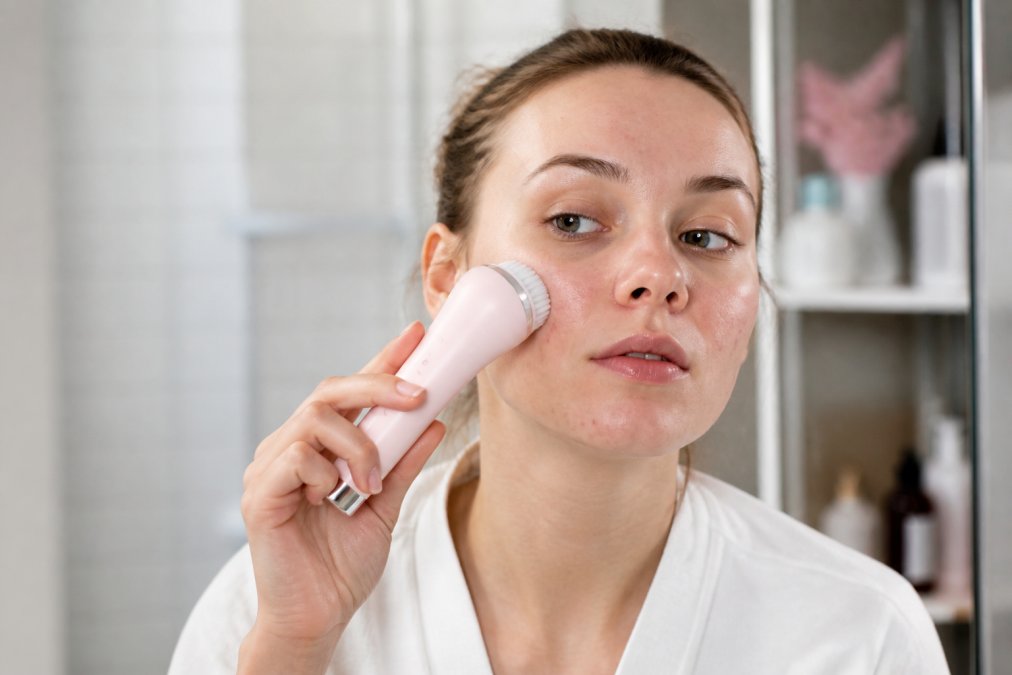
Step-by-Step Routine for Sensitive, Acne-Prone Skin
Here's a routine that keeps cleansing effective without triggering irritation:
- Remove makeup first with a micellar water or oil cleanser, so the brush isn't doing double duty
- Wet your face with lukewarm water
- Apply a gentle, non-comedogenic cleanser to your fingertips
- Turn on the brush and move it in slow, circular passes across your forehead, cheeks, nose, and chin
- Spend no more than 15 seconds per zone, about one minute total
- Rinse thoroughly and pat dry with a clean towel
- Follow with your topical acne treatment, then moisturizer
How Often to Replace Your Facial Brush Head
Replace your facial brush head every three months, or sooner if bristles look frayed or discolored. This is the most-skipped step in sonic cleansing, and it undermines everything the device is supposed to do.
Why a Dirty Brush Head Mimics a Purging Cycle
This is the failure mode most users misread. When a contaminated head reintroduces bacteria and trapped debris, breakouts appear in the same zones you've been cleansing. The pattern looks like purging, the temporary flare some people get when starting an active treatment, so users assume the device is "working" and push through.
A Hygiene Protocol That Actually Holds Up
Replacement timing is only half the equation. What you do between replacements determines how much bacteria the head carries into each session.
- Rinse under warm running water immediately after every use. Don't let residue dry into the bristles; once it sets, rinsing won't remove it.
- Store upright and uncovered. A closed case or a damp drawer traps moisture against the bristles. Air circulation is the point.
- Clean the head weekly. A drop of gentle, fragrance-free cleanser worked through the bristles with your fingers, then a thorough rinse, is enough. Skip harsh soaps and alcohol, which degrade the bristle material.
- Clean the handle weekly with a damp cloth, paying attention to the seam where the head meets the body, that junction collects runoff.
- Never share a head. Even within a household, brush heads are personal. Bacteria and skin flora don't transfer cleanly between people.
- Replace after illness or an active flare. If you've had a breakout that spread, or any skin infection, a fresh head is cheaper than re-triggering the problem.
How to Tell It's Time
Beyond the calendar, watch for these signals a head is past its useful life:
- Bristles that have splayed, curled, or lost their spring
- Any discoloration at the base of the bristles
- A persistent odor even after rinsing
- A return of congestion or breakouts in previously clear areas
Sonic Brushes and Active Acne Treatments: What to Avoid
Sonic cleansing and active acne treatments can work together, but timing and ingredient choice determine whether they help or hurt. The goal is to avoid stacking exfoliation on exfoliation, and first to know whether your acne type is one a sonic brush can help.
First, Assess Your Acne Type
Not all acne responds the same way to mechanical cleansing. Before building a routine around a sonic brush, run this self-check.
Stacking Rules for Common Actives
Once you know your acne type, the next question is how the brush interacts with what you're already using.
-
Retinoids (tretinoin, adapalene, retinol): These accelerate epidermal turnover on their own, so the brush adds a second exfoliating mechanism. A workable pattern is to cleanse with the brush in the morning and apply the retinoid at night, keeping them in separate sessions. During the first several weeks of a new retinoid, when peeling and sensitivity are common, reduce brush frequency or pause it entirely. Reintroduce once your skin has settled.
-
Chemical exfoliants (AHA, BHA, including salicylic acid): Skip the brush on nights you use these. Doubling mechanical and chemical exfoliation in the same session is the most common route to over-exfoliation, which damages barrier integrity and can make acne worse. If you use a BHA cleanser daily, that's already a chemical exfoliation step, don't pair it with the brush in the same wash.
-
Benzoyl peroxide: Fine to use, but apply it after cleansing rather than before. The brush can push product into areas it doesn't need to reach, and benzoyl peroxide is drying enough without being driven deeper.
-
Prescription treatments (topical antibiotics, prescription retinoids, oral medications): Ask your dermatologist before combining any of these with a mechanical cleansing device, especially during the adjustment period when the skin is most reactive.
A Simple Weekly Template
A pattern many people with comedonal acne find workable:
- Morning: Sonic brush cleanse with a gentle cleanser, then moisturizer and sunscreen.
- Night, most nights: Manual cleanse, then active treatment (retinoid or BHA) on the nights you use it.
- One or two nights a week: Skip actives entirely and let the skin rest.
This keeps the brush and your actives from competing for the same session, and gives your barrier recovery nights.
When to Stop
If your skin feels tight, stings when you apply moisturizer, or looks shiny and inflamed, that's a barrier problem. Pause the brush for a week, simplify your routine to a gentle cleanser and moisturizer, and reintroduce the device slowly, once or twice a week at first. If irritation returns, the brush may not be right for your skin at this stage.
The Bottom Line on Combining
Sonic cleansing and active acne treatments are compatible for many people, but compatibility depends on acne type, active ingredients, and timing, not the device alone. Assess your acne profile first, separate mechanical and chemical exfoliation, and treat any barrier signal as a stop sign.
Conclusion
Acne-prone skin needs cleansing that's thorough without being harsh, and that balance is what a sonic facial brush delivers. The catch: results depend on consistency, proper technique, and a brush head you actually replace on schedule.
Frequently Asked Questions
Do sonic facial brushes really help with acne?
Yes, when used correctly. Sonic facial brushes use vibration to loosen pore-clogging debris, oil, and dead skin cells more effectively than manual washing alone. This can reduce comedones and improve overall skin texture. However, they are not a cure for inflammatory acne. A sonic facial brush works best as part of a consistent routine alongside dermatologist-recommended treatments. Overuse can irritate the skin barrier, so stick to gentle, short sessions two to three times per week.
How often should I use a sonic facial brush if I have acne?
Start with two to three times per week, using a gentle, hypoallergenic cleanser. If your skin tolerates it well without redness or peeling, you can increase to once daily. People with sensitive skin or those using prescription topicals should limit use to every other day. Always follow with a moisturizer to support skin barrier integrity. Stop use and consult a dermatologist if you notice increased irritation, dryness, or new breakouts.
Can sonic brushes cause breakouts or make acne worse?
They can if you overuse them or skip cleaning the brush head. Bacterial proliferation on a dirty brush can transfer acne-causing bacteria to your skin. Over-exfoliation weakens the skin barrier, leading to more inflammation and post-inflammatory hyperpigmentation. To avoid this, clean your brush head after every use, replace it every three months, and avoid pressing hard. If your acne is severe or cystic, talk to a dermatologist before adding any device to your routine.
How do I know when to replace my facial brush head?
Replace the brush head every three months, or sooner if the bristles look frayed, discolored, or feel rough. A worn brush head does not clean effectively and can harbor bacteria. If you notice more breakouts, irritation, or a change in how the bristles feel against your skin, swap it out immediately. Mark your calendar or set a phone reminder so you do not lose track. Consistent replacement keeps your sonic facial brush working safely for acne-prone skin.


