Table of Contents
- What Makes Curated Boutiques Different From Mass-Market Retail
- Personalized Attention and Expert Styling Advice
- Access to Unique Styles and Independent Designers
- How to Find Unique Lifestyle Gifts Online
- The Advantages of Small Business Shopping
- Quality, Craftsmanship, and Sustainable Choices
- Building Community and Supporting Local Economies
- Conclusion
Last Updated: August 22, 2026
What Makes Curated Boutiques Different From Mass-Market Retail
Shopping at curated boutiques offers something fundamentally different from mass-market retailers. Where big-box stores optimize for volume and standardization, curated boutiques operate on intentional selection. At Hutch's Beauty Boutique, curation means making deliberate choices about what deserves shelf space based on quality, uniqueness, and fit with customer values.
The difference starts with inventory decisions. Mass-market retailers rely on algorithms and sales velocity data. Boutiques operate differently: buyers visit makers directly, test products personally, and maintain relationships with brands they carry. That human judgment layer creates a fundamentally different shopping experience.
When you walk into a mass-market store, you're navigating thousands of SKUs designed for maximum reach. A curated boutique carries far fewer items, but each has been selected because someone with expertise believes it's worth your attention. You're not paying more because products are inherently superior; you're paying for the work that went into choosing them.
Mass retailers stock deep on winners and accept high waste on misses. Boutiques operate with tighter inventory, constantly refreshing selections and staying connected to real-time market intelligence rather than last quarter's sales reports.
Personalized Attention and Expert Styling Advice

Staff at curated boutiques typically have deep product knowledge because they've been trained on manageable inventory, not thousands of items. They can tell you why something was selected, how it compares to alternatives, and who it's designed for.
When you ask a boutique associate about a product, you're getting perspective from someone who understands the selection philosophy and can contextualize recommendations within your specific needs. Many shoppers receive styling advice they wouldn't get elsewhere, not just "this is popular" but "this works particularly well if you're looking for X outcome."
Boutiques that build strong customer relationships develop a sense of what you actually like versus what you think you should like. A skilled stylist can suggest items you wouldn't have considered but that align perfectly with your taste and lifestyle. Expert styling advice also includes honesty about fit and function. A boutique associate has no incentive to sell you something that won't work; their survival depends on customers being satisfied enough to return and recommend them.
Access to Unique Styles and Independent Designers
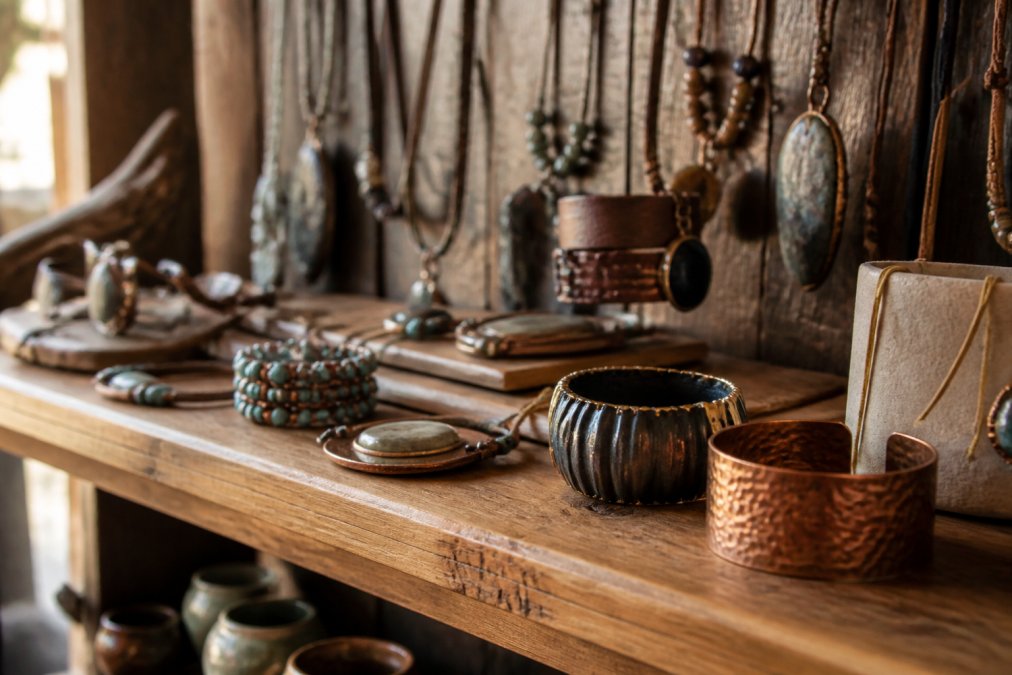
One of the most compelling reasons to shop at curated boutiques is access to independent designers and makers who don't have distribution in mass-market channels. These creators often bring something different to their categories, solving specific problems or expressing particular aesthetic visions through small-batch, sometimes hand-crafted work.
Independent designers typically prioritize higher craftsmanship and more thoughtful design choices than mass production allows (peer-reviewed research). When you buy from an independent designer through a curated boutique, you're often getting access to genuine innovation within its category.
There's real value in owning something that isn't mass-produced, won't show up on everyone else you know, and carries a story about who made it. Small-batch production and direct relationships with makers create natural scarcity that mass retailers can't replicate.
Many independent designers also prioritize values that mass manufacturers deprioritize: sustainable sourcing, ethical labor practices, local production, or premium materials (the EPA). A boutique that stocks independent designers implicitly endorses their approach, so customers can trust that sourcing and production methods align with the boutique's stated principles.
How to Find Unique Lifestyle Gifts Online
Finding unique lifestyle gifts online requires searching for curator perspectives rather than product categories. Look for boutiques with a clear point of view about what they carry, whether that's sustainability focus, specific aesthetic, or lifestyle philosophy.
Read the "about" sections carefully. Language like "handpicked," "vetted for quality," or "sourced directly from makers" suggests genuine curation. Pay attention to boutiques that feature maker stories or designer profiles, this context transforms a gift from "a thing someone bought" into "a thing someone selected because it has meaning."
Look for boutiques with active social media showing products in context and explaining selection philosophy. Consider boutiques organized around lifestyle themes or use cases rather than product categories. A boutique thinking about "gifts for people who value sustainability" is curating around values or needs, not just product types.
The Advantages of Small Business Shopping
Shopping at small businesses creates measurable economic effects. When you buy from a curated boutique, you're supporting a business model that typically keeps more money circulating in the local economy. Small business owners tend to source from local suppliers, hire local staff, and reinvest profits into their communities at higher rates than large corporations (sba.gov).
Your feedback, preferences, and purchases directly shape what a boutique stocks next. If you hate something, the owner hears about it and can make different choices. Your voice actually matters in the selection process.
Small boutiques have to stay responsive to customers, maintain quality, and keep their promises because their survival depends on it. You're often interacting with the owner or staff trained directly by the owner, rather than employees following corporate scripts. That typically means faster problem-solving, more flexibility on returns, and genuine investment in your satisfaction.
Quality, Craftsmanship, and Sustainable Choices
Curated boutiques often emphasize quality and craftsmanship in ways mass retailers can't support. When a boutique commits to carrying fewer items, they can afford to be selective about material quality, construction methods, and durability.
Boutique-sourced items often use premium materials, thoughtful construction details, and designs meant to last rather than be replaced seasonally. You notice construction details, material choices, and design thinking that mass-produced items obscure, hand-finished edges, quality hardware, thoughtful proportions.
Sustainable choices become easier in curated environments because the boutique has already filtered for them. Rather than wading through thousands of options, you're shopping in a space where that work has been done. A boutique focused on sustainability has vetted suppliers and can tell you why items align with environmental values.
The craftsmanship emphasis supports slow fashion and conscious consumerism. When you buy fewer items made well and designed to last, you're naturally moving toward more intentional consumption patterns.
| Factor | Curated Boutiques | Mass-Market Retail |
|---|---|---|
| Inventory Selection | Intentional, values-aligned | Algorithm-driven, volume-optimized |
| Staff Expertise | Deep product knowledge | General category training |
| Unique Items | Independent designers, small-batch | Mass-produced, widely available |
| Craftsmanship Focus | High priority | Cost-minimized |
| Sustainability | Often emphasized | Varies widely |
| Customer Relationships | Ongoing, personalized | Transactional |
| Local Economic Impact | Direct community benefit | Minimal local circulation |
| Product Curation | Curator point of view | Inventory management |
Building Community and Supporting Local Economies
Curated boutiques often become community hubs in ways mass retailers don't. When locally owned, they become gathering places where regular customers recognize each other, staff know your preferences, and the space reflects local culture and values.
Small boutiques are embedded in their communities. The owner shops locally, knows other business owners, and participates in local events. Their success is directly tied to community health and reputation. They're incentivized to be good neighbors and invest in the areas where their customers live.
Supporting local economies through boutique shopping means money stays in circulation locally. The owner pays local staff, buys from local suppliers, and reinvests profits into the community. That's different from money flowing to corporate headquarters.
Many curated boutiques become platforms for local makers and designers, transforming from retail spaces into cultural nodes where community creativity and commerce intersect. A local boutique owner's reputation is tied to their business in ways corporate employees' aren't. They care about community perception and whether they're living up to their stated values, creating accountability that translates into better service and genuine commitment to customer satisfaction.
Shopping at curated boutiques means choosing a different relationship with retail. You're not just buying products; you're supporting a specific vision about what deserves attention, backing small business owners who believe in their work, and accessing items that reflect intentionality rather than algorithm optimization. At Hutch's Beauty Boutique, we've built our entire approach around this principle: every product we carry has been selected because we believe it deserves a place in your daily routine. That curation work means you can shop with confidence that what you find has been chosen with care, quality, and your actual needs in mind. Search Hutch's Beauty Boutique to discover a curated selection designed for your lifestyle.
Frequently Asked Questions
Q: What does it mean for a boutique to be curated?
A: A curated boutique means the owner or team deliberately selects each product based on quality, style, and fit with their point of view. Instead of stocking everything available, curated boutiques choose items that reflect specific standards for craftsmanship, design, and value. This curation process filters out mass-produced basics and focuses on pieces that tell a story or solve a real need. When you shop at a curated boutique, you're benefiting from someone's expertise and taste doing the heavy lifting for you.
Q: How do curated boutiques differ from mass-market retailers?
A: Curated boutiques offer a carefully selected inventory with a distinct point of view, while mass-market retailers stock broad selections designed to appeal to everyone. Boutiques typically feature independent designers, artisanal goods, and exclusive collections you won't find elsewhere. Mass-market stores prioritize inventory turnover and price competition. Boutiques emphasize quality over quantity, personalized service, and building relationships with customers. The curation process means fewer products, but each one has been vetted for authenticity, durability, and alignment with the boutique's values.
Q: Why should I shop at curated boutiques instead of big-box stores?
A: Curated boutiques offer personalized attention, access to unique and high-quality items, and the satisfaction of supporting independent businesses and artisans. You get expert styling advice tailored to your needs rather than generic recommendations. The shopping experience is designed around customer feedback and community, not profit margins. You'll discover products with real craftsmanship and sustainable practices. Many boutiques like Hutch's Beauty Boutique bring together diverse categories, beauty, wellness, home goods, so you can find quality items across your lifestyle needs in one place with competitive pricing.
Q: Is shopping at curated boutiques more expensive than shopping elsewhere?
A: Not necessarily. While some artisanal and handcrafted items cost more due to quality and production methods, curated boutiques often offer competitive pricing on trending gadgets and accessories. The real value comes from better quality per wear and avoiding impulse purchases on items you don't need. When you buy fewer, better-chosen pieces, your overall spending often decreases. Pricing depends on quantity, dates, and delivery. We encourage you to visit Hutch's Beauty Boutique's website for current prices.
This article was written using GrandRanker


