Table of Contents
- Why You Don't Need to Spend $300+ on Sleep Tracking
- Quick Comparison: Best Sleep Tracker Without Subscription
- RingConn Gen 2: No Subscriptions, Full Sleep Data
- Fitbit Charge 6: Affordable Sleep Scores With a Catch
- Garmin Vivosmart 5: Discreet Tracking, Zero Monthly Fees
- Amazfit Band 7 and Xiaomi Smart Band 9: Budget Bands That Deliver
- Withings Sleep Mat: Non-Wearable Tracking for $129.95
- Free Sleep Tracking Apps for Android and iOS
- Frequently Asked Questions
Last Updated: September 20, 2026
Why You Don't Need to Spend $300+ on Sleep Tracking
The sleep trackers market has a subscription problem. You buy a ring or watch, then pay monthly forever just to see your own data. That's why so many people search for alternatives to expensive sleep trackers that don't lock basic features behind a paywall.
Quick Comparison: Best Sleep Tracker Without Subscription
The best sleep tracker without subscription is one you buy once and keep using without monthly fees. The table below compares price, battery life, and whether each option charges for full data access.
Price and Battery Life at a Glance
| Device | Starting Price | Battery Life | Subscription? |
|---|---|---|---|
| RingConn Gen 2 | $299 | ~7 days | No |
| Fitbit Charge 6 | $159.95 | ~7 days | Optional (Premium) |
| Garmin Vivosmart 5 | $149.99 | ~7 days | No |
| Amazfit Band 7 | $49.99 | Up to 18 days | No |
| Xiaomi Smart Band 9 | $45 | Up to 21 days | No |
| Withings Sleep Mat | $129.95 | Plug-in (no charging) | No |
| Oura Ring Gen 3 | $299 | ~7 days | Required |
Pros and Cons Summary
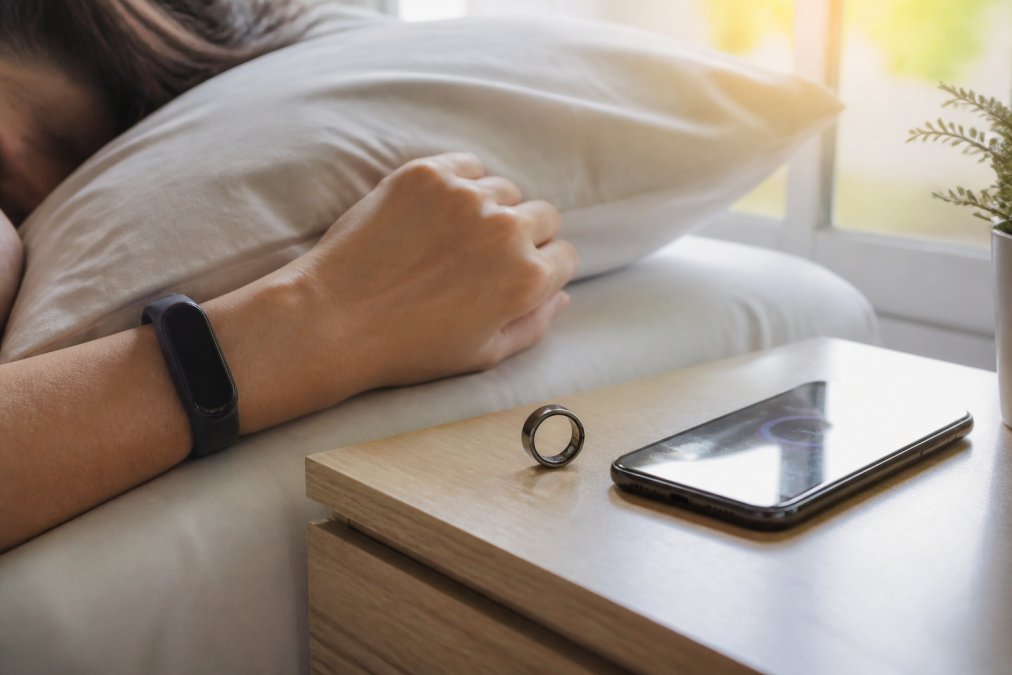
- RingConn Gen 2: No fees, comfortable ring; higher upfront cost.
- Fitbit Charge 6: Affordable, huge app ecosystem; advanced insights need Premium.
- Garmin Vivosmart 5: No subscription, durable; small monochrome screen.
- Amazfit Band 7 / Xiaomi Band 9: Dirt cheap, long battery; less granular data.
- Withings Sleep Mat: Nothing to wear; only tracks while in bed.
RingConn Gen 2: No Subscriptions, Full Sleep Data
RingConn Gen 2 is the strongest pick for anyone who wants ring-based tracking without a monthly bill. It monitors continuous sleep stages, blood oxygen, and heart rate variability, then lets you view everything with no subscription.
Fitbit Charge 6: Affordable Sleep Scores With a Catch
The Fitbit Charge 6 delivers daily Sleep Score analysis, built-in GPS, and heart rate monitoring for $159.95. It's a solid middle ground between fitness tracking and sleep analysis, and the Google app integration is genuinely useful.
Garmin Vivosmart 5: Discreet Tracking, Zero Monthly Fees
Garmin's Vivosmart 5 is a slim tracker with advanced sleep stage tracking, Body Battery energy monitoring, and Pulse Ox sensing. Nothing here requires a subscription, which is rare at this price.
Amazfit Band 7 and Xiaomi Smart Band 9: Budget Bands That Deliver
Budget bands prove you don't need to spend much for functional sleep tracking, but the reason they're cheap matters, and it's where most buyers get surprised.
What the hardware actually does
Both the Amazfit Band 7 ($49.99) and the Xiaomi Smart Band 9 ($45) rely on the same basic sensor stack: a three-axis accelerometer to detect movement, an optical photoplethysmography (PPG) sensor to detect blood-volume changes at the wrist, and a companion app that runs the sleep-staging algorithm on your phone or in the cloud. That's a fundamentally different approach than a ring or a mat, which uses a denser sensor array and, in the mat's case, ballistocardiography to sense heartbeat-induced motion through the mattress.
Battery life, charging, and the accessory trap
- Amazfit Band 7: up to 18 days typical use, closer to 9-10 days with continuous SpO2 and frequent GPS-free workouts.
- Xiaomi Smart Band 9: up to 21 days typical use, closer to 12-14 days with always-on heart rate and sleep breathing quality tracking enabled.
Both charge via a proprietary magnetic pogo-pin cable, not USB-C. That cable is the hidden cost. It's cheap to replace on a marketplace, but it's the kind of accessory that disappears on a trip and leaves you with a dead band. Budget bands also use silicone straps that stretch and discolor within a year; replacements run roughly $8-$15, which is a real ownership cost the upfront price doesn't show.
Longevity and software support
This is the gap most "best budget sleep tracker" lists skip. Budget bands are the most likely category to become e-waste, because:
- The companion app (Zepp for Amazfit, Mi Fitness for Xiaomi) is the only way to view your data. If the app drops support for an older band model, the band still tracks but you can't read the history.
- Firmware updates stop earlier than on premium brands. A common pattern is 2-3 years of active firmware support, after which the device keeps working but stops receiving accuracy improvements.
- There is no local export path on either band by default. Your sleep history lives in the vendor's cloud, which raises the data-portability question covered below.
Data privacy: what you're giving up for $45
Both apps require an account, and both sync sleep and heart-rate data to vendor servers. Neither offers a fully offline mode for sleep tracking. Before you install, check the app's data-safety disclosure in the store listing and confirm whether sleep data is shared with advertising partners. Health and sleep data is sensitive; a $45 band is not worth a broad data-sharing agreement you didn't read.
Withings Sleep Mat: Non-Wearable Tracking for $129.95
The Withings Sleep Mat is the best option if you hate wearing anything to bed. It slides under your mattress and tracks sleep cycles, heart rate, and snoring with no charging required.
Free Sleep Tracking Apps for Android and iOS
Free sleep tracking apps are the only true zero-cost alternative to a hardware tracker, and they're the angle most "best sleep tracker" articles skip entirely. Here's how they actually work, what they can and can't measure, and how to use one without handing over more data than you mean to.
How phone-only sleep tracking works
A phone in bed with you has two usable sensors:
- Accelerometer and gyroscope, detect the micro-movements and position shifts that correlate with sleep versus wake. This is the same signal a wrist band uses, just measured at the mattress instead of the arm.
- Microphone, picks up breathing sounds, snoring, and ambient noise to estimate sleep onset, wake events, and (in some apps) rough sleep-phase transitions.
Credible free options
- Apple Health + Sleep Schedule (iOS): built into the phone, no account required beyond your Apple ID, no ads. Tracks time in bed and sleep schedule, and integrates with any wearable you add later. The most privacy-respecting free option because the data stays on-device and in your encrypted iCloud if you enable it.
- Sleep as Android (Android): long-running, free tier with accelerometer and microphone tracking, plus a paid upgrade for advanced features. Data can be exported locally as CSV, which matters for the longevity point below.
- Google Fit / Fitbit (Android): free sleep tracking if you already use a Wear OS watch or a Fitbit device; the phone alone gives you a basic sleep schedule but not stage data.
- Pillow (iOS): free tier with microphone-based tracking; the automatic sleep-stage feature is behind a subscription, so treat the free version as duration-only.
The accuracy ceiling, stated plainly
Phone-only apps are typically within 20-40 minutes of a wearable on total sleep time, and considerably worse on wake-after-sleep-onset, they tend to overestimate sleep because a still, quiet phone reads as "asleep." They are not clinically validated, and no phone-only app should be used to screen for sleep apnea or any sleep disorder. If you suspect a disorder, the right next step is a clinician, not an app.
The hidden cost: your data
"Free" here means you pay with data, not dollars. Before installing any sleep app:
- Check whether it requires an account. Apple Health does not; most third-party apps do.
- Read the data-safety section of the store listing and look for whether sleep or microphone data is shared with third parties.
- Prefer apps that offer a local export (CSV or JSON). If the app shuts down or drops support, an export is the only way to keep your history.
- On iOS, use the per-app microphone permission and revoke it when you're not tracking. On Android, check the microphone and body-sensors permissions individually.
Where this fits in the bigger picture
If your goal is simply to know whether you're getting seven hours and going to bed at a consistent time, a free phone app is genuinely enough, and it's the only option on this list with a true $0 three-year cost. If you want REM and deep-sleep breakdowns, step up to a budget band. If you want no wearable at all and stage-level data, the Withings Sleep Mat is the next rung up.
Frequently Asked Questions
What is the best affordable sleep tracker for tracking sleep quality?
The Amazfit Band 7 at $49.99 and Xiaomi Smart Band 9 at $45 offer solid sleep stage tracking for under $50. If you want more detailed heart rate variability and blood oxygen data, the Garmin Vivosmart 5 at $149.99 provides reliable metrics without a subscription. For those who prefer a non-wearable option, the Withings Sleep Mat at $129.95 tracks light, deep, and REM cycles from under your mattress.
Can you track sleep accurately without a subscription-based device?
Yes. Many sleep trackers now offer full data access with a one-time purchase. The RingConn Gen 2, Garmin Vivosmart 5, Amazfit Band 7, Xiaomi Smart Band 9, and Withings Sleep Mat all provide sleep stage analysis and health metrics without monthly fees. The trade-off is usually fewer advanced coaching features, but core sleep tracking remains accurate and accessible.
Are free sleep tracking apps for Android and iOS as effective as dedicated devices?
Free apps use your phone's microphone and accelerometer to estimate sleep duration and movement. They can track total sleep time and sleep latency reasonably well, but they cannot measure heart rate variability, blood oxygen, or true sleep architecture like wearable devices with biometric sensors. For basic awareness of sleep patterns, apps work fine. For clinical-grade accuracy and detailed stage analysis, a dedicated tracker is more reliable.
How accurate are budget smartwatches for sleep tracking compared to premium models?
Budget smartwatches like the Amazfit Band 7 and Xiaomi Smart Band 9 use accelerometers and photoplethysmography sensors to detect movement and heart rate. Studies show they reliably track total sleep time and sleep efficiency but may misclassify sleep stages more often than premium devices. For spotting trends and improving sleep hygiene, budget options provide useful data. For diagnosing sleep disturbances, a clinical sleep study remains the standard.
Do I need a wearable device to monitor my sleep stages?
No. The Withings Sleep Tracking Mat sits under your mattress and monitors sleep cycles, heart rate, and snoring without anything on your body. It automatically syncs via Wi-Fi and requires no charging. If you find wrist-worn devices uncomfortable or forget to charge them, a bedside monitor is a practical alternative that still provides detailed sleep architecture data.


